



CLEVELAND — Roberto Wynn, 41, has waited over two years for a Cuyahoga County judge to decide whether he will get the opportunity to present new evidence connected to his 2009 murder conviction.
"I don't understand why it's taking so long, but who am I?" Wynn told News 5 Investigator Sarah Buduson during a phone call from prison. "I'm just little ol' Roberto. I don't know much about the law."
On March 1, 2024, Wynn's attorney filed a motion seeking permission to file a motion for a new trial and requesting a hearing.
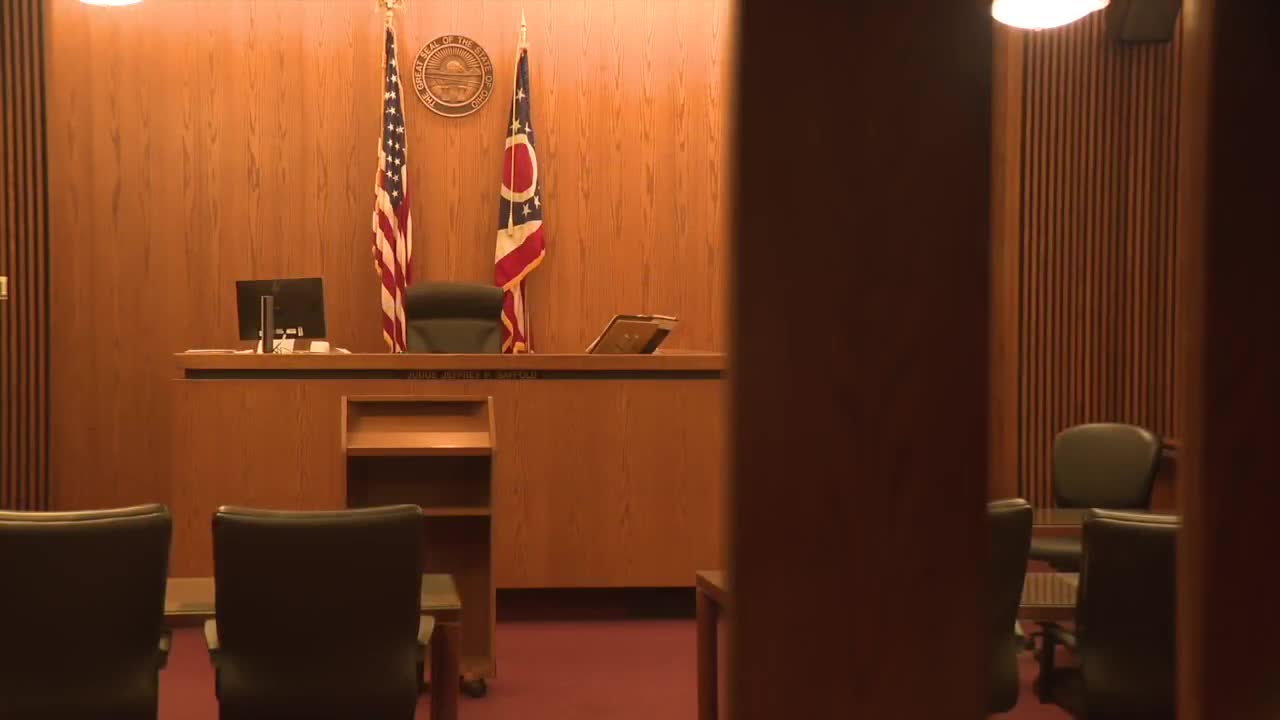
Cuyahoga Common Pleas Judge Jeffrey Saffold has yet to rule on the motion.
The new evidence
Wynn was convicted of fatally shooting Christopher Basie on April 25, 2008.
In 2022, the key witness in the case against Wynn recanted her testimony.
According to Wynn's motion, the witness was 12 years old when the shooting happened on Parmalee Avenue on Cleveland's East Side.
In 2022, she signed a letter that stated she "blamed" Wynn for a shooting that "he didn't commit" and that she was sure he "didn't have a gun."
She wrote that she was mad at him at the time and did not realize his "life would be spent in a cage" over her statements.
"What's left of the case is merely the testimony of wildly inconsistent witnesses," Donald Caster, Wynn's former Ohio Innocence Project attorney, said.
Wynn is now represented by OIP attorney Lauren Staley.
"Without the witness who recanted, there almost certainly wouldn't have been a conviction in this case," Caster said.
Innocence cases often languish
"Unfortunately, delays are very common," Michael Donnelly, a former Cuyahoga County Common Pleas judge, said. "It's not because of an individual judge, it's a systemic problem."
After 14 years on the bench in Cuyahoga County, Donnelly was elected to the Ohio Supreme Court. He is currently an adjunct law professor at the Cleveland State University College of Law and the creator of Ohio Court Watch, which aims to increase transparency and oversight in the state's legal system.
RELATED: Who gets a second chance with the Ohio Supreme Court and who doesn't?
"The safeguards that people have on the front end of the system, like the right to an attorney, the right to a speedy trial, those don't exist," he said. "As a result, cases can languish.”
Since 2014, we have found 28 Cuyahoga County cases where motions for a new trial were open longer than 120 days, which is the standard set by the Ohio Supreme Court.
"In post-conviction [proceedings], people can basically file anything," Donnelly said. "There's a lot of the motions that are frivolous."
"Unfortunately, cases that do have merit — that have been opposed by the state and there may be evidence to be tested — they get lost in the mix," he said.
Ohio legislative proposal
A proposed state law would make it easier for innocence claimants to obtain post-conviction relief.
H.B. 177 requires judges to hold a hearing when they find that an innocence claimant's case has credible new evidence.
However, like many innocence cases, the legislation has also languished.
The bill was introduced in March 2025 and assigned to the Ohio House Judiciary Committee but has yet to receive a single hearing.
"This would be a reform of great significance," Donnelly said.
"If you could undermine the theory of guilt, you're entitled to a new trial under the law," he said. "But the hurdle — because of the flaw in the law in post-conviction right now — you can't get there."
Donnelly said attorneys can complain to the Ohio Court of Appeals or the Ohio Supreme Court when a judge delays ruling on a motion.
However, he said most attorneys do not — over fears they will anger the judge, whom they want to rule in their favor.
'You locked up too'
Wynn is not the only one waiting on the judge's decision.
His parents, Carla Butler and Ronnie Wynn, said they do not understand why it's taken over two years for the judge to rule in their son's case.
"Every single day, this is the first thing to be on my mind when I open my eyes," Butler said.
"It can't get any worse," Ronnie Wynn said through tears. "Our son been gone 18 years."
They both believe their son is innocent.
"I can't even sum it up," Ronnie Wynn said. "I feel like what he been through you can't get back. You can't get them days and nights back."
When the witness recanted in 2022, they thought their son would get a second chance.
Even if the judge denied his motion, Wynn could then appeal to the Ohio Court of Appeals.
Instead, his case has been left in limbo.
"Then, you can't do nothing about it," Butler said. "Nothing."
"People don't understand," Ronnie Wynn said. "Every day he in jail, you locked up too."
Judge Saffold's response
News 5 reached out to Judge Saffold.
He said he cannot comment on an open case.
"It's been two years. Holidays have passed. Over and over again," Wynn said. "What's the holdup?"
Donnelly said Cuyahoga Common Pleas judges are constantly receiving new cases, and he can see how a motion like Wynn's "could get lost in the mix."
He said courts should adopt more data-driven systems to help dockets run more efficiently.
"To me, the worst form of injustice that can occur in our system is having someone who is actually innocent incarcerated," he said. "We should be working to prevent that on the front end of the system, but also to come up with systems that we can remedy that situation as soon as possible on the back end."
What's being done to prevent this?
Ohio Court Watch from CSU Law launched a website on Thursday that tracks cases like Wynn's and many others in hopes of shining light on cases where convicted people who claim they are innocent are waiting to find out if they will get a chance to present new evidence.
Click here to learn more.
