


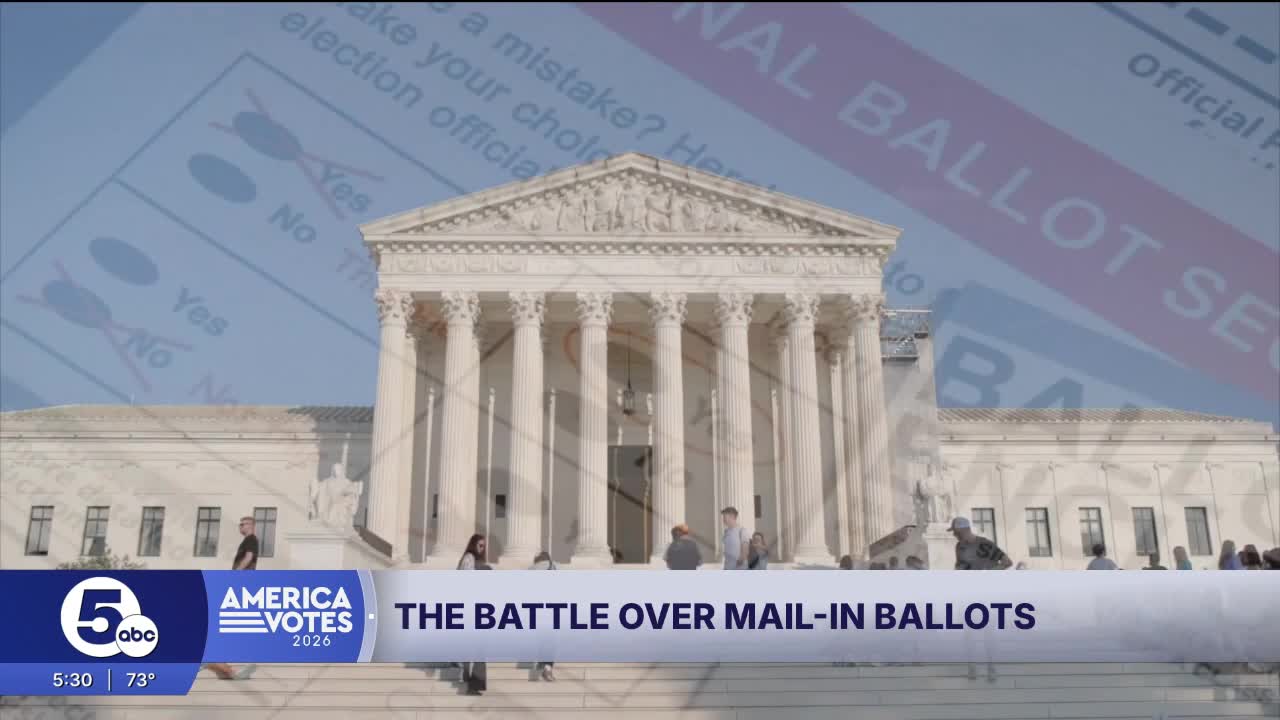



COLUMBUS, Ohio — The U.S. Supreme Court has allowed some aspects of President Donald Trump's controversial executive order to go into effect, but the majority of his attempt to restrict mail-in voting is still up for debate.
Trump’s continued and unproven attacks against mail-in voting, despite voting by mail himself, have yielded a win by the justices.
In a split decision, the court is allowing the Trump Administration to compile citizenship lists for voters in each state, and will likely soon decide if he can require the post office to only deliver ballots to people on that roster.
"The basic here is that President Trump, on his order, has ordered parts of the federal government to restrict the availability of mail-in ballots," Case Western Reserve University elections law professor Atiba Ellis said.
The court decided that the 20-plus liberal states that sued to prevent the citizenship lists filed too early, since the administration hadn’t implemented the policy yet.
Ellis explains that this is a procedural win for the president; it can create lists, but whether states or the post office needs to comply is not settled yet.
Ohio may be in a better position than other states, Ellis said, as it already shares voter data with the federal government.
"Even if Ohio is deemed in compliance by the administration and this list vetting plan gets carried out, I think there is still risk of error," the professor said. "There is still risk of mistakes being made, and that could nonetheless impact individuals' ability to vote by mail."
Allison Russo, the Democratic candidate for secretary of state, said this ruling could disenfranchise voters, even if the court hasn't completely sided in favor of the executive order.
"When people are confused, when we create chaos with our election officials, it prevents people from casting their ballot," Russo said.
It's problematic for the post office to have to pick and choose who is a citizen and which ballots to mail, she added.
"The U.S. Postal Service is not resourced, or has the expertise, to determine who is and is not eligible to be a voter here in the state of Ohio," she said.
Getting rid of mail-in voting isn't partisan, the Democrat added.
"I remind my Republican colleagues, these actions by the president, the sowing of chaos and confusion, don't just hurt Democratic voters," she said. "This hurts all voters, including their Republican voters."
Libertarian candidate Tom Pruss agreed with Russo, arguing that states control the elections, not the federal government.
"We're talking about the federal government compiling state citizenship lists and the Postal Service collecting voter information and creating lists of people who were mailed absentee ballots," Pruss said. "Because apparently the Post Office didn't have enough to do delivering my neighbor's mail to my house."
He said he has a "crazy Libertarian" idea: let Ohio run Ohio's elections.
"I don't want Donald Trump running them. I don't want the next Democratic president running them. I don't want DHS running them," he said. "And I certainly don't need Washington turning the Postal Service into some kind of junior election-enforcement agency."
Republican Robert Sprague declined an interview for this story, but his campaign manager sent a sentence saying they were waiting for a final decision.
Previously, Sprague, who will not say that Trump lost the 2020 election, echoed the president's sentiments about mail-in voting.
"You're always a little bit suspicious because you don't know if the person on the other end of that mail-in ballot is the elector," Sprague said.
"Please cite some cases of mail-in fraud in Ohio," I responded.
"Well, we know that this happens every year," he said.
"Where? When?" I asked
"I can’t give you — If you give me time, I can get back to you."
Following the interview, Sprague's team provided AI-generated details of a Republican Delaware County township trustee who illegally voted twice in 2020.
Absentee ballots first start getting mailed to overseas service members on Sept. 18, so this case is really running up against the clock.
Republican Sec. of State Frank LaRose's team assures elections are safe — as their audits have always shown — and that they are on top of the situation.
"As always, Ohio remains the gold standard of elections because we’ve made preparation and readiness a priority, so we’ve been monitoring this issue for several months and developing plans for how to comply," spokesperson Dan Lusheck said. "We’ll be ready for whatever is ultimately decided.”
Follow Statehouse and Columbus bureau reporter Morgan Trau on X, Instagram and Facebook. Email her at Morgan.Trau@wews.com.
