


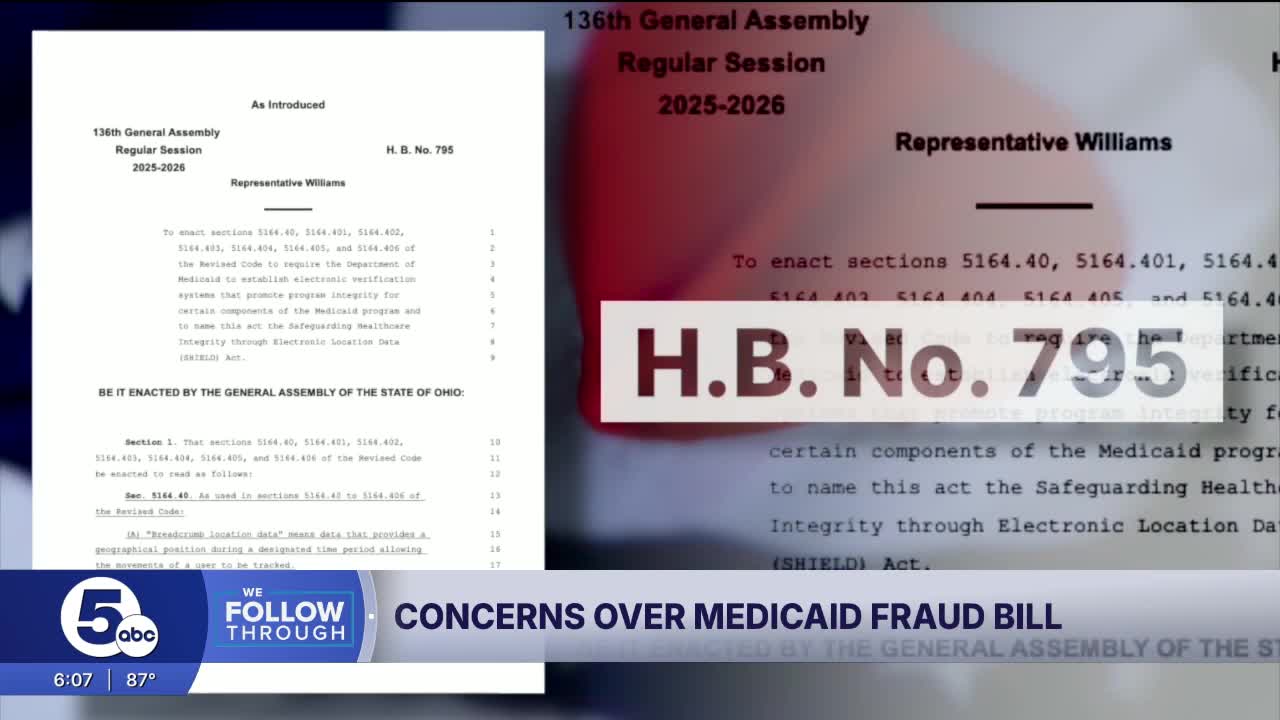


At the Statehouse on Tuesday morning, the Ohio House Medicaid Committee was supposed to hold a hearing and possible vote on House Bill 795, a Medicaid reform and oversight measure also known as the SHIELD Act.
However, after doing roll call, it immediately went into recess and never returned.
Later that day, Ohio House Speaker Matt Huffman, when speaking with a gaggle of reporters about several different pieces of legislation and business, was asked about the Medicaid reform bill.
Speaker Huffman said it is being added to a Senate bill.
It appears it’ll have a hearing Wednesday morning.
It is unclear what, if any, changes were made since Monday, when lawmakers announced they removed one of the most controversial parts, which was an effort to ban family members from being paid by Medicaid for personal care services to disabled loved ones.
RELATED: Ohio lawmakers backtrack after trying to restrict Medicaid home healthcare
"It feels like we're moving in the right direction," said former Ohio House Speaker Jason Stephens (R-Kitts Hill) on Monday. "Hopefully, we can come up with a product that does enable [us] to keep fraud, waste, and abuse at bay. But also, still, we aren't harming the things that do work in Medicaid."
But concerns remain.
Tuesday, I talked with Matt O'Nesti. He is the board chair for Disability Rights Ohio, and he’s also an Ohioan with a disability who relies on home and community-based waivers for everything from wheelchair parts to transportation.
He told me he fears this bill could put the future of waivers in jeopardy.
"It’s the only thing that has given me a type of normalcy and independence that my peers get to live with constantly and that I get to live with sometimes,” said O’Nesti.
He told me the measure is moving fast, causing chaos for the community, and it feels left out of the conversation, along with experts who use the Medicaid system daily.
"What’s truly missing from this conversation is the human element,” he said. “It's missing the people. It's missing the families. We're scratching and clawing as a community to get ourselves to Columbus and get in front of these people and have conversations, and I'm not going to lie to you, they're not making it easy.”
