





COLUMBUS, Ohio — A Republican lawmaker introduced a bill to restrict state funding to public schools that are suing Ohio's private school voucher program. After mass backlash, he has reversed course.
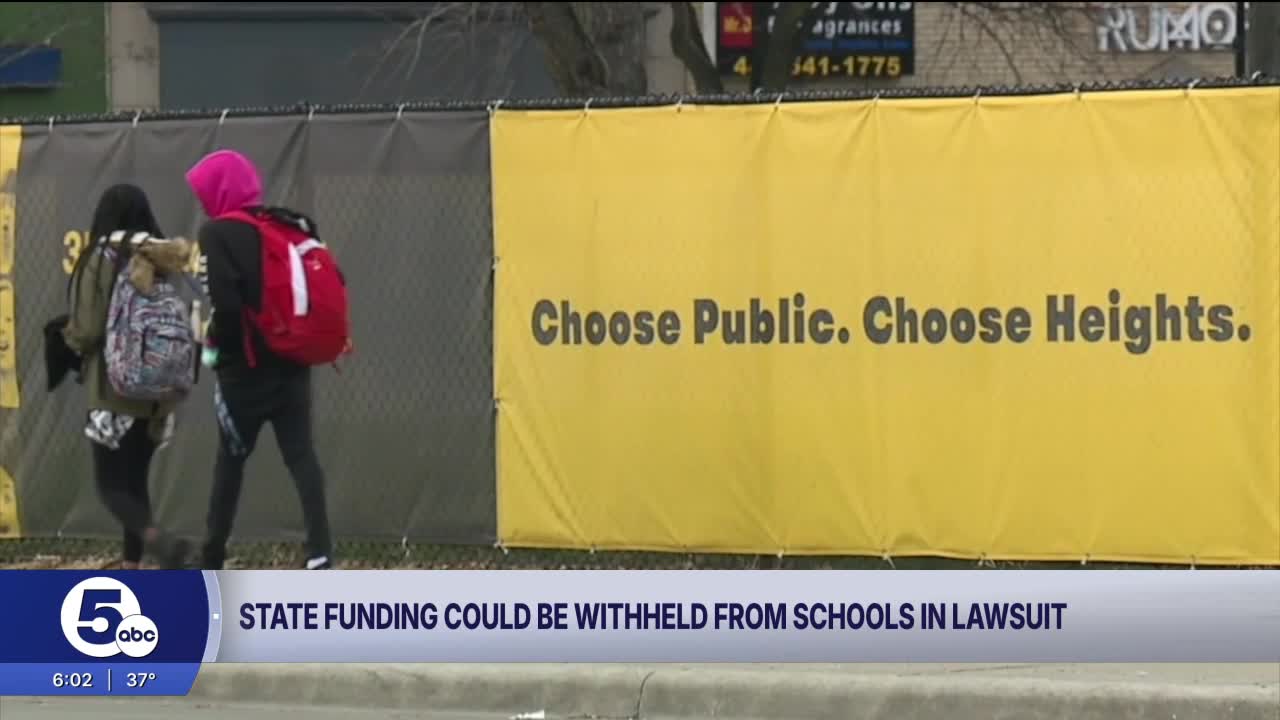
Leaders at Cleveland Heights-University Heights schools say they have been forced to make tough decisions.
"We've made cuts," school board member Dan Heintz said. "It breaks my heart to say that there are gonna be many more on the way with that budget cut that we're looking at."
Each cut hurts the district's nearly 5,000 students, he added.
The district sued the state in 2022 to get more money. About 320 districts have joined, filing a lawsuit over the state's private school voucher program, also known as EdChoice. It allows any family, no matter their income level, to get taxpayer dollars to attend nonpublic schools.
RELATED: Ohio's public schools end 2025 feeling bruised. The governor doesn't see it that way.
A judge ruled last summer that the program was unconstitutional, but the state is appealing that decision.
"Ohioans can see very, very clearly the impact of battle after battle in making Ohio's public schools have to fight and scratch for every nickel when Ohio's private schools are swimming in money and building new buildings every other day," Heintz said.
But a newly introduced bill targets those districts.
"It's ludicrous that they think they can file a lawsuit using school funding dollars," state Rep. Jamie Callender (R-Concord) told me.
In an exclusive interview, Callender said that under H.B. 671, any school suing would have their state funding restricted and put into escrow until they stop.
"If we restrict that conduct, that actually puts more monies in the school's coffers, if they aren't having to spend money and they aren't spending money, on things that aren't directly going to teachers' salaries, classroom enhancements," Callender said.
The lawmaker has backing from Republican leadership, like Senate Finance Chair Jerry Cirino (R-Kirtland) and other fiscal conservatives.
"There has been some frustration shared among, what I would say, some of my Republican colleagues that we're funding these state institutions, and that they are using the very funding that we're providing them to sue us on this stuff," Senate President Rob McColley (R-Napoleon) said.
Callender reiterated that it was frustrating that the schools were using their funding against the state.
"The money that they paid in the lawsuit, though, does that even hold a candle to the amount that they thought that they were receiving but didn't end up getting in the budget?" I asked Callender.
"They got more this year than they ever have before; they expect more, and unfortunately, there's not more to expect," he responded.
Heintz said each participating school has spent $2 per student for the past four years. Based on that number, the coalition has spent $1.7 million on legal fees.
Nonpartisan research group Policy Matters Ohio found that K-12 schools are being underfunded by nearly $3 billion over the next two years.
In the fiscal year 2025, more than $1 billion of taxpayer dollars went to private schools. They are set to get more than $2 billion over the next two years.
Callender should focus his concern on the "unconstitutional" voucher program, Heintz said.
Callender's motive
"Rep. Callender knows very, very well that the state only funds a small part of what we do," Heintz said. "How on earth is he gonna say that it's that money that's being used to support our lawsuit? It's ridiculous."
Callender knows the school funding system better than most due to the fact that it was his legislation that gave Ohio a constitutional funding system for the first time in decades. He, a moderate Republican who votes with Democrats more than any other legislator, has previously been hailed as a champion by some public school advocates.
He sponsored the Cupp-Patterson Fair School Funding Plan in 2021.
The rollout of the plan was supposed to take six years and is meant to change how public dollars are provided to K-12 schools. It would give additional support to local districts so they can rely less on property taxes.
The first two years were partially funded, and the second two years were fully funded. Lawmakers fought for months about the FSFP, with House leadership adamantly against it. In the end, the plan was partially funded, but with massive cuts to the expected funding.
"I'm very frustrated that we fought so hard to get the Fair School Funding Plan and tried to get it back in place this year and get it fully funded two years ago," Callender said. "This year, the legislature moved away from it. One of the reasons that we couldn't get the votes for it was things like this — this lawsuit."
Callender claims to be trying to help schools from "disaster," as activists are seeking to abolish property taxes and are collecting signatures to get an amendment on the ballot.
Backtrack
Backlash came swiftly from school supporters and attorneys after the bill was introduced.
"Representative Callender is trying to bully and intimidate our local school districts, and it won't work," former Ohio Supreme Court Justice Eric Brown said.
And after hearing the outrage for the past week, Callender has backtracked.
"I'll ask for it to be amended so that the amount put in escrow is only the amount being spent on the lawsuit, not the entire amount the school district would get," Callender told me.
The bill was supposed to start a conversation, but not the way he would have hoped.
"Part of the reason for this legislation was to get the ball rolling with tough discussions about how can we save funding without having to cut staff, without having to cut teachers," Callender said.
Heintz rolled his eyes when I told him what Callender said.
"The Ohio legislature recognizes very clearly, very obviously, that they don't have a case," Heintz said. "That is a man who is desperately seeking to justify an unjustifiable position."
Follow WEWS statehouse reporter Morgan Trau on Twitter and Facebook.
