


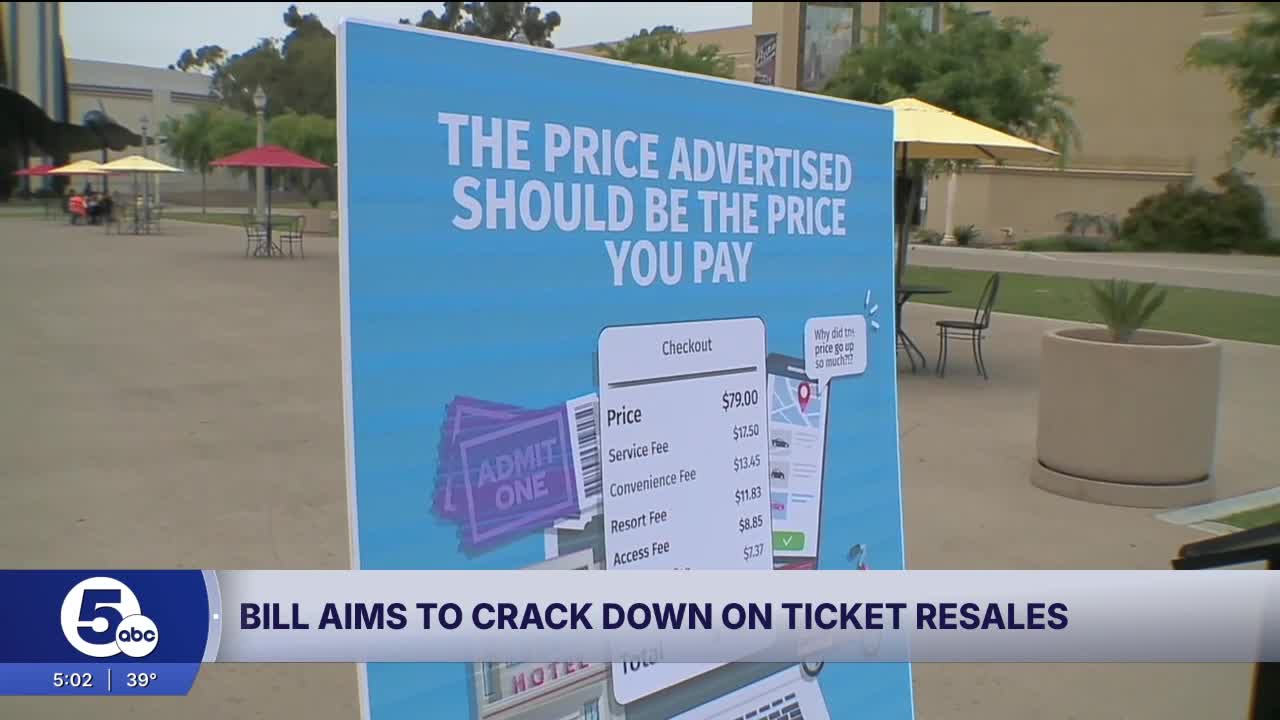



COLUMBUS, Ohio — Ohio lawmakers are trying to hold companies like Ticketmaster and StubHub accountable for "deceptive" practices, as local theatres share that resellers have hurt their businesses and the public trust.
"It is very essential for our community, especially in rural areas, because a lot of times, the access to arts and culture — it's hard to come by," Tuscarawas Arts Partnership's Wilma Mullet said.
What should’ve been a sold-out show to see a local production of Annie, where tickets are $15, could be empty due to ticket scalpers — companies or buyers who purchase tickets and sell them on a third-party site, jacking up the prices.
"If a patron sees those prices, which is usually 300 to 400 bucks, they're automatically gonna think, 'Well, I can't enjoy a show,'" Mullet said.
It’s a problem that Mullet said she and other theatres deal with.
"We, in chargebacks alone, lost over $100,000 in Nutcracker," Sue Porter with BalletMet said. "That's over a 2.5 week period in December."
State Rep. Mark Hiner (R-Howard) and a small group of lawmakers have proposed House Bill 563, which aims to keep tickets affordable by requiring more transparency for resellers.
"This legislation doesn’t just go after small-time scammers, it also holds large corporations accountable when they engage in misleading or unfair tactics," Hiner said during sponsor testimony. "Whether it’s an independent reseller or a billion-dollar company, everyone should play by the same fair rules."
Among the dozens of provisions, it would require the total price to be included upfront, mandate the seller disclose if it isn’t affiliated with the official platform and allow the state to go after scammers.
"It protects Ohioans from misleading pricing and high-pressure sales tactics," Mullet testified.
The Cincinnati Shakespeare Company, Cincinnati Arts Association, Renaissance Performing Arts Association in Mansfield and Cincinnati Symphony Orchestra subsidiary Music and Event Management, Inc. all provided testimony in favor of the bill.
Cleveland's Playhouse Square, the United States' second-largest performing arts center after NYC's Lincoln Center, also urged the lawmakers to pass the bill.
"When consumers are misled by deceptive ticket listings or excessive hidden fees, they often blame the show, the venue, or the arts experience itself," Playhouse Square CEO Craig Hassall wrote. "This discourages repeat attendance and can undermine efforts to grow audiences — especially at a time when arts organizations across the country are working hard to rebuild attendance and engagement."
Controversies
Online ticket brokers have been a focus of the Federal Trade Commission in recent litigation.
In May, the FTC enacted a rule about unfair or deceptive fees on tickets.
In September, it, along with seven other states, filed suit against sellers Live Nation and Ticketmaster, alleging pricing problems, ignoring individual ticket-buying limits and more.
RELATED: Lady Gaga ticket problems hit daughter, dad
Back in 2024, Attorney General Dave Yost joined a lawsuit against the pair for "illegal monopolistic practices." The lawsuit remains, even as the DOJ settled its claims.
“Ohioans deserve transparency, fair prices and vibrant competition," Yost said in 2024. "This lawsuit is a critical step toward dismantling the stranglehold that Live Nation and Ticketmaster have on the market and ensuring that consumers and businesses are no longer at their mercy.”
Live Nation continues to be in the public eye due to this lawsuit, and recently revealed court documents show that two employees bragged about being able to "gouge" customers.
Sellers StubHub and Viagogo are currently under investigation by British authorities for their "mandatory additional charges applied when consumers buy tickets — and whether or not these fees are included upfront."
In defense of resellers
We reached out to the most-used ticket reselling websites: Live Nation, Ticketmaster, StubHub, Vivid Seats and SeatGeek.
"We applaud Ohio lawmakers for advancing reforms that protect fans and artists, including a ban on speculative ticketing, deceptive websites, and bots scalpers use to take tickets from real fans. No one should be able to scam fans by listing tickets they don’t have or by pretending to be legitimate ticket sellers," a spokesperson with Live Nation, which owns Ticketmaster, said.
StubHub declined to answer the questions, and none of the other companies responded to comment. Brian Berry with the Ticket Policy Forum, which says it represents "America's leading online ticket marketplaces: StubHub, SeatGeek, Vivid Seats, TickPick, Gametime and Events Ticket Center," reached out with a statement.
“Our members' goal is to help fans easily access the live events they love, and that’s the bar we judge any legislation against. While we support this bill’s goals, the current version comes up short. We are working with the bill sponsor and interested parties to ensure this proposal fits fans’ needs for events of all sizes. We hope that our input is reflected in the bill, making it easier for Ohioans to root for their favorite team or attend events at small and large venues they love,” Berry said.
Case Western Reserve University business professor Michael Goldberg explained that resellers do play a role in the local economy.
"Some folks like to wait till the last minute to sort of make a decision," Goldberg said.
It's about supply and demand, he added. Sometimes, the official website is sold out.
"It’s smart, to some degree," the professor said. "Investors in seats, individual buyers are going to go in and take all the seats and then try to get more money on the secondary market later."
Moving forward
Mullett says the legislation isn’t meant to hurt last-minute buyers, but protect the actual theatres from losing business and trust with their community. A major challenge is with fake websites that mimic her coalition members'.
"Some of these websites go as far as copying venue logos, mimicking website layouts and using urgency tactics like 'Tickets selling fast' or 'Trusted site' messaging to create false credibility," she added.
Right now, Mullet can only report the sites to Google, but not much changes, she said.
House Speaker Matt Huffman (R-Lima) gave an early stamp of approval on the idea, noting that "there should be clarity" on what fees are because sometimes "it's not transparent and borders on fraud."
House Technology and Innovation Committee Chair Thad Claggett (R-Licking County), who was animated during the hearing on Tuesday, addressed Mullet's struggles with fighting third-party websites.
"Wow," Claggett said. "What a pain."
By shining a spotlight on scalpers, officials aim to keep the stage clear for fans.
"Would you say that this legislation helps make the arts, and your program, even more accessible?" I asked Mullet.
"It does," she responded. "It's definitely a step forward for that because it helps create that transparency that's needed."
Follow WEWS statehouse reporter Morgan Trau on Twitter and Facebook.
