


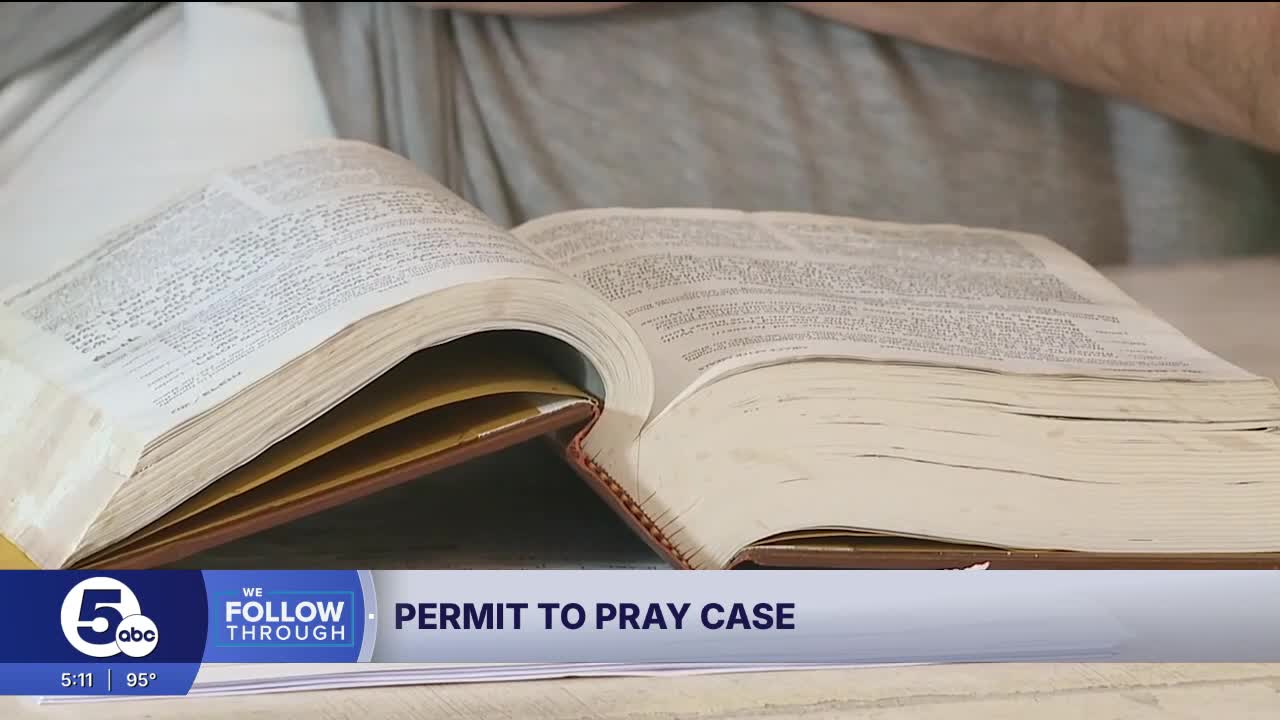


UNIVERSITY HEIGHTS, Ohio — The U.S. Supreme Court will review a religious discrimination case from University Heights, where a man said he was told by the city that he needed a permit to pray.
Daniel Grand filed a federal lawsuit in 2022 after city officials told him he needed a permit to have friends over for prayer in his home.
"People have a right to pray to God because they want to, and they shouldn't be told by the government that they can't without a permit," Grand told us.
As an Orthodox Jew, Grand is restricted from driving on Shabbat, and because his synagogue was too far to walk, he wanted to have a minyan, a group of at least 10 men, over to pray.
The city sent him a cease-and-desist, claiming he was attempting to operate an illegal synagogue in a residential area. Now, years later, he is still fighting — this time, in front of the nation's highest court.
RELATED: University Heights man files lawsuit claiming city violated his rights to host home prayer group
"They were attempting to tar and feather me, and it didn't work," Grand said Wednesday. "It feels like we're making progress."
University Heights and its attorney didn’t respond to our interview request, but previously argued in court that neighbors say “Grand understated the size of his proposed gatherings,” and “his proposed use would create traffic, fire and parking issues.”
Grand had advertised the event online, as well as over email to a dozen people. He then invited people, over email, to "spread the word" and bring friends, the court documents state.
"A legitimate concern if something like this becomes too big, too unwieldy, too many people, creates various hazards," Case Western Reserve University law professor Jessie Hill said.
The city pointed out that Grand had originally applied for a permit to make his home “a place of religious assembly,” but before a decision was reached, he rescinded his proposal, saying the process was unfair. That is why the courts have sided against him, Hill explained.
"The city is trying to argue that it's just too early for the court to make a decision because there is no ultimate decision by the city to rule on," she said.
The appellate court agreed. This case could go further, Hill added.
"It may well come to this question of whether the city can require a permit for this kind of use," she said.
Grand is framing his case as a broader issue of First Amendment rights and whether a permit is needed to hold a prayer group.
"There is no place for a government between you and your Creator," Grand said. "If you want to talk to God directly, there should be no intermediaries whatsoever."
The case won’t be heard until at least the fall, but over the past several years, the Supreme Court has been very sympathetic to religious groups claiming discrimination.
The Alliance Defending Freedom, which former Attorney General Dave Yost works for, is part of Grand's legal team.
News 5 covered a separate controversy in University Heights and Orthodox Jewish places of prayer in 2021, after the city issued a restraining order to the residential Aleksander Shul, or synagogue, for allegedly violating its occupancy permit, setting a limit of 36.
Follow WEWS statehouse reporter Morgan Trau on Twitter and Facebook.
