


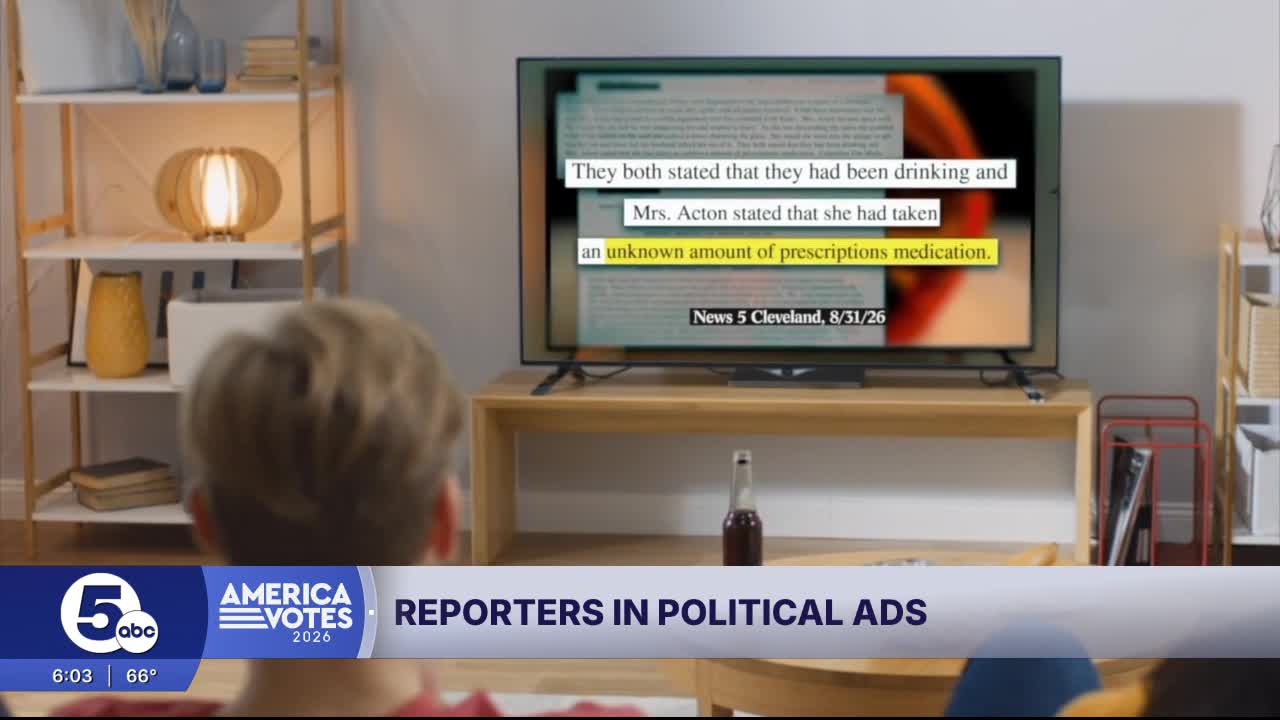


COLUMBUS, Ohio — Not only are local television stations required to air campaign ads, even if they are misleading or contain lies, but candidates can also clip news reports for their own agenda.
TV, streaming and social media users have been bombarded by incessant political ads, oftentimes videos that contain clips from news reports.
As one of our political reporters, I have appeared in at least three different attack ads in this cycle. Viewers have noticed, and I have received a lot of questions about why a specific ad, airing nationally during the OSU-Texas game, used my voice and my reporting.
It was a pro-Vivek Ramaswamy ad, one bringing up Democrat Dr. Amy Acton's 2019 domestic disturbance.
The truth is, we didn’t know about it. And it's completely legal for it to air.
Here's how it works.
Federal law allows campaigns to use news reporting under the fair use doctrine, which Case Western Reserve University Elections law professor Atiba Ellis explains allows candidates to use copyright-protected work without licensing it.
"The campaigns are using them for speech that is involved in the political process," Ellis said. "These snippets can be used in compliance with First Amendment law and copyright law, because the campaigns aren't using these ads to make money."
We've started a series fact-checking ads, and I’ve gotten the same question over and over: if these ads are misleading or even flat-out lying, why are you airing them? Well, the Federal Communications Commission (FCC) says we have to.
RELATED: Did Acton shut down Ohio? Where did Ramaswamy go to school? We fact-check ads.
"The media can't act as a censor precisely because television, radio, newspapers all serve as forums," Ellis said. "The media is obligated to air ads as part of ensuring a robust debate."
Candidates and reporters have little to no legal recourse if something is taken out of context or if an ad isn't telling the whole truth.
"A lot of folks at home don't think about the fact that there is no defamation in commercials," Democratic candidate for governor Dr. Amy Acton said. "People can lie."
The FCC doesn’t monitor political ads for accuracy, just for disclosure on who created the ad.
RELATED: Dr. Amy Acton responds to attack ads about alcohol, COVID death
Candidates can sue, civilly, to get something off the air, but by the time that a lawsuit is filed and a decision is reached, it's far after Election Day.
Still, strategists say both sides need to be strategic about getting their message across.
"Whether it's a 30-second commercial or a 100-second news clip, it's hard to get in all the history and explain all the nuances," said Terry Casey, GOP strategist.
When you are watching ads on TV, make sure to take them with a grain of salt.
If you have seen a campaign ad that you want me to fact-check, email or message me on any social media platforms. Here are the ones we have completed already:
- Is Acton is an alcoholic?
- Did Acton contribute to the death of an elderly woman?
- Did Acton shut down the state?
- Where did Ramaswamy go to school?
Follow Statehouse and Columbus bureau reporter Morgan Trau on X, Instagram and Facebook. Email her at Morgan.Trau@wews.com.
