


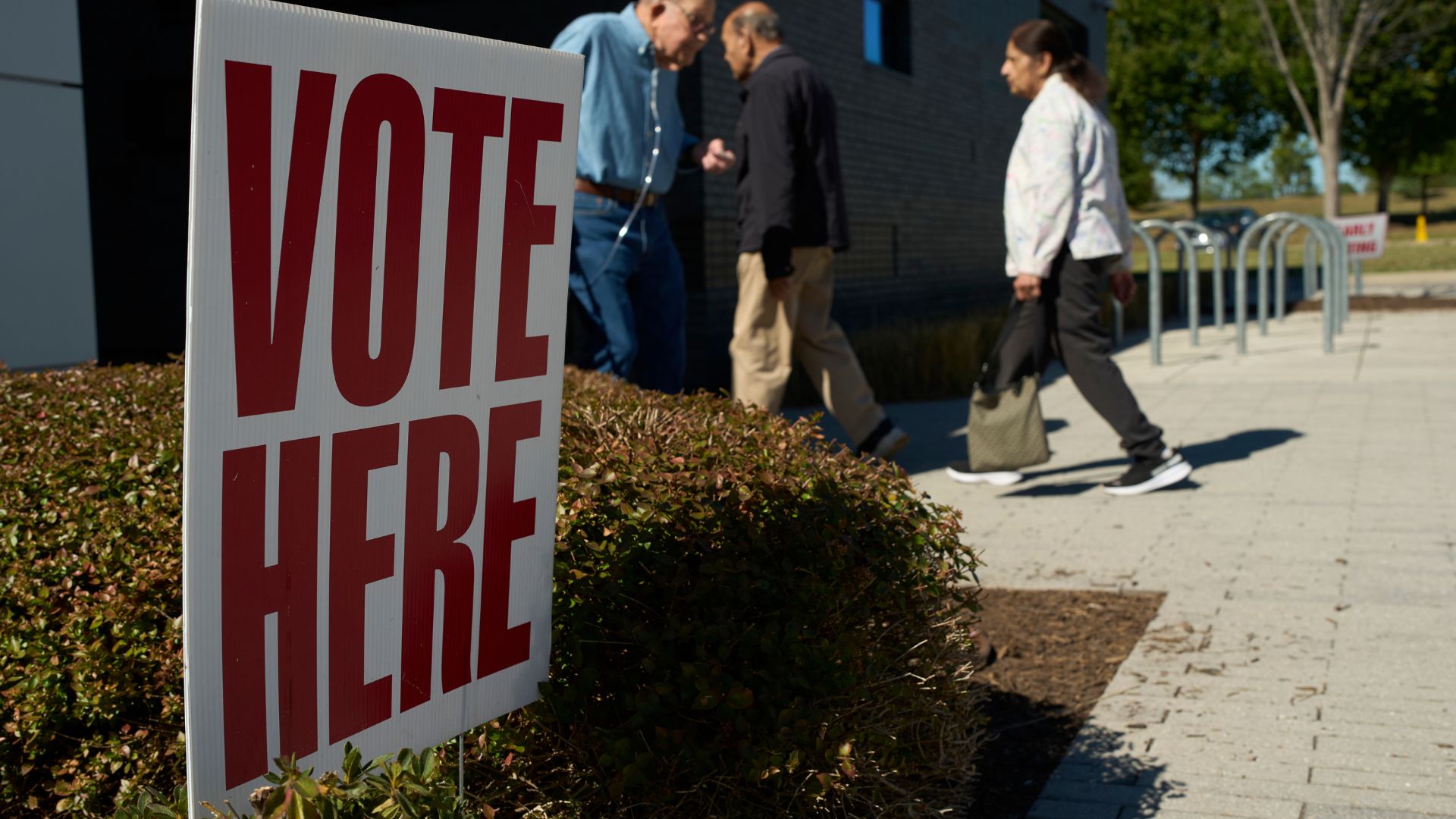


On Election Day, around 100,000 precincts will be up and running, filled with election officials, volunteer poll workers, and potentially some election monitors or observers.
Election monitoring has long been part of the US electoral system. Avery Davis-Roberts, the director of the Democracy Program at the Carter Center said, "It's a great way for people to get engaged in the process, right? To understand how elections work, to really sort of learn the nuts and bolts of what goes into running an election.”
For 2026, there are a few different types of observers voters could see at their polling site. People there to observe or monitor the election will largely fall a handful camps – partisan poll watchers, nonpartisan observers, volunteers, DOJ election monitors and congressional observers.
RELATED STORY | Federal agents are ending up at polling places for reasons unrelated to the election
In every state except West Virginia, political parties or candidates are allowed to send poll watchers to voting sites.
“This does mean ensuring the integrity of elections... but it also means ensuring that their own supporters can vote and from time to time, challenge challenging the eligibility of potential opposition supporters,” explained Mollie Cohen, an associate professor of political science at Purdue University.
What exactly partisan poll watchers can do depends on the state. But in 32 states, they can challenge the eligibility of a voter. As Cohen explains, the requirements for those challenges vary by state: "For example, in North Carolina, poll watchers who challenge the eligible eligibility of a voter have to submit an oath under threat of perjury and perjury to an election official in the state of North Carolina is a felony offense. In a place like Nevada, Election Day challenges of voters have are only considered valid if they're based on direct personal knowledge.”
Advocacy groups and nonprofits, like the Carter Center, also organize and train poll watchers. Depending on state rules, they could be inside or outside the polling place, but they're there purely to observe and help improve transparency.
“All of the observers that you might see have to abide by state law. They shouldn't be interfering in the process. There shouldn't be anything that makes voters feel unsafe or intimidated,” said Davis-Roberts.
Also, the Department of Justice is deploying about 1,000 election monitors across all 50 states. It’s a notable increase from the last midterm election, where the department deployed only 388 election monitors in 2022. In a statement to Scripps News, the DOJ said: “Every monitor will merely observe and report any potential violations of federal law to the Department, which will be reviewed after Election Day.”
MORE ELECTION NEWS | Why Social Security could become a major issue for the senators elected in 2026
Two other types of people voters might see. Volunteers might be outside the ‘electioneering line’ providing sample ballots, information on issues or assisting voters stuck in a long line. You also could see congressional election observers. They are allowed to see every part of the voting process and their observations could even come into play if a race is contested.
And election observation will extend beyond November 3. In many states, observers can watch the ballot counting and the procedures for processing mail-in ballot, which is officially called canvassing.
