

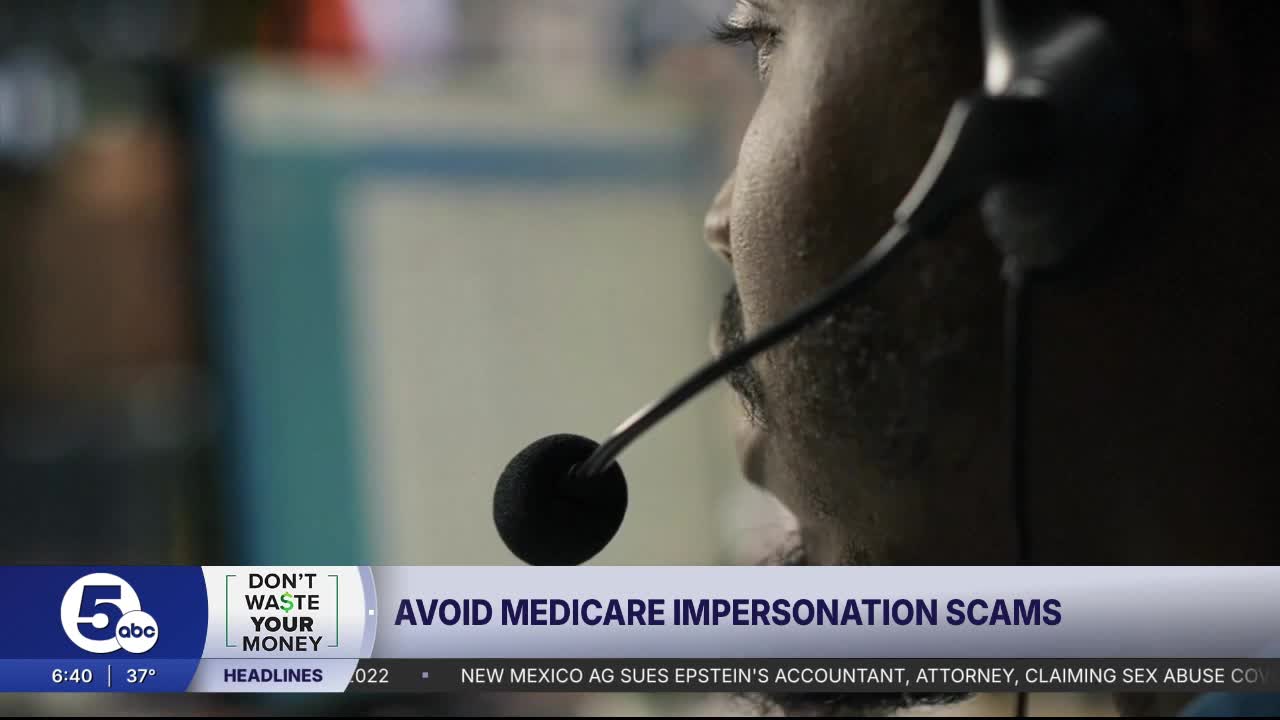


CLEVELAND, Ohio. — Open enrollment for Medicare is now underway, and over the next couple of months, millions of Americans will be targets for scammers.
Nomorobo, a spam-call and text-blocking service, has been tracking Medicare impersonation scam activity and found that call volume reached 104 million nationwide in May.
That early activity, months ahead of enrollment season, signals that beneficiaries should expect a massive wave of fraudulent calls over the next several weeks.
As your consumer reporter focused on scams, I want to go beyond the headlines about increased Medicare impersonation activity and arm you with information about the top schemes scammers are using to steal your money and personal information.
First: Immediately hang up on callers who threaten a loss of coverage unless you update your Medicare number, Social Security number or banking information.
Second: Delete texts or emails claiming there is a problem with your account and that you need a new plastic card with a chip. Real Medicare cards are made of paper.
Third: Ignore sponsored ads in search engine results that appear to be legitimate.
Scammers pay for fraudulent ads that appear at the top of search results.
I spoke with Katie Hills at the Better Business Bureau of Greater Cleveland, who says scammers use fear, panic and pressure to act quickly in their communications.
"But you always have the power to hang up, right? Like, you always have the power to say, hey, not right now. I'm going to go do some checking of my own, and then you don't have to call people back if you don't want to," Hills said.
Last year, according to the Federal Trade Commission, Americans lost roughly $920 million to government impersonation scams — a category that includes Medicare and Medicaid fraud.
