

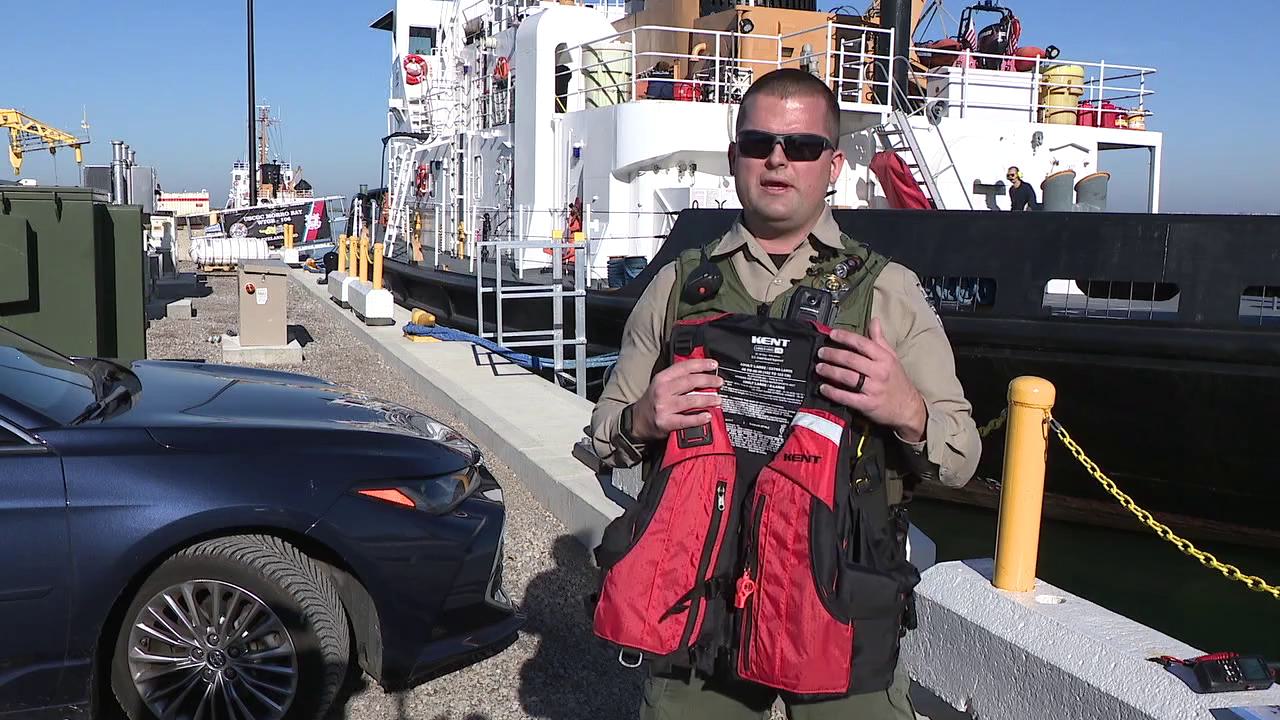


CLEVELAND — As temperatures drop and Lake Erie enters its seasonal transition, the Ohio Department of Natural Resources and the U.S. Coast Guard urge anyone heading out on the water to take cold water seriously.
Water temperatures on Lake Erie have fallen below 50°F. Despite the potential for calm, sunny days, ODNR Lt. Chad Kozan said activity on the lake remains high.
"If you drive by a marina, the boats are all wrapped up, you know, done for the season, but there's still a lot of fishermen out there and we're going to get into our waterfowl season where we're going to be going out in all types of weather," Kozan said.
Three walleye tournaments are currently underway on the lake, and waterfowl season is approaching. ODNR is urging anyone heading out to check the agency's website for a full list of required boat equipment and to ensure all passengers wear life jackets.
Kozan said a life jacket can be the difference between life and death if someone falls overboard — and the danger begins the moment a person hits the water.
"If you ever take a shower and it's a really cold shower and you get that initial cold shock where your body tenses up and you kind of go, 'Whoa' — that's when people start to suck in a little bit of water and that's when the drowning process starts," Kozan said.
The danger is not limited to those on boats. As temperatures continue to fall and the lake begins to freeze, the U.S. Coast Guard is also preparing for ice rescue season.
Boatswain's Mate Sierra Ortiz said the transition is already underway.
"We are in the transition from search and rescue to ice rescue," Ortiz said.
The Coast Guard is preparing cold water rescue equipment, including rescue slings, blankets, blizzard bags and a hypothermic recovery capsule. Ortiz said monitoring the forecast before heading out is critical.
"If it's going to be super cold out there and there's a sea state, then they shouldn't go out," Ortiz said. "Water robs the body of heat 25 times faster than air."
Anyone planning to spend time on or near Lake Erie is encouraged to visit the ODNR website for safety guidelines and required equipment checklists before heading out.
This story was reported on-air by a journalist and has been converted to this platform with the assistance of AI. Our editorial team verifies all reporting on all platforms for fairness and accuracy.
