


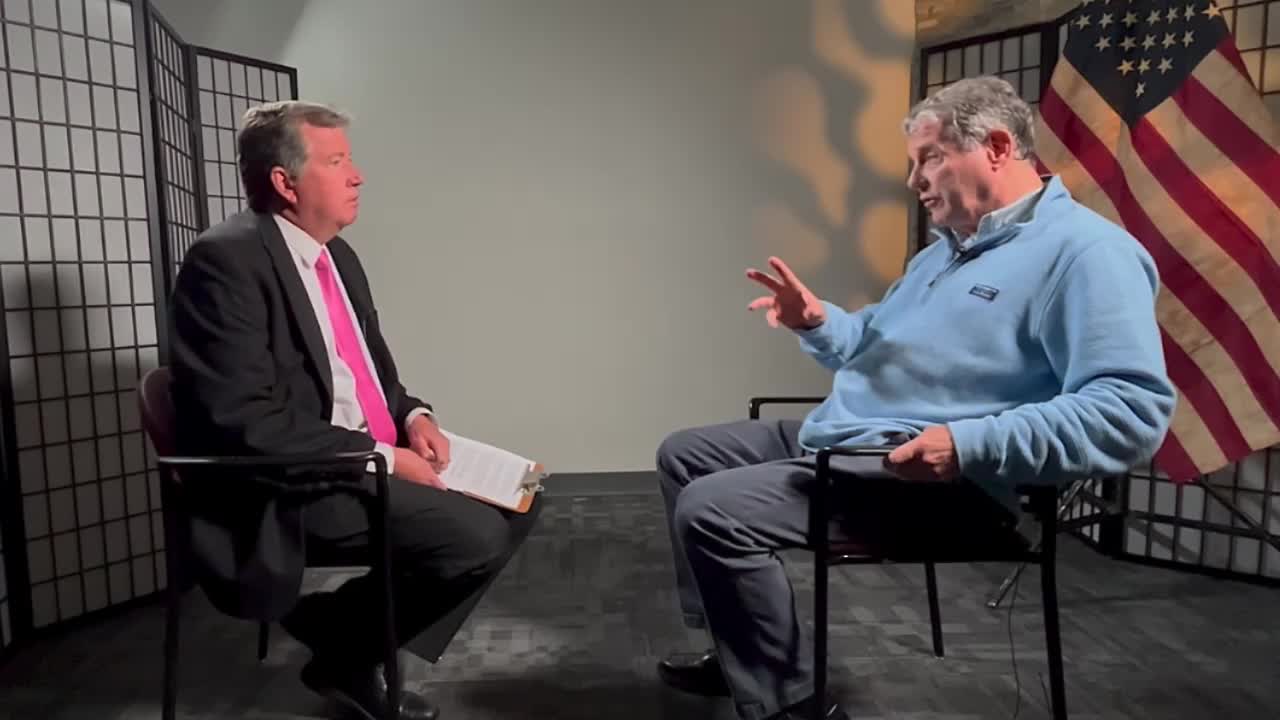


CLEVELAND — As voters learn about those running for office in fast-moving 30-second increments squeezed between their favorite television shows or sports matchups, we at News 5 will take time to catch up with the major party hopefuls as they travel the state to talk about what they're seeing and hearing.
On Wednesday, Democrat Sherrod Brown, who is looking to unseat Republican Senator Jon Husted, stopped by the News 5 studios before a meeting with local union leaders in Parma.
While traditional campaigning finds voters gathering in a room to hear a candidate speak, Brown said he's focused this year on flipping that script and listening to voters. And as he crosses the state?
"I hear people talking about, always about prices," Brown said. "I go to a farm, which I've done a lot over the last year or so, and talk to the farmer who is paying twice in fertilizer costs what he did a year ago, almost twice in diesel prices. It costs close to $1,000 to fill up your combine now. That works its way through higher grocery prices, higher gas prices, higher diesel prices and people want a change."
Brown said the feeling is definitely different than what he experienced two years ago, when he fought a losing battle for a fourth term in the Senate and lost to Bernie Moreno.
"Yeah, it's a different tone because people have always recognized the system's rigged against workers and I don't just mean union workers," he said.
The race is one of the most closely watched and highly funded in the country, with Democrats eyeing the seat as a path to regaining control of the Senate. If that happens, Brown said the priorities would be simple.
"Well, the first focus needs to be: how do we fight against these price increases? The first thing we should do is fight to end the war. The second thing we should do is fight to end the tariffs. And one thing, maybe not directly, but too many members of Congress are making money by stock trades and $600 million in stock trades last year," said Brown. "If you're running for office and you can't promise you won't do stock trading, you can't promise you won't be a lobbyist when you leave, you got no business holding public office. So that's not the highest priority, but that should be a priority. But it's ending the war, ending the tariffs and then focusing on how do we cut costs directly for middle-class, working-class people who are struggling."
After President Trump's election in 2016, Brown sent him a letter expressing a desire to work together on trade policy, as both opposed trade agreements like NAFTA and TPP. Brown worked with the administration to make changes through the USMCA. Brown has supported tariffs, but only when they are specifically targeted.
"In those days, about twice a year I would go in front of the International Trade Commission and testify on behalf really of Ohio jobs. In one case it was Turkey, in another case it was China, in a third case it was Mexico, ones that were cheating on a specific product and I would support a short-term definitive tariff that would level the playing field," he said.
"We gotta have a better policy. Yeah, I did support the USMCA, I helped to write it, I negotiated directly with the White House on making sure that it supported workers," he said. "It's an improvement over what it was; I did vote for the agreement. But most of these trade agreements, the biggest problem is that they fail to have workers at the table representing American workers and how to do this trade policy that supports workers in the middle class, not this sort of trickle-down whatever billionaires want out of this trade policy and whatever New York financiers want out of this trade policy."
