




COLUMBUS, Ohio — Ohio lawmakers are trying to fight for regulations on ticket resellers as scalpers continue to upcharge hundreds of dollars for local theatre tickets. Sometimes, those seats don't even exist.
The Renaissance Theatre in Mansfield is opening Guys and Dolls in August, and from ticket prices, it looks like they are in high demand.
"I think more than ever we find ourselves leaning into connection, you know, being able to experience something together, to share something together," CEO Chelsie Thompson said.
But the century-old performing arts center is losing money, she said. They lost $60,000 in 2025 due to scalpers, which are companies or buyers who purchase tickets and sell them on third-party sites, jacking up the prices.
On their official website, tickets range from $26 to front row at $53.
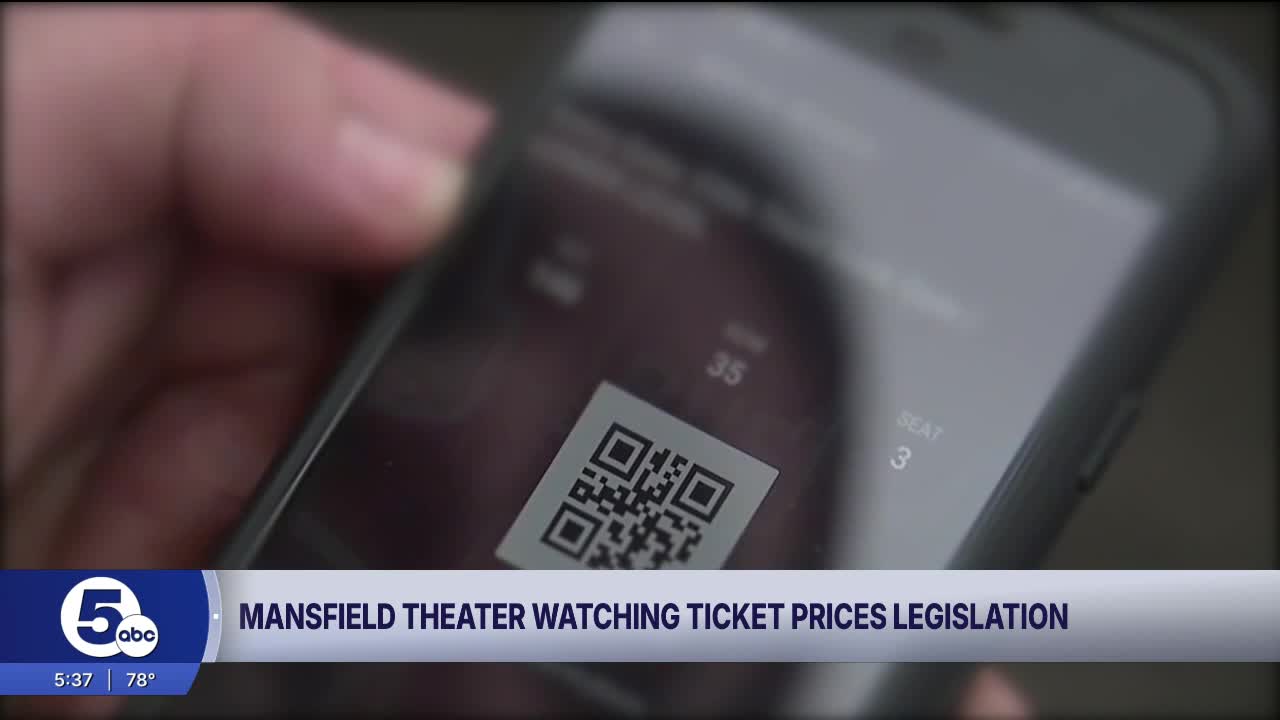
But if a theatre-goer happens to get tickets on Vivid Seats, one of the largest reselling companies, they could be paying 10 times the price at $519 for worse seats. Other seats were in the hundreds, including several at more than $400 and $500 in the balcony, which isn't even available to sit in.
Another site, Tix4Cause, is selling a seat in Row X, a row that doesn't exist, for $750. Other seats were in the $500s and $600s that also were in rows and areas that don't exist. The theatre's seats only go to Row U, according to Thompson, their seatmap and the box office.
Other reselling sites also had upcharges, but none as expensive.
"It's maddening, especially for an organization like ours that focuses so heavily on access and having tickets that people can afford," Thompson said.
It's not just Mansfield that this is happening to. Dozens of organizations of all sizes testified, like Cleveland's Playhouse Square, the Cincinnati Shakespeare Company, the Tuscarawas Arts Partnership and BalletMet.
"We, in chargebacks alone, lost over $100,000 in Nutcracker," Sue Porter with BalletMet said. "That's over a 2.5 week period in December."
But unlike the cast of Guys and Dolls, the House lawmakers are trying to rock the boat, passing legislation that aims to keep tickets affordable by requiring more transparency.
RELATED: Ohio lawmakers aim to put guardrails on Ticketmaster, resellers
"When you get defrauded on a ticket purchase, it doesn't really matter what your political beliefs are," state Rep. Mark Hiner (R-Howard), who sponsored House Bill 563, said. "You're just frustrated, and you're looking for a solution."
Among the dozens of provisions, it would require the total price to be included upfront, mandate the seller disclose if it isn't affiliated with the official platform, stop sites from selling tickets they don’t actually have, and allow the state to go after bad actors.
"It's putting some guardrails on, primarily, transparency in disclosing who you are, what you're selling, making sure you're being transparent about the price you're displaying," the lawmaker said.
He was stunned by Mansfield's predicament.
"Consumers need to be paying attention, and they need to make sure they don't need to pay $700 for a ticket when they maybe could buy it for $53," the lawmaker added.
We reached out to both Vivid Seats and Tix4Cause to ask for explanations.
Vivid Seats, a few hours after receiving our requests for comment, took down the entire Guys and Dolls event from their website. After that, they responded, but didn't address the question.
"As a marketplace, we don't set the prices; those are set by sellers. The secondary market is in place to give consumers more options. Unlike the primary market, we do not require any price minimums or 'floors' so fans can find some of the best deals on our platform," a spokesperson said.
We asked the company to address my question, including why they are allowing seats that don't exist to be sold. Once again, they didn't respond to the topic.
"The listings sold through our platform are legitimate, and we invest heavily to protect our customers and take pride in making ticket resale safer by virtually eliminating ticket counterfeiting and providing our customers with unparalleled protection," the spokesperson said.
The company neglected to respond to our further attempts for answers.
The Ticket Policy Forum, a trade group representing the leading sellers like Vivid Seats, StubHub and SeatGeek, had previously told us that while they “support this bill’s goals, the current version comes up short.”
Live Nation, which owns Ticketmaster, cheered the lawmakers for advancing reforms.
"We applaud Ohio lawmakers' efforts to protect fans and artists with reforms, including a ban on speculative ticketing, deceptive websites, and the bots that scalpers use to take tickets from real fans. No one should be able to scam fans by listing tickets they don’t have or by pretending to be legitimate ticket sellers. The real issues in ticketing are predatory resale sites and scalpers who scam and siphon millions from fans while contributing nothing to the event experience," a Live Nation spokesperson said.
Live Nation has, in recent years, started to feature all-in pricing, meaning it shows all fees upfront. While some event centers say this is a good thing, it comes as federal regulators have been investigating ticketing companies like them for deceptive practices.
Case Western Reserve University business professor Michael Goldberg explained that resellers do play a role in the local economy.
"Some folks like to wait till the last minute to sort of make a decision," Goldberg said.
It's about supply and demand, he added. Sometimes, the official website is sold out.
"It’s smart, to some degree," the professor said. "Investors in seats, individual buyers are going to go in and take all the seats and then try to get more money on the secondary market later."
While the bill passed the House unanimously, StubHub submitted testimony saying that the bill is too restrictive, and could "penalize good-faith listings" by requiring sellers to, among other disclosures, explicitly state which seat they own.
"Certain legitimate sellers—including season-ticket holders and individuals with verified presale access—often do not possess specific seat assignments at the initial point of sale," Shaun Chapman, StubHub's senior manager of government affairs, wrote.
But this legislation is beneficial to all the small theatres that are losing trust with their communities, Thompson said. Having patrons be overcharged for a seat that doesn't exist has been a challenging battle for the theatre to overcome.
"Being able to minimize that is a huge step, having the guardrails in place, having some sort of repercussions," she said.
That way, fans don’t need just luck to make sure they see the musical classic.
Follow WEWS statehouse reporter Morgan Trau on Twitter and Facebook.
