


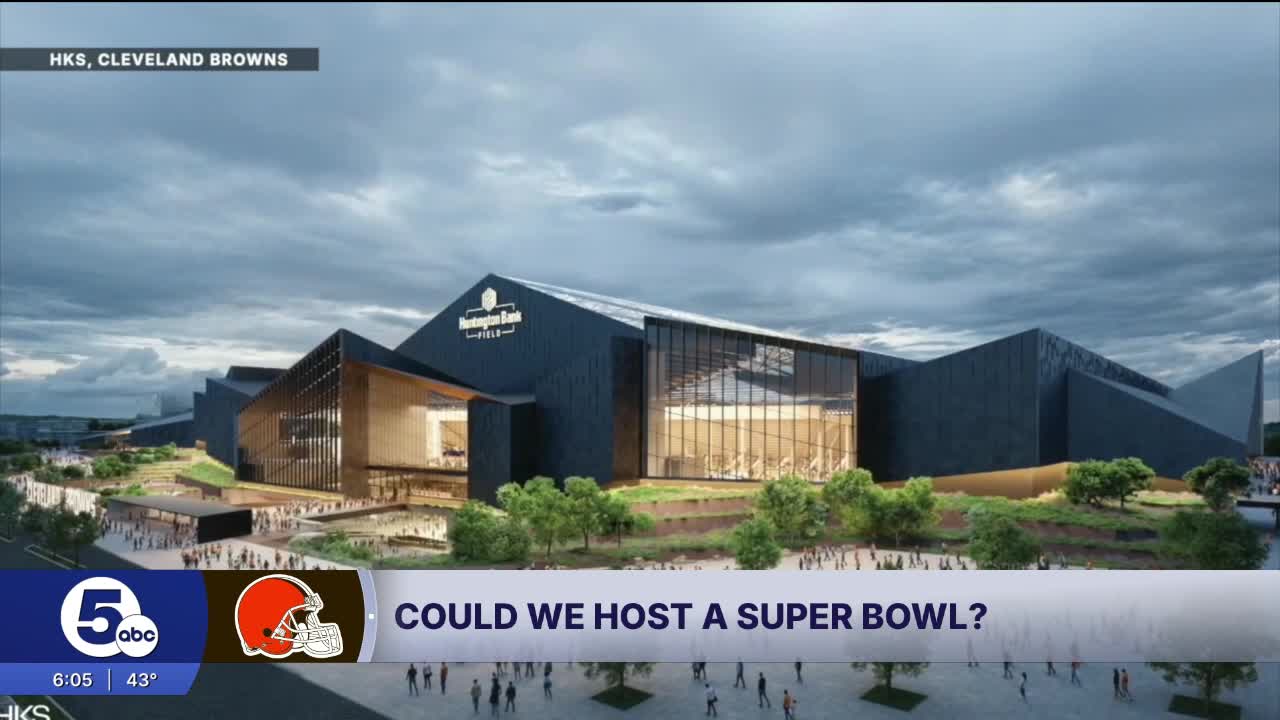



COLUMBUS, Ohio — Ohio Gov. Mike DeWine is hopeful that Ohio can host a Super Bowl at the new Cleveland Browns stadium, but said an NFL draft would likely come soon.
"The commissioner certainly hinted very strongly yesterday that the Browns will be getting the draft back in a relatively short period of time," DeWine said Friday. "You saw what happened in Pittsburgh with 350,000 people — that's a big deal."
A draft would bring in people from outside the state, too, he said.
"I think that's probably the next thing we will see, probably before the Super Bowl," he said, to laughs. "We're optimistic about a Super Bowl eventually, too."
But does Cleveland have the infrastructure for a Super Bowl? NFL Commissioner Roger Goodell said the area needs more hotels — about 60,000 rooms total.
The area has just over 22,000 hotel rooms, according to the latest market report from the Newmark real estate brokerage. There are a handful of new projects on the drawing board, including two hotels planned for the suburban stadium-district site.
"Do you think that there should be a greater investment in that to try to get a Super Bowl here?" I asked the governor.
"Well, I don't think the government should be investing in hotel rooms," he responded. "I think this is something, though, that certainly the private sector is looking at."
DeWine is trying to stop the government funding of private projects, as he wasn't on board with the lawmakers' Brook Park proposal to begin with.
Part of the funding plan for the stadium is to use taxpayers' unclaimed funds. The $600 million state grant for the stadium is still in limbo, tied up in a court fight over the state’s move to grab unclaimed funds for pro sports facilities and other projects. Ohio’s holding billions of dollars of misplaced money from people’s old bank accounts, insurance payouts, utility deposits and other sources.
DeWine is, once again, pushing his idea to help fund stadiums by raising the sports betting tax.
"If the courts tell us definitively that that is not legal, then we have to go back and look at the other choices," he said. "The most logical choice is to go to the tax for our sports gaming companies... We don't want to be taking that money and more away from schools."
As the construction moves forward, public funding for the project remains up in the air.
Follow WEWS statehouse reporter Morgan Trau on Twitter and Facebook.
