


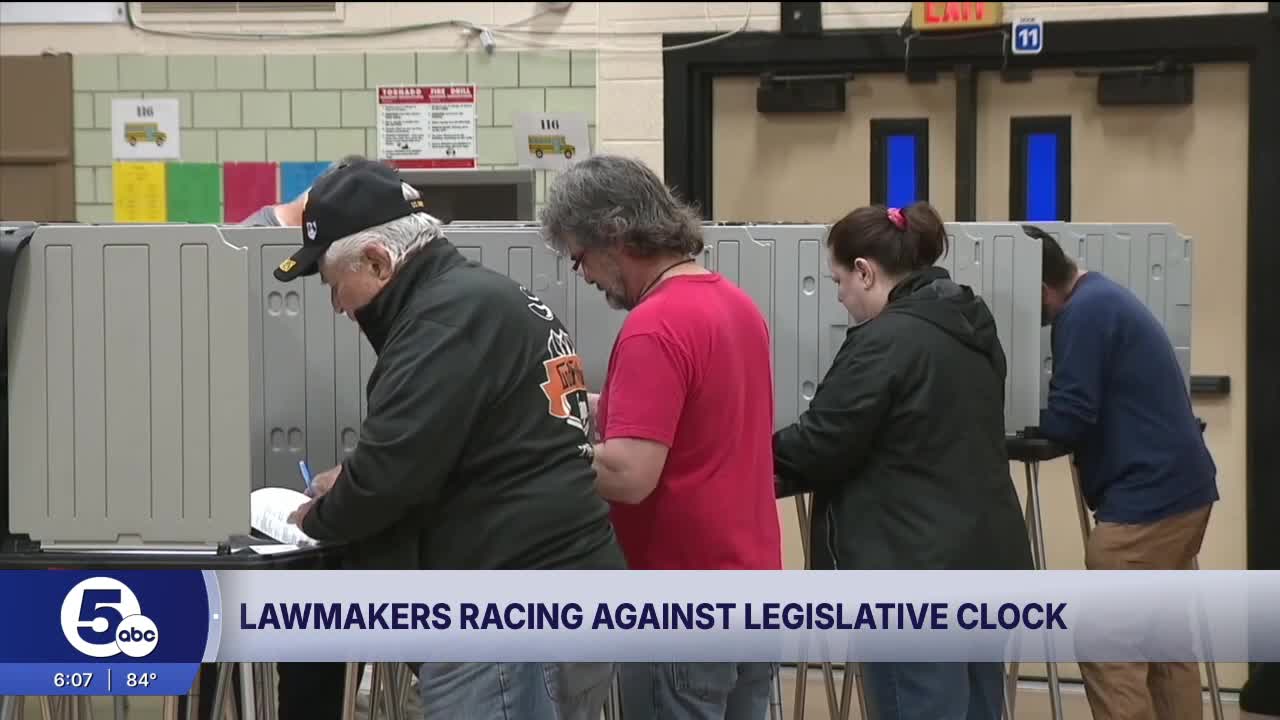



COLUMBUS, Ohio — Ohio Republicans have put a constitutional amendment on the November ballot that would require a photo ID in order to vote in person, a policy that is already in state law. In addition, they passed legislation that would require a photocopy of an ID in order to vote by mail.
This is a developing story and will be updated.
Although photo ID is already the law, Senate Joint Resolution 10, if approved by voters, would enshrine it in the state constitution.
A future general assembly could reverse the law, unless it's in the constitution, Senate President Rob McColley (R-Napoleon) said. Photo ID for voting went into effect in 2023.
"This will be, if not the strongest, one of the strongest election integrity, voter identification, photo identification measures," McColley said.
RELATED: Ohio Senate passes resolution to put voter photo ID amendment on Nov. ballot
To be clear, there is no evidence of widespread voter fraud in Ohio, even when photo ID wasn't the law. Thousands of audits have proven that.
Democrats say that this is an effort to increase Republican turnout in the midterms, one that strategists say will be better for Democrats than 2024.
"It's already the law, it's not going to change a single person's life," House Minority Leader Dani Isaacsohn (D-Cincinnati) said. "And we're begging, begging not to take away Medicaid and healthcare coverage. That's how we're spending our last day before we break."
It's not the first time the GOP has put on a "ballot juicer," some opponents said. In 2022, another midterm year, Republicans put a proposal on the ballot that bans noncitizens from voting in all Ohio elections. Noncitizens already couldn't vote in state or federal elections.
Conservative activists don't like the resolution either, many testified.
"The amendment's fatal flaw is that it fails to provide comparable safeguards to the 20% who vote by mail," Butler County resident Gail Niederlehner said.
Niederlehner is against the proposal because she said it doesn’t do anything for actual election integrity, which, to her, is requiring photo ID for absentee ballots.
S.J.R. 10 does not require photo ID for absentee ballots; however, it allows it as an option. In order to get enough GOP votes to get the resolution to the ballot, lawmakers amended the unrelated House Bill 472.
The original H.B. 472 would waive ID fees for individuals facing homelessness. The new version requires an applicant to provide two forms of ID out of multiple options, including live capture of a photo ID or an electronic signature. People would upload this via a new state portal. They could also mail a photocopy to their board of elections.
"You are preventing not only seniors but people with disabilities, many of whom are veterans, from access to the ballot," Isaacsohn said. "We should be getting more people to vote, not fewer. When you have fewer people voting, that is how billionaires get what they want from state legislatures and from Congress."
State Rep. Brian Stewart (R-Ashville) pushed back on that.
"If you're sick, this bill doesn't apply to you. If you're disabled, this bill does not apply to you. If you're in jail, this bill doesn't apply to you. If you can't work the computer or show your ID, you can stop by the board of elections. If you can't work your phone to show your ID, you can stop by the Board of Elections. If you don't have a copier to make a copy of your photo ID, you can use your phone or go online or go to the Board of Elections," Stewart said.
Follow WEWS statehouse reporter Morgan Trau on Twitter and Facebook.
