



AI-powered scam sites are getting harder to detect — and American shoppers are losing money at record rates. Take our quick quiz to see if you know the warning signs.
A beautiful floral gown in an ad. A shapeless, unwearable rag in the box. Eva Borho's $66 YouTube purchase turned into a costly lesson about how convincing fake online storefronts have become — and she's far from alone.
Online purchase scams now make up nearly a third of all fraud reports to the Better Business Bureau. Find out how well you'd hold up against today's AI-generated shopping traps.
- 30% — Of BBB fraud reports are online purchase scams
- 9 in 10 — Online scam victims lost real money
- $66 — What Eva paid for a 'groundhog' dress
Could You Spot a Fake Online Store?
Five questions. See if you know the red flags AI scammers exploit.
You click a YouTube ad for a $66 dress from a brand you've never heard of. The website looks sleek and professional with glowing reviews. What is the most important next step before you buy?
- Check the URL for misspellings or imitation domains — Smart move. Deceptive sellers often register URLs that closely mimic familiar retailers. A polished design means nothing if the web address is slightly off.
- Read the five-star reviews on the product page — Reviews are one of the easiest things for scammers to fake. AI can generate hundreds of convincing positive reviews in minutes, according to the BBB's Josh Planos.
- Search the company on BBB.org for complaints or warnings — This is exactly what the BBB recommends. Searching BBB.org can surface unresolved complaints, fraud warnings, and patterns of deceptive behavior before you hand over payment info.
- Look at how many photos are on the product listing — AI-generated product photos can look incredibly convincing. The BBB warns shoppers not to trust appearances — polished product images no longer signal a legitimate seller.
A pet supplement company's website lists a Kansas City street address and looks professionally designed. BBB investigators visit that address. What did they actually find?
- A warehouse with the company's logo on the door — No such luck. When investigators arrived at the Kansas City address listed by The Paw Parent, they found no sign of the business — tenants in the building had never heard of it.
- Other tenants who had never heard of the business — Correct. The BBB found that The Paw Parent was 'listed nowhere on the signage' and that it 'seemed very unlikely that that company exists at that location,' according to investigator Josh Planos.
- A shared co-working space with a legitimate mailbox — It wasn't even that. The business had no visible presence at the address at all — a classic tactic for giving a scam operation the appearance of legitimacy.
- A recently vacated storefront — There was no storefront at all. The BBB investigation found the company listed a fake address — and noted that 'a fake company operating out of a fake address' can keep its website active even after complaints are filed.
Eva Borho received a dress that looked nothing like the ad. When she tried to return it, what made the return effectively impossible?
- The company had no return policy listed on its website — The issue was more concrete than that. The seller gave Eva a return address in China and told her shipping would cost $40 to $50 — more than half the dress's original price.
- The return shipping cost to China was $40–$50 — Exactly. Eva was given a China return address and quoted $40 to $50 in shipping — making the return economically irrational on a $66 purchase. This is a deliberate tactic used by overseas scam sellers.
- The package had no return label included — The barrier wasn't a missing label — it was that the return address was in China and the shipping cost alone nearly matched what she paid for the dress.
- Customer service stopped responding to her messages — The source of her frustration was the return cost: $40 to $50 to ship back to a China address. For a $66 purchase, that math doesn't work — which is exactly what scam sellers count on.
The BBB found that before AI, fake shopping websites were easier to spot. What specific red flags did AI help scammers ELIMINATE?
- Slow website load times and broken checkout forms — Technical glitches aren't the main tell the BBB highlighted. What AI changed most was the APPEARANCE of legitimacy — the content, images, and copy that used to give scammers away.
- Awkward wording, poor images, and unprofessional design — Correct. The BBB's Josh Planos specifically identified awkward wording, poor product images, and unprofessional website design as the red flags that AI has effectively eliminated — making today's fake storefronts far harder to detect on appearance alone.
- Missing shipping estimates and no product descriptions — Missing info used to be a clue, but the bigger shift the BBB identified is that AI now helps scammers create polished storefronts, convincing product images, and plausible reviews that eliminate the visual tells shoppers once relied on.
- No social media presence or brand recognition — Social media is actually where many scam ads originate — Eva's fraudulent ad appeared on YouTube. The BBB's concern is that AI eliminates the design and language flaws that used to help shoppers identify fakes.
According to BBB data, what share of online purchase scam victims reported losing actual money?
- About half — roughly 5 in 10 — The number is significantly higher. The BBB's Scam Tracker data shows nearly 9 in 10 people who reported an online purchase scam said they lost money — not just half.
- About 6 in 10 — Close, but the actual figure is higher. BBB data shows nearly 9 in 10 people who reported an online purchase scam lost money — a figure that underscores how rarely victims recover their funds.
- Nearly 9 in 10 — That's right. The BBB's Scam Tracker shows nearly 9 in 10 people who reported an online purchase scam said they lost money — meaning most victims never get a refund or successful return.
- Nearly all — 10 in 10 — Nearly all, but not quite. The BBB figure is 9 in 10 — still a staggeringly high rate that makes prevention far more valuable than trying to recover funds after the fact.
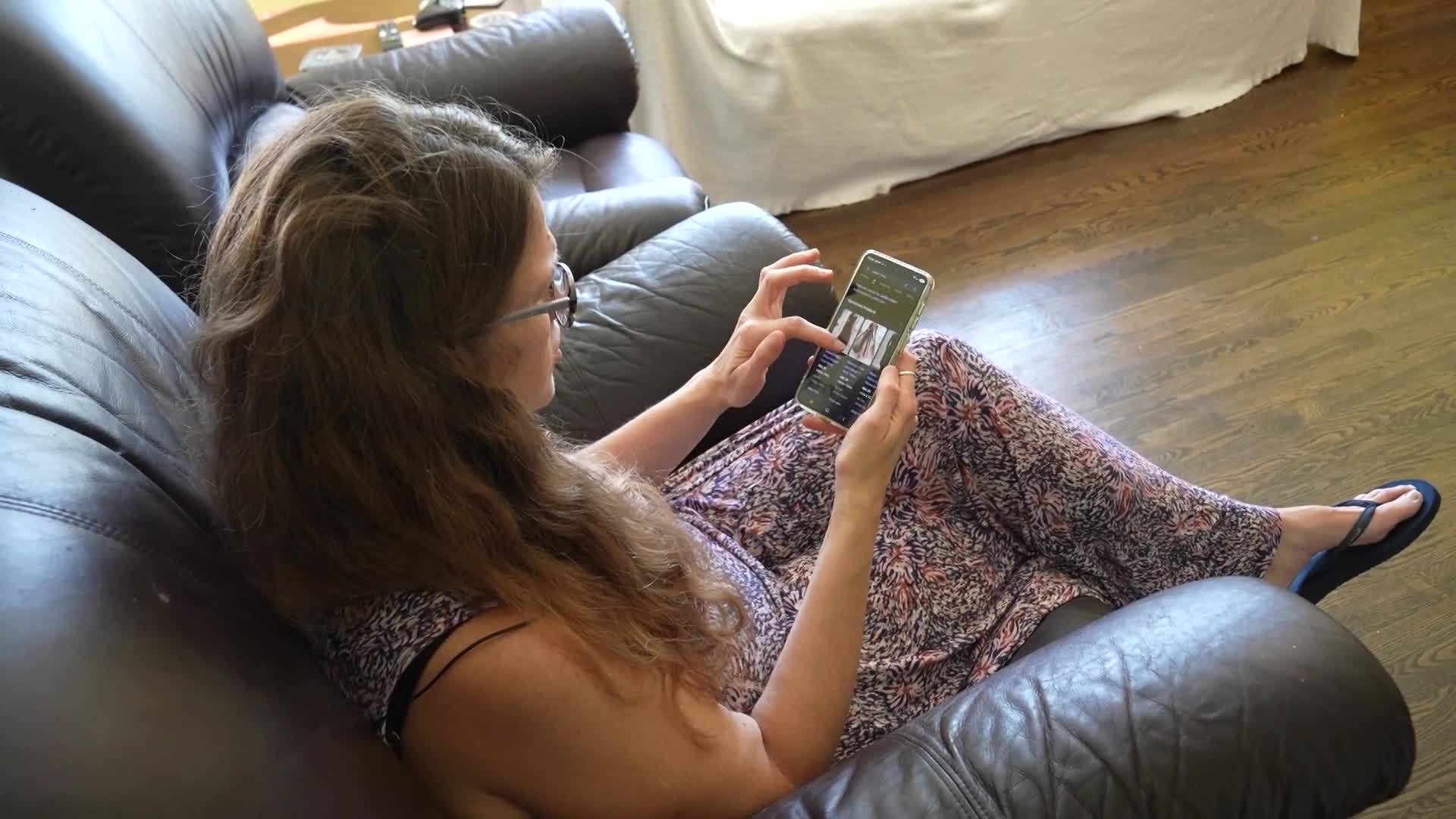
Eva Borho wasn't careless. She was shopping the way millions of Americans do every day — scrolling through a video platform when an ad caught her eye. The dress looked fitted and elegant, with delicate pink floral detail. At $66, it seemed like a find. What arrived was something she described as unwearable. 'I literally had to laugh so I didn't cry, it was so terrible looking,' she said.
What made Borho's experience especially frustrating wasn't just the bad product — it was the trap built around it. The return address was in China. Shipping would cost $40 to $50. The math made the purchase essentially unrecoverable. She cut her losses and kept the dress she couldn't wear.
You have to look past the gloss and the professionalismJosh Planos, Better Business Bureau
The core problem, according to the BBB's Josh Planos, is that artificial intelligence has erased the visual tells that once made fake stores identifiable. Awkward grammar, blurry product photos, an amateurish layout — those red flags are largely gone. AI can now generate a convincing storefront, complete with product images and glowing reviews, in a fraction of the time it once took.
The BBB found this dynamic playing out beyond clothing. An investigation into a dog supplement seller called The Paw Parent found the company listed a Kansas City address — but when investigators visited, no one at that location had heard of the business. It wasn't on any signage. Planos concluded it 'seemed very unlikely that that company exists at that location.' And yet the website stayed active, still accepting orders.
Common Myths About Online Shopping Safety
A polished website with professional photos means the seller is legitimate.
Verdict: false
The BBB warns that AI now enables scammers to generate convincing storefronts, product images, and reviews quickly. Josh Planos advises shoppers to 'look past the gloss and the professionalism' — appearance alone is no longer a reliable indicator of legitimacy.
Positive customer reviews are a reliable trust signal.
Verdict: false
AI can generate large volumes of convincing fake reviews. The BBB specifically calls out fake reviews as one of the tools deceptive sellers now use to build false credibility with shoppers.
A company listing a U.S. street address is operating in the U.S.
Verdict: false
The BBB's investigation of The Paw Parent found the Kansas City address it listed appeared to be fabricated — other tenants at the location had never heard of the business and it was not on any building signage.
Filing a complaint will get a fake website shut down.
Verdict: mostly false
According to Planos, questionable websites can remain active even after complaints are filed. 'You still have a fake company operating out of a fake address and a website that is still active,' he said — which is why pre-purchase research matters more than post-purchase complaints.
Four Steps to Check Any Seller Before You Buy
- Inspect the web address carefully — Look for misspellings, extra characters, or URLs that imitate a familiar retailer's name. Scam sites often register domains that look nearly identical to trusted brands at a glance.
- Verify contact information — Check whether the company lists a working phone number and a verifiable physical address. If the only contact is a web form, that's a warning sign worth taking seriously.
- Search the seller on BBB.org — Look up the company name at BBB.org before you hand over payment details. The BBB's Scam Tracker surfaces complaints, fraud warnings, and investigation results that may not appear in a standard search.
- Don't let a good-looking site override your instincts — A professional design, convincing product photos, or five-star reviews do not confirm a seller is real. AI has made all three easy to fake. Research the company behind the site — not just the site itself.
Borho's situation is a preview of a wider shift in consumer risk. As AI lowers the cost of building a convincing fake storefront, the volume of deceptive sellers will only grow. The BBB's Scam Tracker already shows online purchase fraud accounting for roughly 30% of all reports — a share that reflects how thoroughly scam operations have migrated to where shoppers now spend their time: social media feeds and video platforms.
The practical takeaway is straightforward, even if it cuts against the ease that makes online shopping appealing: the more convincing a site looks, the more important it is to verify who is actually behind it. Research the seller, not just the product.
Report a Scam or Research a Seller
- Look Up Any Seller on BBB.org: Search a company name before you buy to find complaints, fraud warnings, and investigative findings.
- Report a Scam to the BBB Scam Tracker: If you've been deceived by an online seller, filing a report helps the BBB track patterns and warn other shoppers.
- Watch: Woman Unwraps a Dress That Looks Nothing Like the Ad: See Eva Borho open the package and compare what she received to what was advertised — a vivid illustration of how far the product diverged from the listing.
