

CLEVELAND — For many people, Labor Day is the unofficial end of summer. As we head into fall, the season change will spark a shift in scams.
The so-called "ber" months, September, October, November, and December, mean old schemes will get a renewed push as we turn the pages on the calendar.
As your consumer reporter, I want to share a few schemes that will likely intensify in the coming weeks.
First, Medicare open enrollment begins Oct. 15.
"So, anything that is act now where this bad thing will happen or do this immediately and this really good thing will happen. That's like the first radar comes up," said Ariel Reid, GCH Technologies.
Criminals will soon be calling seniors, posing as Medicare representatives with claims they have to pay a fee to keep their coverage or need to update personal information.
"Step back and kind of examine the evidence, allow analytic thinking as opposed to intuitive beliefs kick in a bit, then we are hopeful that some of them will be able to sidestep a big financial loss," said Jeffrey Janata, Professor of Psychiatry, Case Western Reserve University.
Second, we know the holidays can be a lonely time of year.
Both the FBI and the Federal Trade Commission warn romance scam cases will surge.
Scammers will flood dating apps and social media in October and November.
They target individuals who are alone or grieving a loss, offering constant, intense digital companionship to fill the void. Then they ask for financial help.
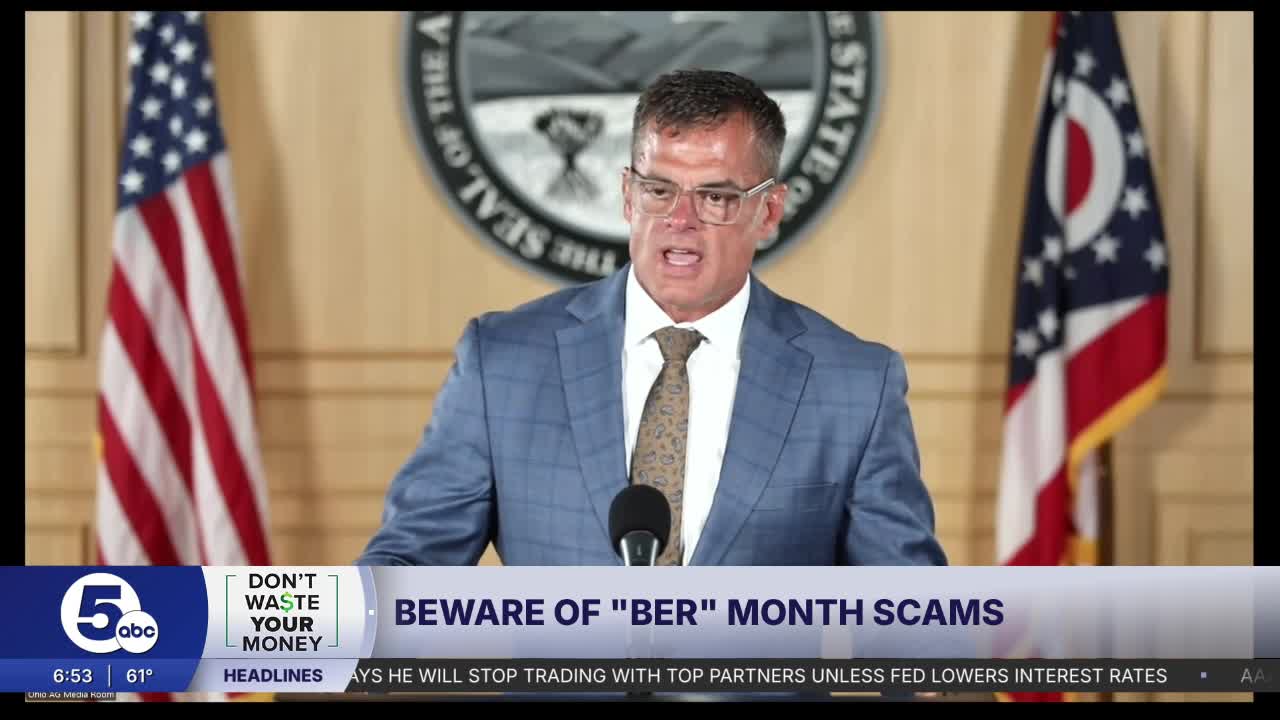
"It's just unbelievable the number of people who are being taken for this and who are losing hundreds of thousands of dollars, life savings, their entire life savings, their entire nest egg, everything they earned over their life that they were going to live on in retirement gone,” said Andy Wilson, Ohio Attorney General.
Third, the FBI's Internet Crime Complaint Center expects a spike in non-delivery phishing scams as holiday shopping ramps up in October.
The agency is encouraging consumers to "take a beat" on discounted seasonal goods or pre-holiday deals.
If the deal is too good to be true, the FBI says it is almost certainly a fraudulent website, also known as a fake storefront.
Buyer beware: the sites look legit, but a typical red flag is a URL that is slightly off.
"Even I fell victim to one recently. In the past year, I thought I saw a really great sale at Lululemon. I went to website, it looked like the Lululemon website and then when I placed an order, nothing ever came. And then I went back to the website, checked what it was, instead of Lululemon.com it was Lululemon.us.co," said Ryan Molloy, Seniorlist.com
As you prepare to start that holiday shopping over the next handful of months, make sure you always bypass social media ad links.
Instead, manually enter the retailer's official web address into your browser to make sure you get what you paid for.