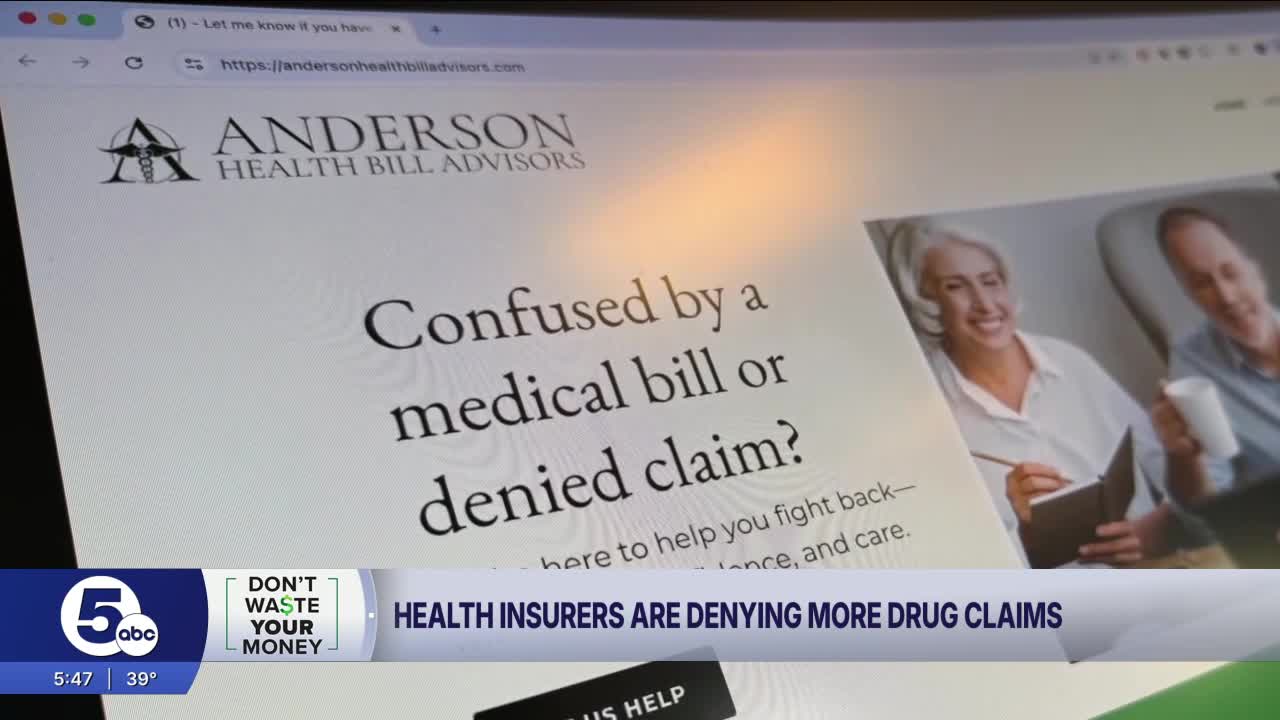


CLEVELAND — With healthcare costs rising, the last thing most patients expect after a doctor’s visit is a surprise bill.
But for millions of Americans, that’s exactly what’s happening.
According to the Kaiser Family Foundation (KFF), roughly 20% of in-network insurance claims are denied, along with 37% of out-of-network claims — often leaving patients stuck with unexpected costs.
And in many cases, experts say those denials have nothing to do with the care itself.
Roshan Patel, CEO of the health-tech company Arrow, says claim denials can happen for surprisingly small reasons.
"It can be as simple as your name being misspelled on the claim,” Patel said.“That alone can result in a denial.”
Arrow works with healthcare providers to help submit insurance claims accurately and prevent avoidable rejections. Patel says the issue has become massive.
"This is a $20 billion-a-year problem,” he said.
According to Patel, there are nearly 200 different reasons a claim can be flagged or denied, ranging from incorrect patient information to missing referrals or authorization requirements.
While some denials are unavoidable, Patel says patients can take several steps before they ever walk into a doctor’s office to reduce their risk.
If you’re seeing a specialist, experts recommend asking your insurance company:
- Is this provider in my network?
- Is a referral required?
- Is prior authorization required?
And don’t overlook the basics.
"Make sure you bring updated insurance cards and confirm all your personal information is correct at check-in,” Patel said.
Something as small as an outdated policy number or wrong birthdate can trigger a denial.
Patients do have the right to appeal a denied claim.
But research shows very few actually do.
According to the American Journal of Medical Care, only about 1% of denied in-network claims were appealed in 2023.
That’s significant — because appeals often work.
Studies show that more than half of denied claims are ultimately reversed once patients challenge them.
Experts say the appeals process can be confusing and time-consuming, which discourages many patients from pushing back — even when they have a strong case.
As healthcare costs continue to climb, insurance denials are becoming more common — and more costly for patients who don’t know their rights.
Experts say staying proactive, double-checking details, and asking the right questions upfront can help prevent denials before they happen.
And if your claim is denied?
The data suggests it may be worth fighting back.