

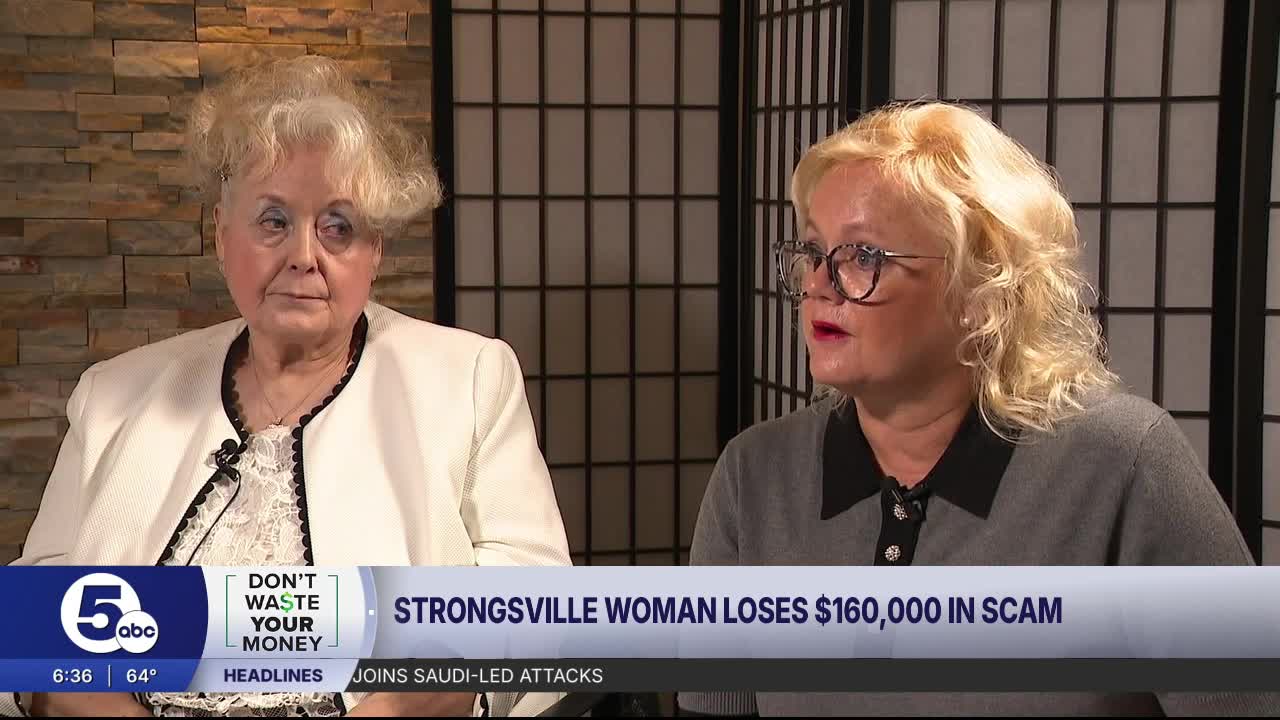


STRONGSVILLE, Ohio — What began as a phone call from someone claiming to help with identity theft ended with a 77-year-old Strongsville woman losing nearly $160,000 in a scam that drained most of her life savings.
A Call That Changed Everything
It started with a phone call from Washington, D.C.
By the time it was over, 77-year-old Strongsville resident Michelle Poch handed over nearly $160,000 of her life savings to a man she had never met.
The caller didn't sound like a criminal. He sounded like someone trying to help.
"I was just very alarmed and upset," Michelle said.
Watch related coverage: Feds investigate Huntington Bank fraud complaints after News 5 reports
The man told her her identity may have been stolen. He claimed he could help protect her money and resolve the problem before things got worse.
That phone call marked the beginning of a weeks-long scam that would ultimately drain most of the savings Michelle and her late husband had spent years building.
"He Was Very Kind"
The caller introduced himself as "Andrew."
Over time, the conversations became frequent. The relationship became personal. Michelle said he convinced her that her money was in danger and needed to be moved to help clear up issues tied to her identity.
"The money could be taken away from me and he wanted me to have it," Michelle said. "And he was very kind and very, very nice."
That trust became one of the scammer's most effective tools.
The Warning Sign She Missed
Eventually, he instructed Michelle not to tell anyone about their conversations.
Not her daughter. Not her son. Not the police.
Looking back, Michelle says that's the warning sign she wishes she had recognized.
Watch related coverage: Woman out $1,100 after missing 60-day window to report fraud
"When they tell you: don't talk to your daughter, don't say anything to your son, [it's] all the more reason why you should."
Investigators say isolating victims from family members is one of the most common tactics used by scammers.
Nearly $160,000 Gone
The scammer ultimately convinced Michelle to visit her bank twice and request certified checks. Combined, those checks totaled nearly $160,000.
"They've just gotten to know me so well that they never questioned anything that I said or asked," Michelle said of bank employees.
Her daughter, Deborah Wutz, believes the unusual requests should have raised concerns sooner.
"She had walked in on a random Wednesday asking for a significant amount of money, which I felt should have been a red flag for any bank teller," Deborah said.
Watch related coverage: How Ohio is cracking down on Medicaid fraud
The Withdrawal That Raised Alarms
Even after receiving nearly $160,000, the scammer wasn't done.
"He wanted everything," Deborah said.
When Michelle returned to the bank to make a third large withdrawal, employees finally stepped in and contacted her daughter.
"Your mother's here to wipe out her bank account and we're not going to allow this to happen," Deborah recalled being told.
The intervention may have saved what little money remained.
Watch related coverage: 3 big lies all rolled into 1 mega-fraud that took big money from this woman
A Family's Future Upended
Michelle said she genuinely believed the money was being used to fix her identity problems. According to Deborah, her mother thought she would receive a new name, a new Social Security card and other documents once the process was complete.
Instead, investigators say she was being manipulated by scammers.
The loss has left lasting financial consequences.
Deborah says the money had been set aside by Michelle's late husband to help cover potential long-term care or assisted living expenses.
"He had established some money for her if she needed long-term care or assisted living," Deborah said. "That's what that was for. So now we're at the point where she has to watch every cent."
Can the Money Be Recovered?
Strongsville police are now investigating. A detective working the case says investigators are trying to trace the certified checks and track where the money was deposited. At this point, it's still unclear whether any of the money can be recovered.
Police say Michelle was also threatened with arrest if she contacted authorities, a tactic investigators are seeing more frequently. Scammers often convince victims they are facing legal trouble and must send money immediately to avoid arrest.
Investigators say fraudsters also commonly instruct victims to make checks out to seemingly legitimate businesses, such as remodeling companies, because it helps explain large withdrawals when questioned by bank employees.
A New Tool to Stop Scams
Cases like Michelle's are one reason the Cuyahoga County Scam Squad recently rolled out a new tool for banks and credit unions across the area.
The wallet-sized card prompts tellers to ask six questions when customers request unusual or large withdrawals, helping identify potential scams before money leaves an account.
For Michelle, that intervention came during her third attempt to withdraw money.
But by then, nearly $160,000 was already gone.
The Growing Threat of AI Scams
While scammers have long relied on phone calls and fear tactics, experts warn artificial intelligence could make future scams even more convincing.
AI technology can clone voices, create realistic emails and text messages, and impersonate trusted organizations with startling accuracy. That means the next scammer may sound like a government official, a bank employee, or even a loved one.
Consumer advocates say the best defense remains the same: slow down, verify who you're speaking with, and never send money or share personal information based solely on an unexpected call, text or email.
For Michelle, sharing her story is about preventing someone else from becoming the next victim.
Her message is simple: If someone tells you to keep a financial matter secret from your family, friends or police, that's exactly when you need to start talking.
This story was initially reported by a journalist and has been converted to this platform with the assistance of AI.
