

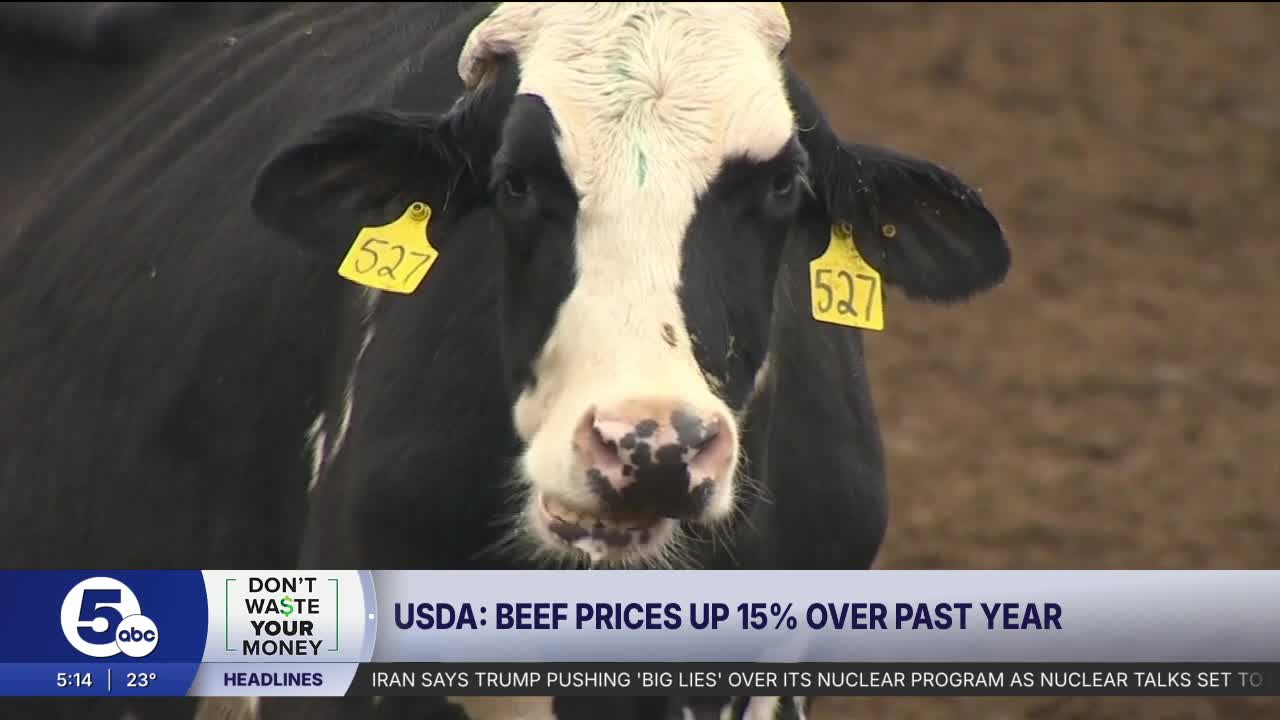

CLEVELAND — Food inflation is easing overall, but not when it comes to beef. The cost of beef has surged 15% over the last year, according to the U.S. Department of Agriculture.
Andrew Coppin, CEO of Ranchbot, a company that monitors cattle across the U.S., told Good Morning Cleveland anchor Mike Brookbank the price spike comes down to supply and demand.
"So on the supply side, drought has caused a diminishing herd. On the demand side, of course, we've had a complete blow up in steakhouses, in burger chains and in red meat protein being a preferred protein," Coppin said.
President Donald Trump recently signed an executive order to expand the amount of beef the U.S. can import from Argentina — a move aimed at lowering prices — but relief won't be immediate.
In the meantime, customers are coping with higher beef prices by seeking cheaper alternatives.
Brookbank visited Ohio City Provisions and learned the butcher shop has made some changes to keep up.
Owner Trevor Clatterbuck said, "We have had to adjust our prices a little bit. The only price we've changed this year is actually the price of ground beef."
Clatterbuck recommends lesser-known cuts to save money.
"Here with our butchers on site, we're taking the whole side of beef and breaking it down and finding more valuable cuts," Clatterbuck said.
Co-owner and butcher Adam Lambert said the savings on some of those cuts can be dramatic compared to what shoppers find at the supermarket.
"You got filets up somewhere around $40 to $50 a pound at the grocery store. Now, you could have a clod heart steak for like 12 bucks a pound," Lambert said.
Another way to save is to buy meat in bundles.
Butchers will sell different cuts at a lower price to move product.
Properly freezing extra meat can also cut costs over time.
"If you have a vacuum sealer at home, that's going to be your best bet. That's going to remove the oxygen and preserve it for the longest time. If you've got a good seal with no punctures in the bag, a year is not unreasonable," Clatterbuck said.
However, there is a catch to keep in mind.
"Once it's frozen, it's not convenient to cook right away. So if you're going to start freezing your meat, you just have to be more disciplined to pull things out a day or two in advance and thaw it out slowly in the refrigerator," Clatterbuck said.
