

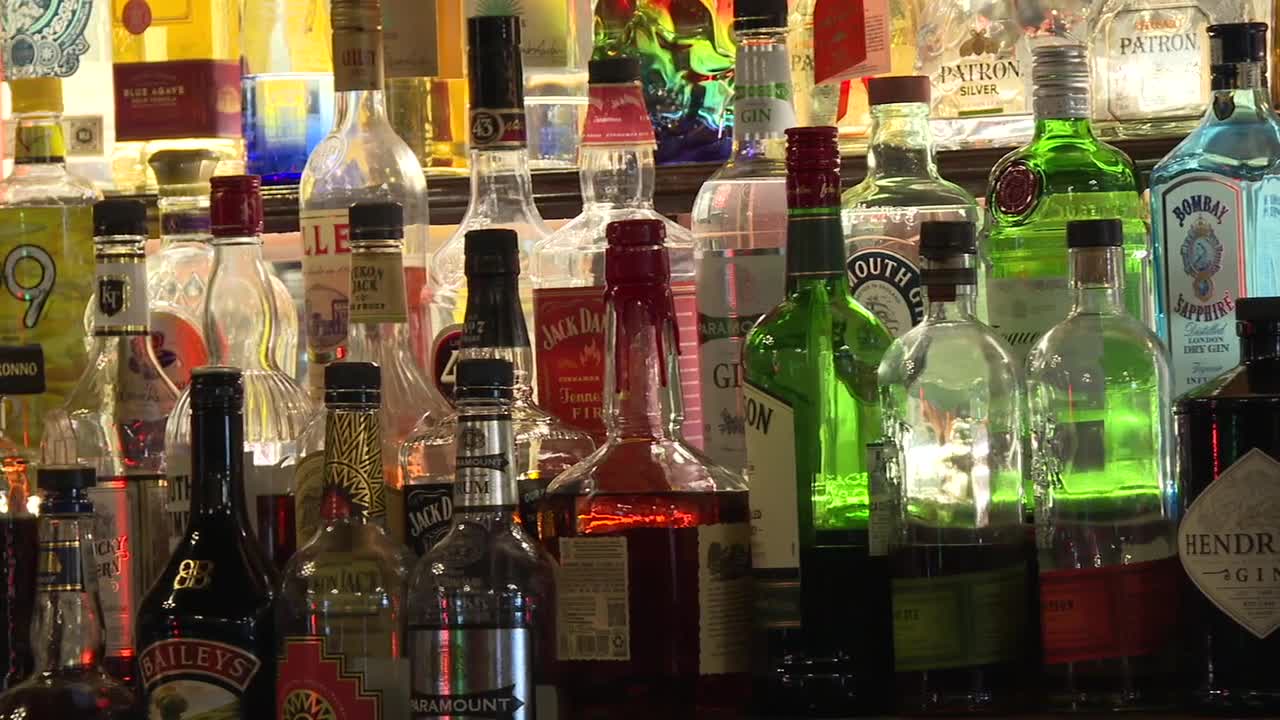


CLEVELAND — A Cleveland councilmember is suspicious of some local establishments diluting their liquor with either water or a cheaper substance, so now he's investigating.
Cleveland Ward 5 Councilman Richard A. Starr posted to social media this week asking, "Cleveland, who’s really pouring what they’re advertising?"
His full post reads:

Since posting it Nov. 9, he said it has received more than 60,000 views.
As of Wednesday, he has collected a list of 60 establishments that have been questioned by constituents, some of which have been named multiple times.
"It's one of those things I've experienced where people have reached out and shared their story with me where they said, 'Hey, I'm an occasional drinker. I'm drinking. I've had a couple of shots and a couple of doubles at this establishment. The next day I woke up with a major migraine, headache, not able to hold down food, can't hold down water, Gatorade,' and they have to call off from work because they are really sick and they notice that they are not able to return back to themselves for almost 24 hours," Starr said.
Starr told me he has no backing or evidence behind his inquiry right now, but is hopeful some will come.
I asked him, "So what do you do now? Does it look like legislation? Does it look like dialing the Division of Liquor Control?"
"My goal is to reach out to the Ohio Division of Liquor Control and also the Ohio Investigative Unit to be able to see what they do as far as investigating these establishments," Starr responded.
The Ohio Division of Liquor Control regulates approximately 28,000 liquor permit holder locations throughout the state.
Ohio Division of Liquor Control Public Information Officer Reagan Reetz said that, beyond their compliance agents doing inspections of new applications, they also work based on complaints for issued permits.
"If we receive complaints alleging practices such as refilling or diluting alcohol (which would be in violation of ORC Section 4301.68 or Ohio Administrative Code 4301:1-1-47), either the Division of Liquor Control or the Ohio Investigative Unit within the Ohio Department of Public Safety may conduct an investigative site visit and address the matter through the appropriate enforcement process," Reetz said.
Depending on the findings, that process could result in a correction notice, citation or other administrative action.
"It’s also important to point out that local legislative bodies have the opportunity to object to the renewal of a liquor permit during the permit renewal period, which provides a formal avenue for addressing concerns about a permit holder's operations," Reetz said.
Cleveland liquor permits renew annually on Oct. 1.
The procedures Ohio follows are supported by Laurie Torres, Mallorca's owner and president of Cleveland Independents, a restaurant and bar association.
"They do an excellent job, and there are rules that they put in place for you to follow. If you don't follow those rules, you lose your liquor license, and you should lose your liquor license if you're not following those rules," Torres said.
She told me she is disheartened to hear of the allegations regarding local establishments cutting their liquor.
"It's disappointing," she said. "There's a reason that rules are in place. They're to protect the people in the community, and they're to protect your business, and if you're the kind of business that's thinking that short-term where you're trying to make an extra buck on a Monday night, you're not going to survive long-term. Your reputation has got to be more important than the extra $50 you might make over pouring water into a tequila bottle."
Starr is going to continue investigating in hopes of cracking down in the next several months.
"What I wanna make it clear is this is not an attack on business owners. We're not trying to get rid of the nightlife. That is never my thing. This is to make sure we protect the consumers. This is also to protect the establishment," Starr said. "Trust me, we're gonna find you. And guess what? You're gonna pay the price."
In an ideal world, he would like to see more state agents conducting random site checks.
Once he turns over his list of establishments, that's what he would like to see done.
If you suspect an establishment is diluting its liquor, Starr encourages you to call his office or message him on social media.
