

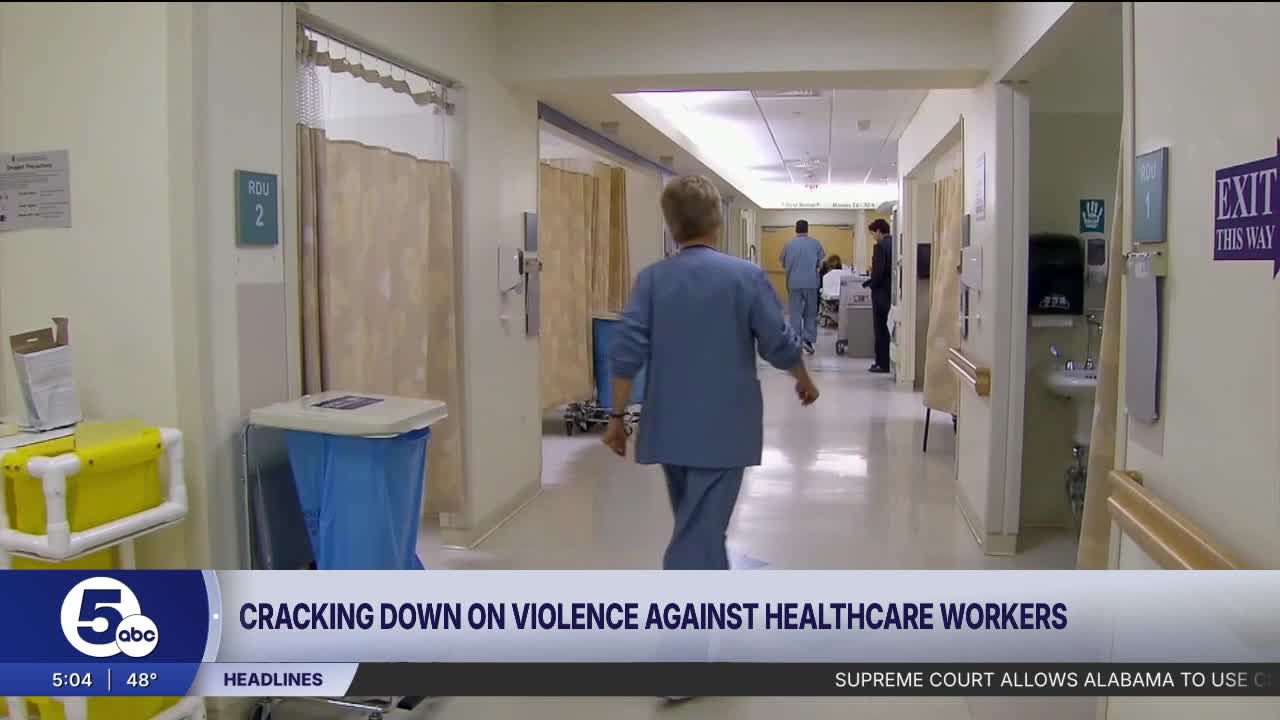


CLEVELAND — City of Cleveland officials are taking a stronger stance against violence and threats targeting healthcare workers.
Cleveland City Council has approved new legislation that increases penalties for people who threaten doctors, nurses, EMTs, and other healthcare professionals while they are on the job.
The ordinance now heads to Mayor Justin Bibb’s desk for final approval.
The legislation, sponsored by Council President Blaine Griffin and Safety Committee Chair Mike Polensek, amends the city’s menacing ordinance to specifically address threats against healthcare workers.
Under the new law, menacing a healthcare worker would be elevated from a fourth-degree misdemeanor to a first-degree misdemeanor.
The ordinance includes a mandatory minimum sentence of three days in jail, with penalties of up to six months behind bars and fines of up to $1,000.
“We live in very difficult times and as a result of that we felt that this legislation was needed to increase the penalties,” Polensek said.
The measure comes amidst growing concerns over workplace violence in hospitals and healthcare facilities nationwide.
Healthcare workers report increasing incidents of verbal threats, harassment, and physical assaults while on the clock.
“They have been threatened with ‘I’m gonna kill you,’ ‘I’m gonna beat you up,’ ‘We’re gonna come to your home.’ Give me a break. Really?” Polensek told News 5.
According to Polensek, the legislation is intended to impose additional consequences on those who threaten healthcare professionals.
“Basically, what it does is create additional penalties for those individuals who wanna threaten healthcare workers in our city,” Polensek said.
Healthcare systems across Northeast Ohio, including MetroHealth, University Hospitals, and Cleveland Clinic, have raised concerns about violence against employees, citing incidents where staff members have been hit, kicked, and seriously injured while performing their duties.
Supporters of the ordinance say stronger penalties are necessary to protect workers who often face dangerous situations while providing care.
“It’s our opinion we have to do everything we can to protect them,” Polensek said.
The legislation also includes requirements aimed at prevention and accountability.
Healthcare facilities must provide de-escalation and crisis intervention training to employees for the enhanced penalties to apply.
The ordinance also calls for tracking and reporting incidents to ensure long-term oversight.
Data from the Centers for Disease Control and Prevention shows harassment against healthcare workers increased by 7% between 2018 and 2022.
Healthcare workers are also significantly more likely than workers in many other industries to experience workplace violence.
“You wanna threaten a nurse? You know what? Be prepared to pay a fine. Be prepared to spend some time in jail if you wanna be that stupid,” Polensek said.
In a statement, MetroHealth praised the council’s action, saying:
"MetroHealth appreciates Cleveland City Council’s leadership in elevating this important issue. When paired with health system-level violence prevention strategies and caregiver support, efforts like these can help protect healthcare workers and reinforce accountability. MetroHealth police officers primarily charge incidents involving threats, menacing or assault against healthcare workers under state law, helping ensure consistent enforcement across all MetroHealth locations, including those outside the City of Cleveland."
The Cleveland Clinic also voiced support for the ordinance, saying:
"Cleveland Clinic is committed to providing a safe environment for caregivers, patients and visitors. We continue to invest in prevention, de‑escalation, and reporting to make our facilities safe for everyone, as well as supporting caregivers in their recovery following workplace violence events. We thank Cleveland City Council for voting to update the city’s menacing ordinance and strengthen penalties for those who threaten healthcare workers. This creates a clear legal framework for responding to credible threats against workers and reinforces that violence in healthcare settings is not acceptable."
