

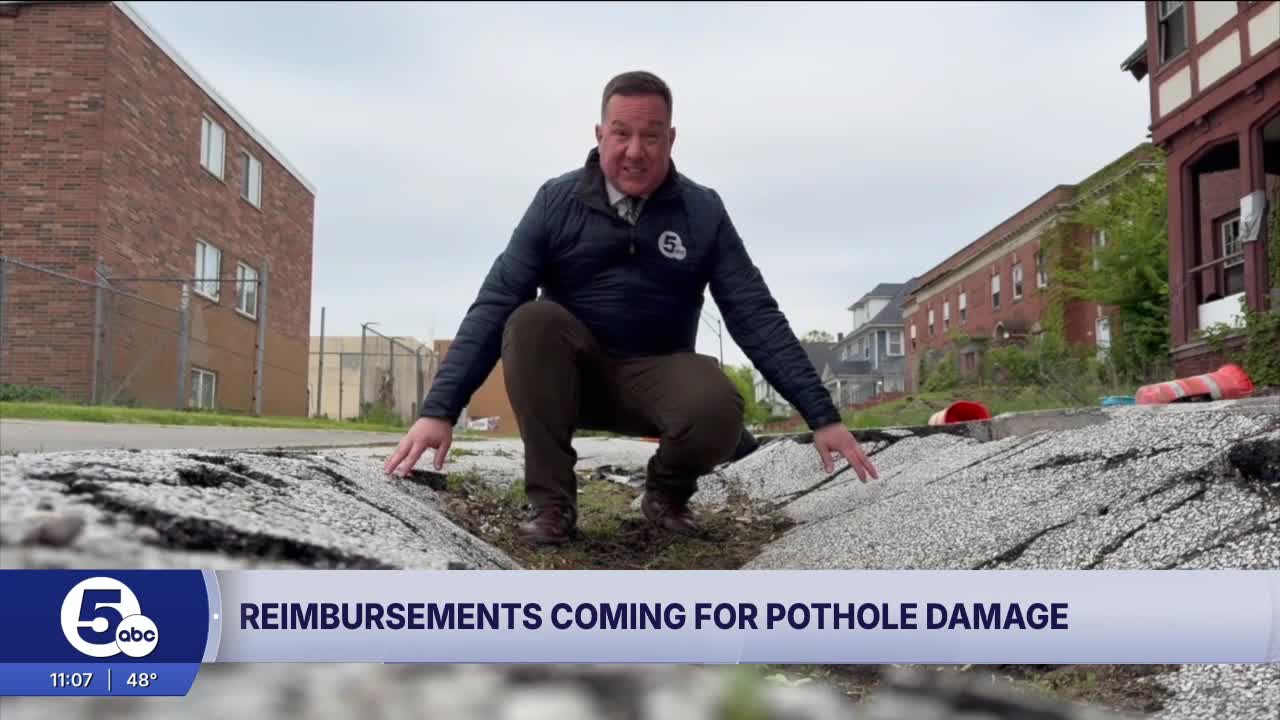


EAST CLEVELAND, OH — For years, East Cleveland’s crumbling roads left drivers with big repair bills. But now, a new policy paves the way for the city to reimburse people for some of those expenses.
Council unanimously passed a new vehicle damage policy Wednesday night.
It sets aside $10,000 a year from the city’s general fund to cover claims for drivers whose vehicles were damaged by “potholes or other street obstructions.”
Drivers must file claims with both the city and their insurance company to receive a maximum of $200 per claim.
“It’s a compromise,” said Law Director Ken Myers. “So we avoid litigation, you give the motorist something to acknowledge there was damage done but also to acknowledge the city probably would not be liable if it went to court and to save everybody the trouble.”
City leaders said they would love to fix the roads that are damaging vehicles, but acknowledged that’s not in the struggling city’s budget right now.
“It’s not perfect,” said City Council President Tim Austin, “but at least you’re getting your needs met by the City of East Cleveland based on our financial restrictions.”
Austin, who said he blew six tires in one winter because of the city’s streets, said the policy is overdue.
Drivers, like William Hart, agreed.
He called the city’s streets “literally hell.”
“I tore up two front ends on a 535I BMW because of those streets,” said Hart.
He said that, despite racking up thousands of dollars in repair bills, he never received a check from city hall.
“The runaround, that’s exactly what they gave me,” said Hart.
He’s skeptical of the new policy paying drivers.
“That’s just on paper, that’s just to keep you guys away,” said Hart. “That’s what that’s for, trust me.”
East Cleveland’s law director estimated he’s already received 20 claims for damages from last winter.
Under the new policy, which still needs to be signed by East Cleveland’s mayor, all claims must be filed with the city by July 1, 2026.
Once the $10,000 fund is exhausted, no other claims will be accepted or paid until the next budget cycle, according to the policy.
