

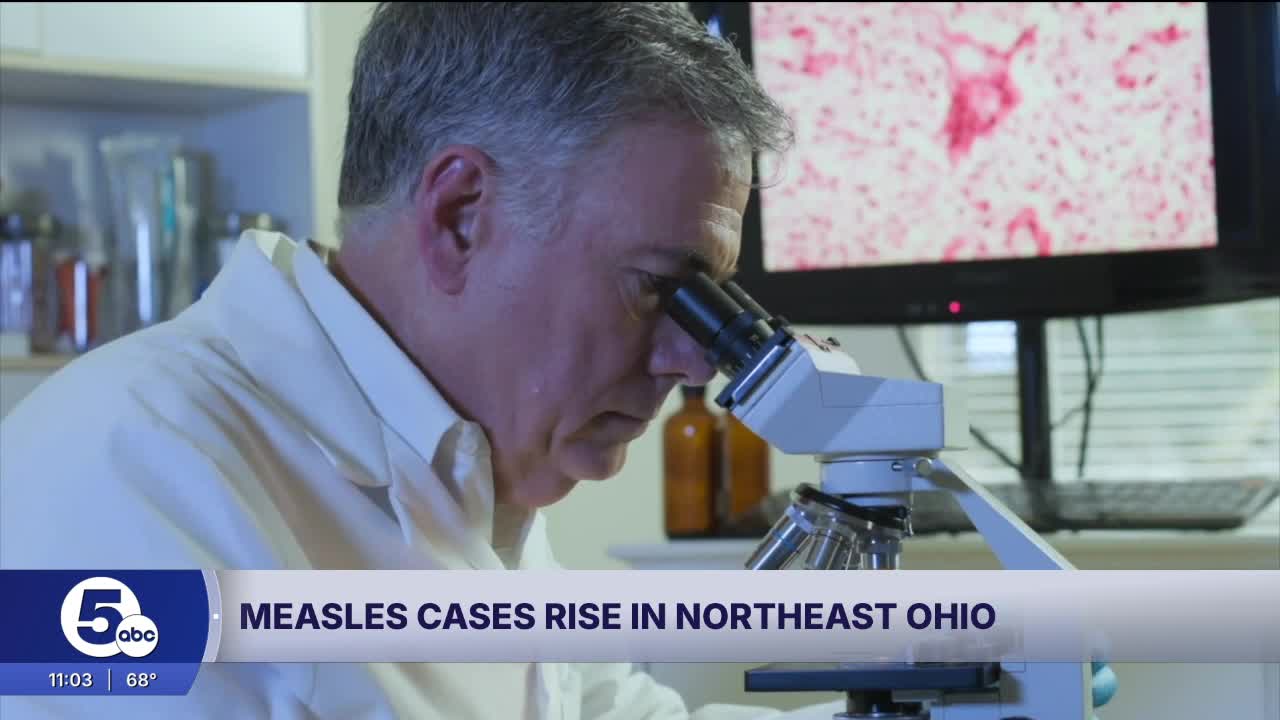


WOOSTER, OH — The number of confirmed cases of measles continues to rise in Wayne County after the health department said two more people tested positive for the virus, and 27 others are suspected of having measles.
“The threat is real and a lot of folks are taking that threat and they’re realizing this is serious stuff,” said Wayne County Health Commissioner Nicholas Cascarelli.
Since the begining of August, seven people have now tested positive for measles in the county, according to Cascarelli.
The county had its first two confirmed cases earlier this month following a horse sale in Sugarcreek.
Since then, Cascarelli believes the virus spread through large pockets of unvaccinated people, highlighting the risk measles poses.
“Nine out of 10 folks who are unvaccinated and exposed to someone with measles will get measles,” said Cascarelli.
And now there are concerns that another spike could be coming as kids head back to school.
That’s because measles can spread for four days before someone even shows symptoms of the virus.
State health figures show while 88% of kindergarteners were vaccinated against measles last year in Ohio, in Wayne County that percent drops to just over 83% of kids.
“It is frustrating because it's something we know, the science is unequivocally clear on,” said Cascarelli, “if you get vaccinated for many of these childhood diseases, there's a really good chance, over a 99% chance you're not going to get those diseases.”
The health commissioner said so far only one person has been hospitalized because of measles in Wayne County.
But he stresses the virus can cause severe health problems including pneumonia, swelling of the brain and even death.
To try and limit the outbreak, the health department doubled its number of outreach clinics in recent weeks and has vaccinated more than 700 people against measles.
A number Cascarelli hopes will continue to grow, and hopefully prevent a deadly outbreak.
“This is really unnecessary,” said Cascarelli. “It’s something that if we were just vaccinating them all the time, we wouldn’t have to deal with things like measles outbreaks and things like that.”
