



CLEVELAND, OHIO — Changes are coming for some Americans receiving food assistance. On Feb. 1, new work requirements are rolling out for the Supplemental Nutrition Assistance Program (SNAP).
Under the new requirements, more individuals will be considered “able-bodied adults” capable of working at least 20 hours weekly.
The expanded group now includes adults ages 55-64 and those with children ages 14-18. Veterans, adults aging out of the foster care system and those experiencing homelessness will no longer qualify for exemptions.
The changes come as part of the federal government’s goal to cut SNAP spending by billions in the coming years.
Last spring, USDA Secretary Brooke Rollins said the nutrition program should also be tied to getting Americans back to work.
RELATED: USDA urges states to reinforce work requirements for SNAP recipients
“It is important to remind states that Congress conditioned the receipt of benefits by able-bodied adults without dependents on satisfying work requirements,” said Rollins. “Many states have abused the system by requesting work requirement waivers. Today marks the start of a new era for SNAP—prioritizing work, career and technical education, and volunteering rather than idleness, excess spending, and misapplication of the law.”
Other proponents said expanding work requirements improves accountability amid conversations about fraud. Ohio Attorney General Dave Yost mentioned SNAP fraud in a press conference last week.
“When I was auditor of the state, I conducted the first audit of the SNAP program. And we found people that had multiple SNAP cards. I think that was 2015 and I don’t believe another one has been done since,” Yost said.
In Cuyahoga County, about 5,100 people have been sent letters informing them that their work requirements are changing. The number makes up less than 3% of the county’s 191,000 SNAP recipients.
The affected group will receive another letter from the Ohio Department of Job and Family Services (ODJFS) to inform them of the next steps.
“Ultimately they will have to come in and schedule an interview. We’ll sit with them to make sure we have all the information we need and that there isn’t an exemption on file,” explained Cuyahoga County Department of Health and Human Services Director David Merriman.
He said the county is anticipating the changing cases could put stress on the system.
“That administrative burden is there for that 5,000, but a lot of people are going to get caught up in the longer wait times and the more residents that are coming to our lobbies to talk to us,” he said.
Additionally, some community food assistance programs said they’re bracing for a spike in demand if some people can’t fulfill the new requirements.
Staff at the Collinwood Food Pantry on Cleveland’s east side said they saw similar increases with previous SNAP changes.
“We didn’t see anything for three or four months. And then all of a sudden, the existing SNAP benefits rolled over from month to month, once those were used up, then we saw the increase,” said pantry manager Cindy Bregitzer.
She said many of the pantry’s clients use the pantry to fill the gaps when their SNAP benefits run out each month.
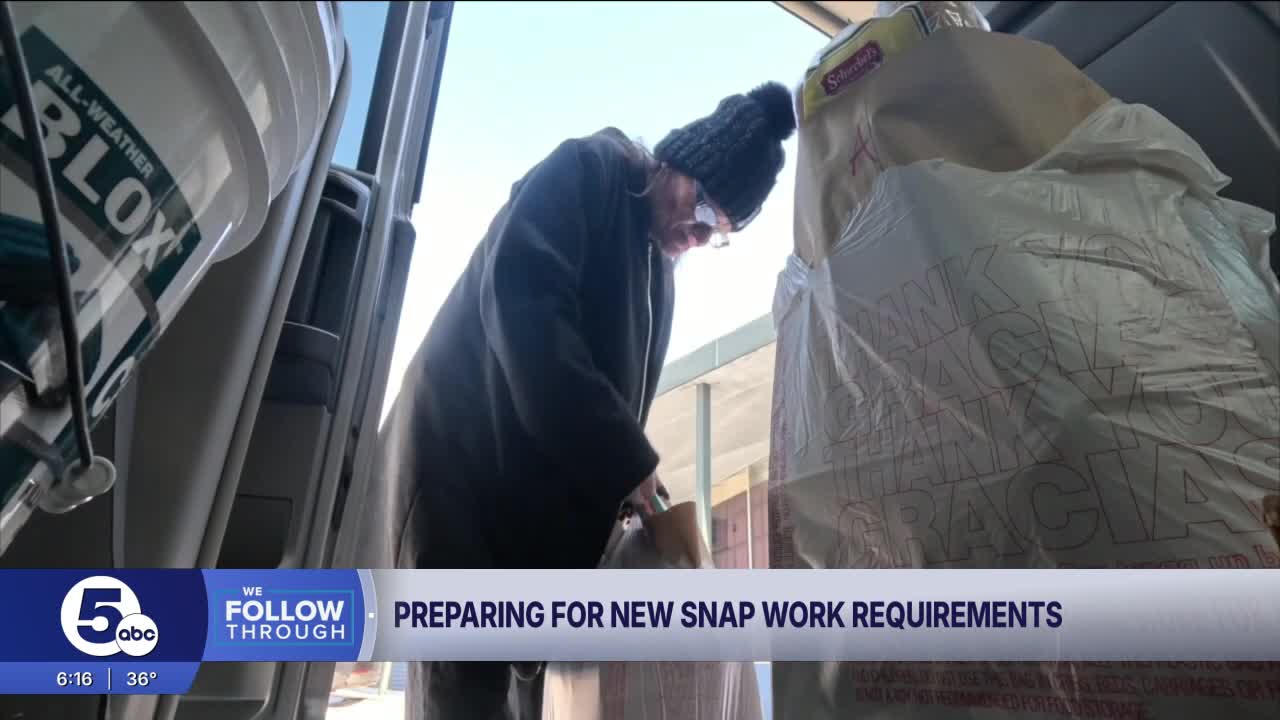
“I have to go beyond my means. I don’t know, it’s just really tough,” said Laurie Cox, who was picking up food at the pantry Wednesday.
She said her monthly SNAP allotments don’t last as long as they once did.
“[They last] about a week because the food [prices] are going so high anyway,” Cox said.
The Greater Cleveland Food Bank said it has been focusing on informing its clients about the changing SNAP requirements and working with its network of community partners to connect people with employment and other services.
Advocacy and Public Education Director Jessica Smachko said about 77% of SNAP recipients are already employed.
“Really what we’re looking at is just individuals that are having a hard time making ends meet in the current environment,” she said.
Cox said she is currently on disability, but would consider working if she were required to do so. She said others may face additional barriers to employment.
“Especially if they don’t drive or they have other restrictions… It’s hard to find a job out here,” she said.
Director Merriman said the county expects some SNAP recipients to encounter challenges, and it’s enlisting community partners to find solutions.
“There will be residents that lose benefits, unfortunately,’’ Merriman said.
Cuyahoga County has added answers to frequently asked questions about the SNAP changes on its website. Click here to read more.
