



CLEVELAND — Reimagining an airport isn’t easy.
Rebuilding one in place — on a landlocked site — is even trickier.
That’s exactly what officials are trying to do at Cleveland Hopkins International Airport, where construction started this year on the first phase of an ambitious transformation plan called CLEvolution. The makeover will cost billions of dollars and take well over a decade to pull off.
“That’s primarily because of the small postage-stamp footprint that this terminal campus sits on,” said Bryant Francis, who leads Cleveland’s airport system as the director of port control. “We don’t have other options, in terms of building new facilities elsewhere. … In almost all cases, we’re going to be removing something that’s currently in use in order to build something new in its place. All of that takes time.”
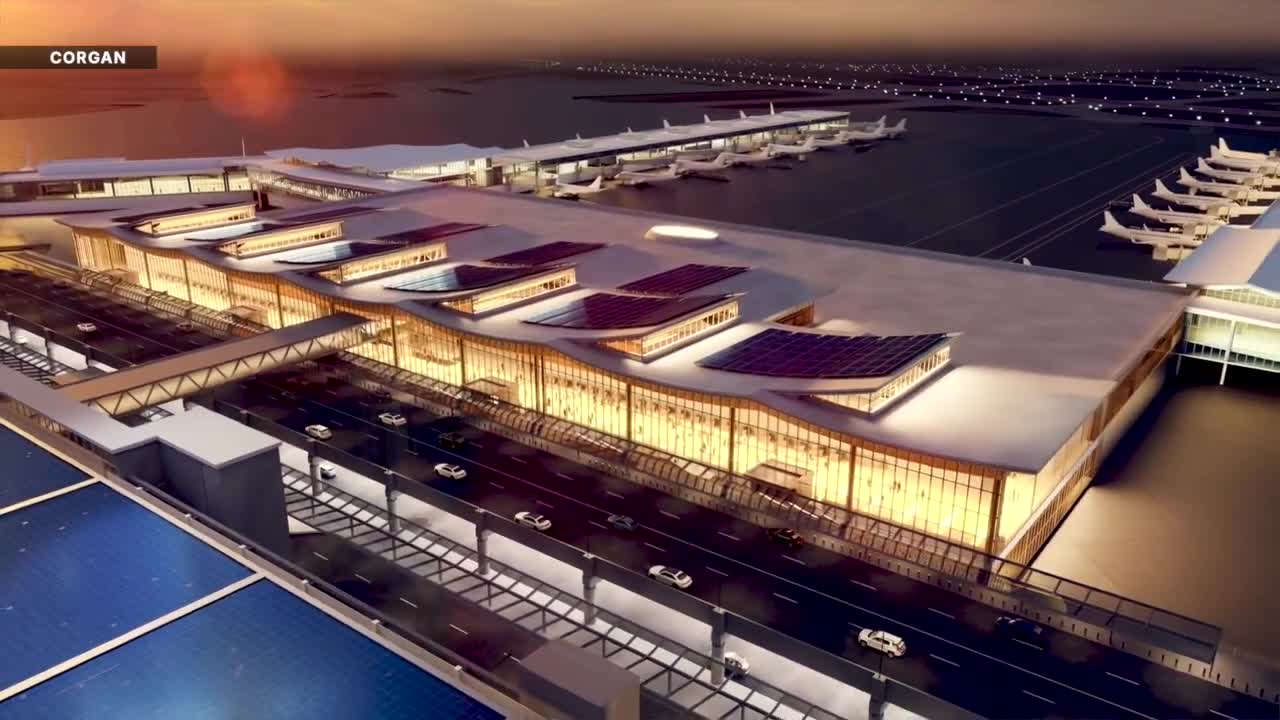
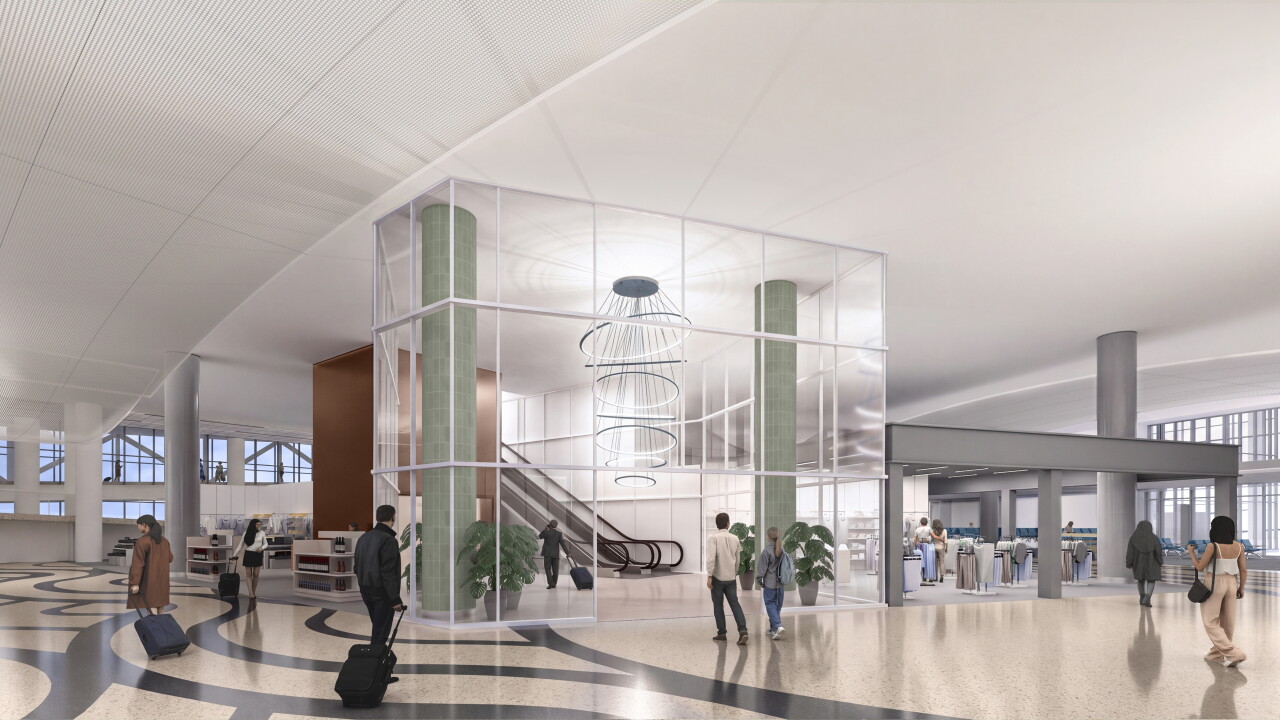
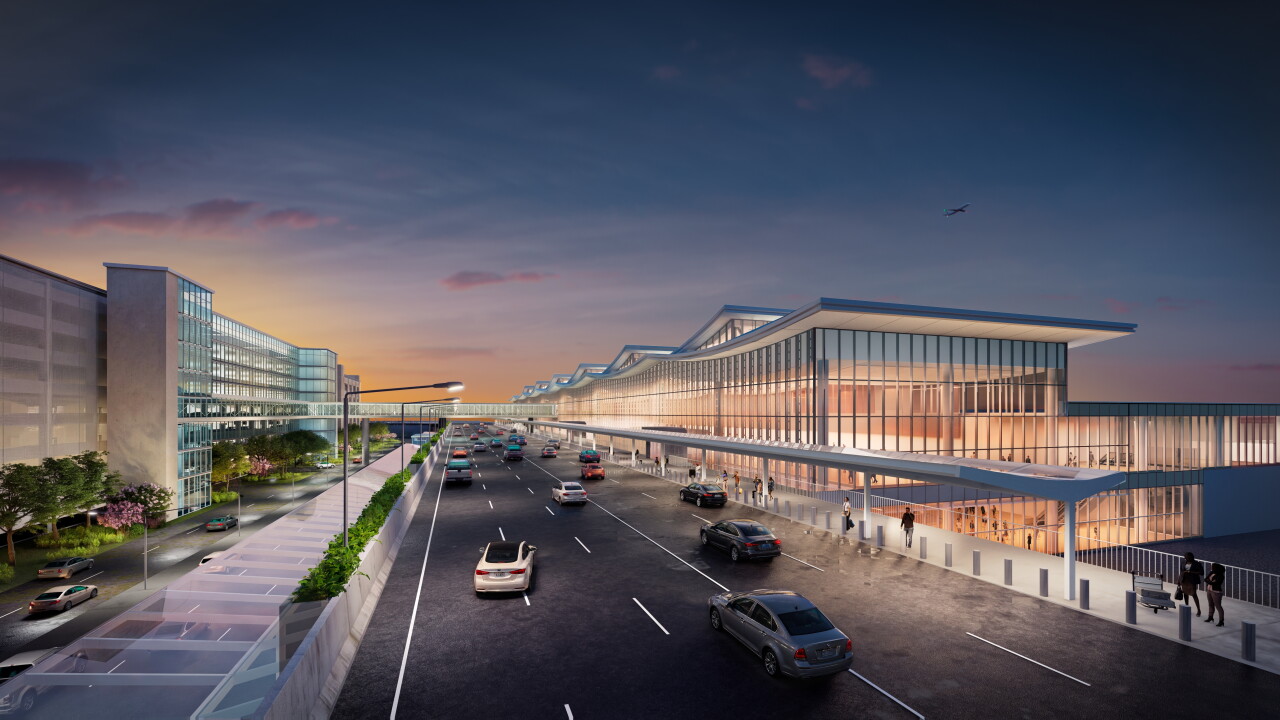
The $1.6 billion first wave of construction at Hopkins will touch everything you see before security, from parking to a brand-new terminal scheduled to open in 2032. Airport officials recently unveiled conceptual plans for replacing the aging concourses, but that’s a later phase of the project.
For Francis and his team, it’s a delicate balancing act. They’re focused on creating a new front door to the region, meeting travelers’ expectations and making room for growth. But they don’t want to cause too much turbulence for the airlines and customers along the way.
“It's something that is, yes, going to be very complex,” Francis said. “But it is it is doable. It's manageable.”
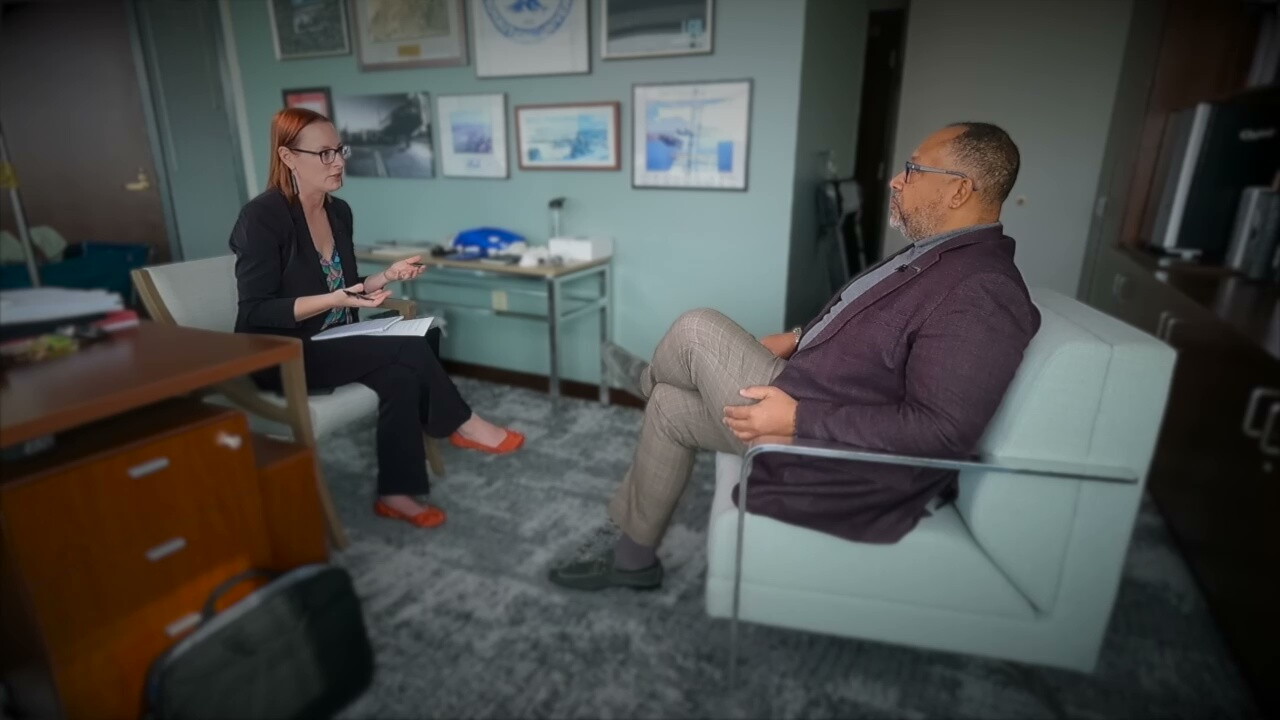
He recently sat down with News 5’s Michelle Jarboe to discuss development around Hopkins and air travel in the region. The following conversation has been edited for clarity and length.
Michelle Jarboe: Let's talk about the airport modernization plan and where you're at in the process.
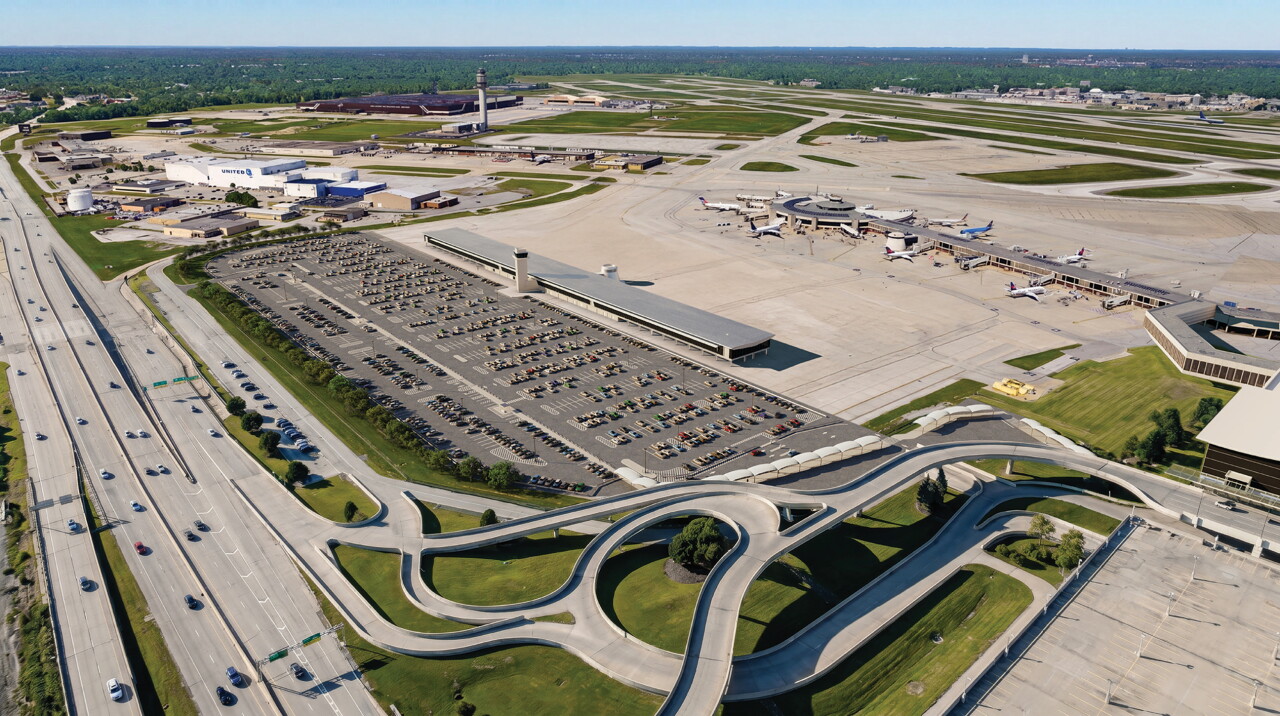
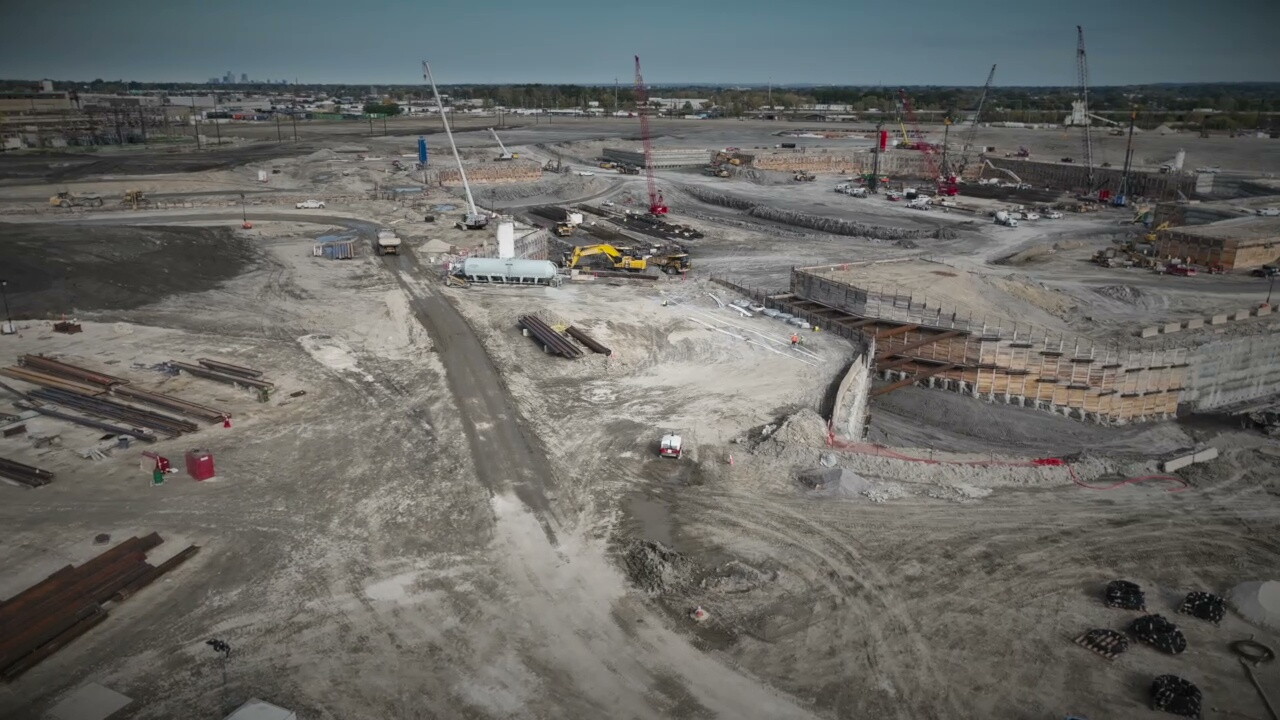
Bryant Francis: The first project broke ground over the summer, and that's called the Gold Lot. It'll be about 1,600 spaces of public parking, surface parking. That is scheduled to open in the spring of next year.
WATCH: Officials broke ground for the Gold Lot in July
Then we'll roll into the construction of a new RTA Red Line station, an underground station, as the existing one is. Above that, we will build a new roughly 6,000-space, eight-level public parking garage. And that will replace the existing garage.
Ultimately, the site of the current garage will become our new front door. The terminal will be replaced, and the new facility will be built on the site of the existing garage.
Jarboe: At a recent industry day, you shared images of replacing the concourses. So that's later on down the road?
Francis: Correct. That is separate, but we had to start thinking about the entirety of the program. The focus right now really is on the land side, and that is primarily because that's where we experience the greatest level of challenge in our day-to-day operations.
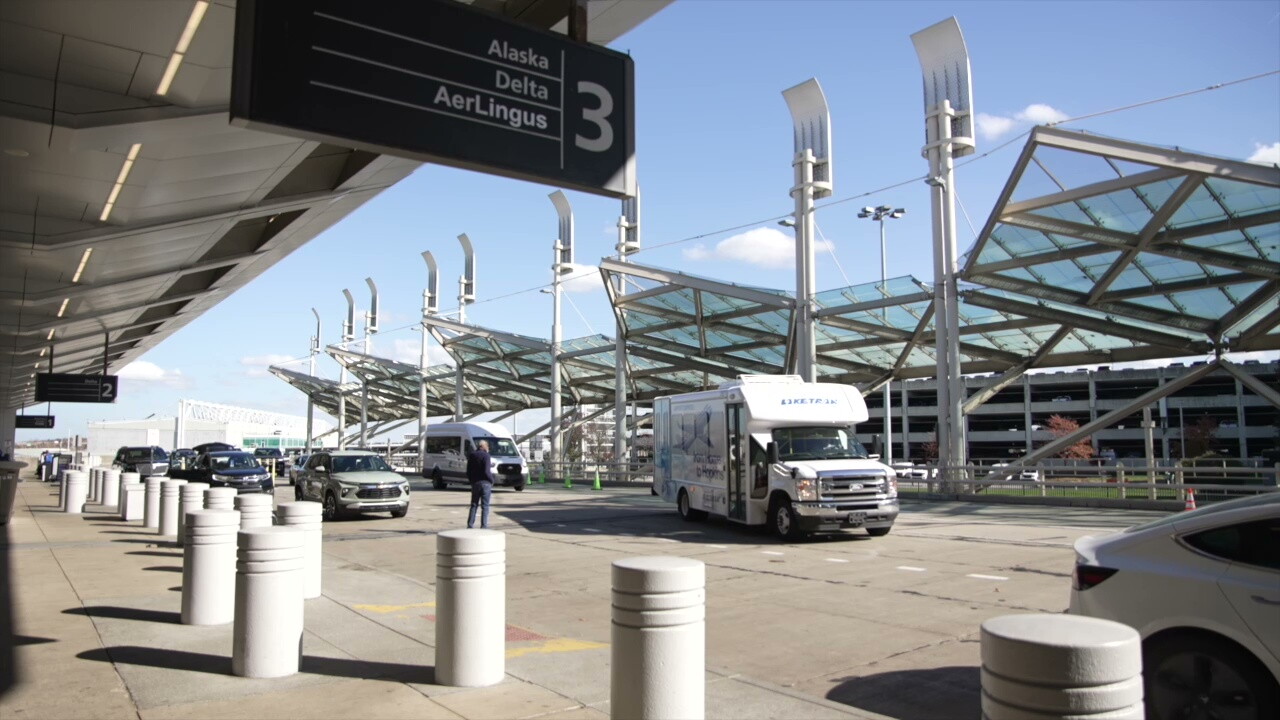
And that really is because the passenger activity today is all local. Everyone that is using CLE is arriving or departing from CLE. That's put a lot more pressure on the front of the house. We are deficient in public parking. We don't have sufficient curbside on the arrivals or departures level.
The (terminal) headhouse itself is well below the size that is needed to support 10 million annual passengers, which is what we're seeing today. And then also there's the age of the facilities. They're aging, and they need to be modernized. Ultimately this is much more than an infrastructure project. We are a critical component of this region's economy.
Jarboe: So, how long is all of this going to take?
Francis: We just started on the Gold Lot this summer, and the (terminal) headhouse will be the last major project of the land-side portion of the program. We are planning for a ribbon cutting in 2032.
Jarboe: Do you have any sense of when the whole vision could be done?
Francis: Likely the latter part of the next decade. The late 2030s is what we are seeing right now, from a timeline perspective. We would not expect the air-side components to begin prior to the end of the land-side effort.
Jarboe: Where does the money for all this come from?
Francis: We are not funded through local taxpayer dollars. That is a common misconception everywhere I've worked, in every community.
If you use the airport, that is how you're contributing, through user fees. Whether that's leases or parking or concessions or the rental-car operations, those types of functions are where we derive most of our revenues. And then our airline partners, they essentially make us whole. We're not operating to make a profit. We are simply out to break even.
As it relates to the terminal program, we will be issuing bonds to support the construction. Ultimately, those bonds are backed by our airline partners. Our debt will go up. We'll be paying more each year to operate, so that gap that the airlines are covering between our non-airline revenue and what it actually requires for us to operate is going to get larger. They are going to continue to fill that gap.
Jarboe: Where are you at in terms of reaching agreements with the airlines about that?
Francis: We have nearly $500 million that the airlines have committed to this undertaking. That has never happened in the history of Cleveland. I think that is something that is worth stating.
Yes, we have a lot more work to do behind the scenes. We meet with our airline partners on a monthly basis, as a group. It's all really focused right now around the terminal program.
We're looking to agree on scope and timeline and budget. Once we reach that level, we can go forward with the request for funding approval. That will happen sometime, likely, in mid-2027, so six to eight months from now.
Jarboe: We've seen a few different figures in terms of total cost of the project. What numbers should we be using?
Francis: The land-side program, the working number that we're using is $1.6 billion. We continue to do cost-estimating efforts as those plans advance. We've not put a dollar figure on the air-side component. That's a later conversation.
Jarboe: How disruptive is this going to be for travelers?
Francis: I'd say the most important thing that we can do is to communicate. That will be very important for us, to always be talking about where we are, what's coming next, so that our customers know what they can expect when they're with us.
We are going to work diligently to minimize the impact on our users. One thing that I think is a positive is the location of the future terminal. It will sit on the existing site of the smart parking garage. That will be a benefit, actually, because it is generally outside of the footprint of the day-to-day operation.
When we get more into the air side, we may have a little bit more disruption then. But that's where the phasing comes in.
Jarboe: Cleveland consistently does poorly in the JD Power surveys of airport customer satisfaction. What's your reaction when you see those? What do you want people to know?
Francis: We are working on that, and it's not just about the new facilities that we're going to create over the next several years. It's also in the things we're working on within the existing facility, because we do still have several years left in the current house, if you will.
We've made improvements such as refreshes to some of our restrooms. That will continue next year, with several more sets of restrooms undergoing a refresh. We also expanded the central security checkpoint. That opened earlier this year. We've gotten a lot of positive feedback from our customers and the TSA on that improvement.
Ultimately, while we understand that the experience today is not what we would like it to be, all of our efforts are around making it better going forward. While it will take us some time to bring that to reality, each step of the way, our customers will see the progress happening right before their eyes.
Jarboe: Since 2014, when we lost the United Airlines hub here, there have been complaints from local travelers and businesses about the lack of nonstop flights. Where are you at when it comes to trying to bring more nonstop flights in?
Francis: I appreciate that there's a strong desire and belief that we should have more service than we have today. We are working behind the scenes, literally on a daily basis, with a slate of airline partners — whether that’s someone who is with us today or a potential new carrier.
That can come in several forms. It's not just about a new airline to a new market. It could also be working with an existing airline on refining a flight schedule so that it meets more connections. It could be working with an airline to say there's demand for service in this existing market that we think you can meet. They may add an additional frequency. They may add a larger aircraft. We're working on that front both domestically and internationally.
We've had some wins this year, actually. JetBlue, which has been with us for more than 10 years, they added both Fort Lauderdale and JFK. In the past, they did serve both of those routes. But effectively, those are new routes for them because it's been quite a while since they served either of those.
American added LAX earlier this year. That was a big win. We had Air Canada that brought Montreal. That service did very well. It did so well that they're intending to fly it twice daily next summer.
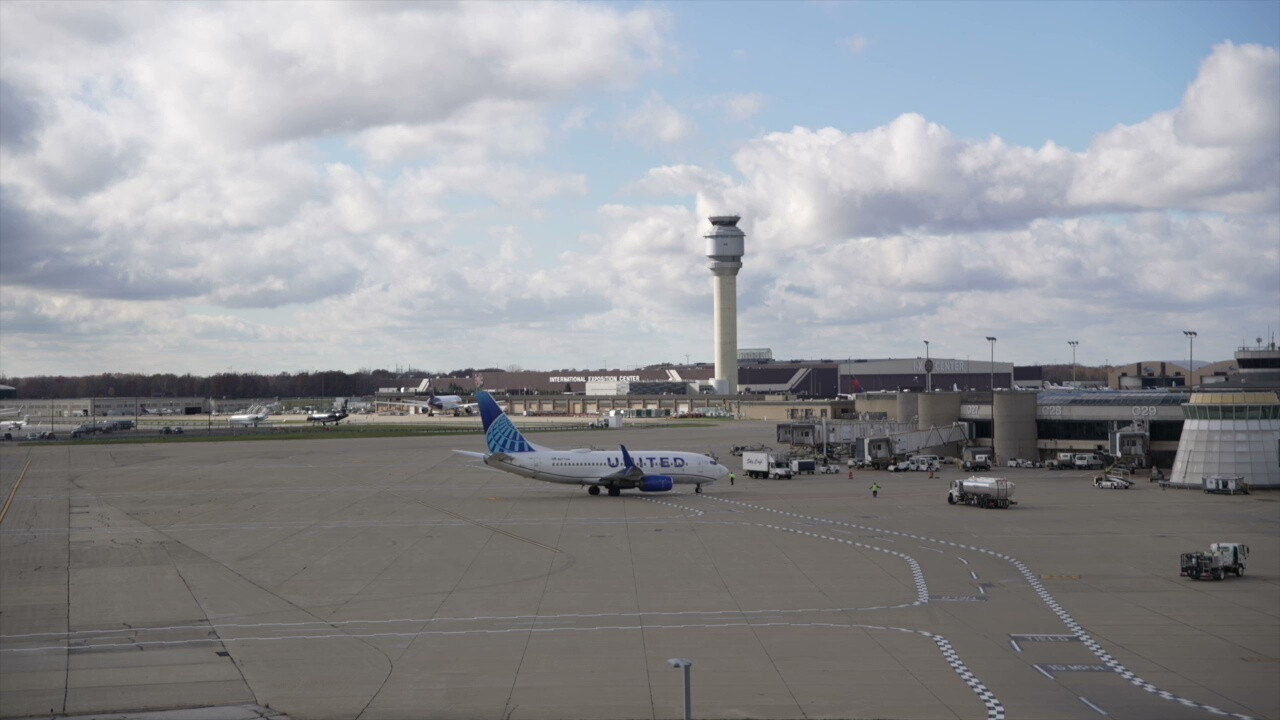
United is still our largest carrier, and they've added seasonal service to Miami, which starts later this year. They've added also service to Las Vegas. We have a new airline in Cleveland in Avello. They're flying to Concord, which is Greater Charlotte, and also to New Haven, Connecticut. So that opens up more of New England. There's a lot happening in that space, and I think we've seen some good results.
What we need is for people to make use of all of those services. Because what is very true is that if it's not utilized to the extent that the airline sees as being successful, then that asset is mobile. It can be placed in another airport.
Jarboe: Any announcements coming up that you can drop any hints about?
Francis: No, ma'am. (laughs) Good try, though!
Jarboe: What opportunities do you see to bring more businesses and development to the area around Hopkins, particularly with the changes underway at the I-X Center and the fact that the city is going to get back some land over there, around the building, as part of a lease-extension deal with a developer at the property?
WATCH: A major manufacturer has been eyeing the I-X Center, with the potential to bring 700 jobs to Cleveland
Francis: That is something we are looking forward to. We don't have a lot of available land that is ready to be developed. This will be a positive for us, in that we will get some acreage back that we can begin to market. We'll be focusing on aviation and aerospace-based companies to garner their interest and see what opportunities exist for new development here.
Jarboe: Site preparations are under way for the new Browns stadium on the other side of State Route 237. What kind of conversations are you having at this point about infrastructure and ways to mitigate any game-day traffic concerns, so that people can get to and from the airport?
Francis: That's going to be an ongoing conversation between us and the Haslam Sports Group, the city of Brook Park, the (Northeast Ohio Areawide Coordinating Agency) and possibly ODOT. What we're most interested in is that we maintain an easy ingress and egress to CLE. Route 237 is our only point where users can access the terminal facility.
Jarboe: How are you feeling at this point about the airport and the stadium district coexisting?
Francis: I appreciate that we have had very positive collaboration with the Haslam Sports Group and other involved parties, just looking at the future and how the two can coexist as peacefully as possible. I think we all know that there will be some disruption. But my goal, really, is just to look out for the users of CLE and to ensure that we’re maintaining the best possible access to the airport at all times, including during those large-scale events.
When you look at growth and development in and around an airport, it is a positive thing. So I’m looking forward to all that I’m hearing about that is planned for the area. There are hotels, I understand, along Brookpark Road. There are some developments on the south side of the airport. As well as the development on the Browns site.
I’m hoping that all of those things will contribute to the future growth of CLE. And I certainly believe that our investment in our infrastructure will help that, as well.
Jarboe: Shifting gears here, what do you think about the conversations around closing Burke, which you also oversee?
WATCH: FAA administrator, Sen. Moreno say closing Burke Lakefront Airport is a non-starter
Francis: I appreciate that there is a lot of energy around Burke. There’s been healthy conversation regarding the future of Burke. Obviously, there’s been no determination made at this point in time. But once that determination is made, then I certainly will follow that direction.
Jarboe: What are your thoughts on the potential growth trajectory for air travel here?
Francis: We're seeing 10 million annual passengers. We do believe, in the next decade, that we could see greater than 12 million annual passengers. So there will be opportunities. One of the biggest opportunities for us is to retain more of the traffic that is naturally in the Cleveland area, having more of our local residents and visitors using CLE going forward.
There are several other airports within a couple hours’ drive. I do believe the investments that we're going to be making will help us in terms of offering a greatly elevated guest experience. That will be a factor in people wanting to make use of CLE in greater numbers. Through modernized facilities, we will gain operational efficiency, and that will allow us to more easily accommodate more passengers.
Michelle Jarboe is the business growth and development reporter at News 5 Cleveland. Follow her on X @MJarboe or email her at Michelle.Jarboe@wews.com.
