





COLUMBUS, Ohio — Anti-AI sentiment is increasing across Ohio, with a growing number of cities and townships moving to ban data center development in their area. State lawmakers are now stepping in, creating a committee to study the benefits and detriments of the tech hubs.
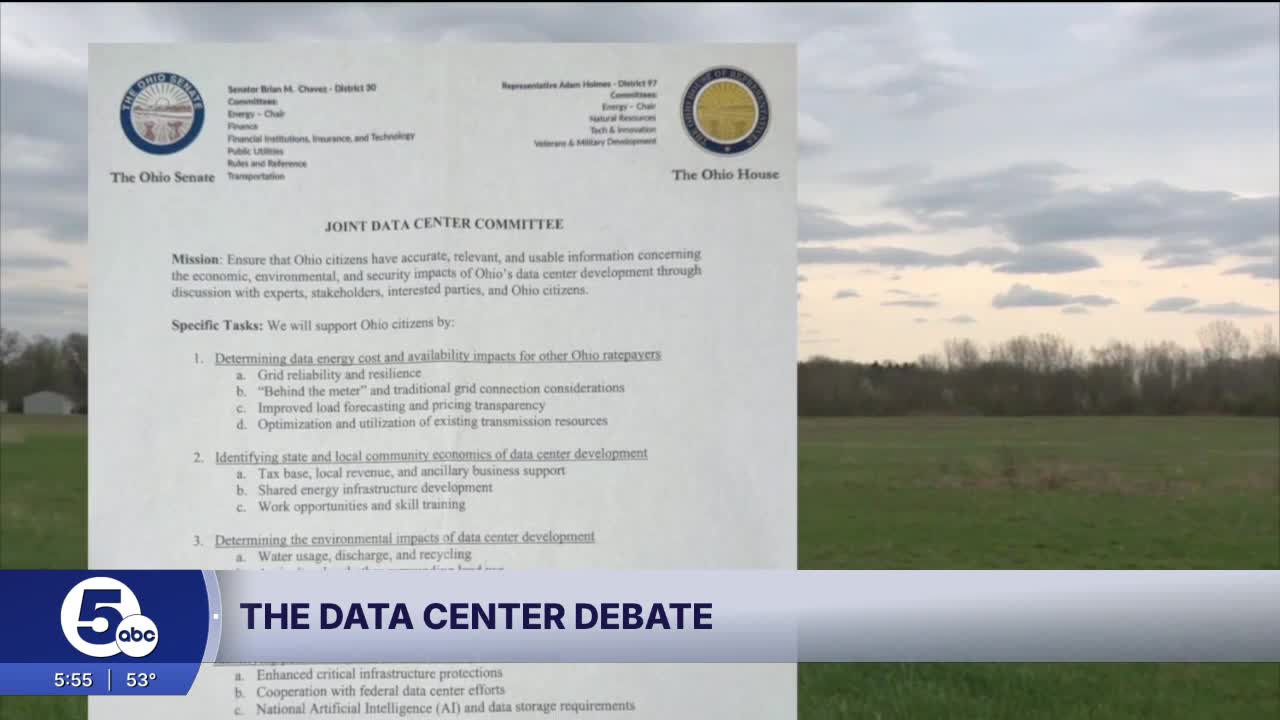
The new Joint Data Center Committee aims to evaluate the tech boom from all angles, state Rep. Adam Holmes (R-Nashport) said during a press conference Wednesday morning.
"Ensure that Ohio citizens have accurate, relevant, and usable information concerning the economic, environmental, and security impacts of Ohio's data center development," Holmes said.
RELATED: Ohio's data center boom really started in New Albany. We went there to see what it looks like.
The committee, made up of a bipartisan group of lawmakers, has five main ways the lawmakers say they will support Ohioans. It will see how much data centers impact Ohio energy bills, look into the financial benefits to communities, evaluate what they do to water and wildlife, identify the national security risks and increase awareness of what hubs actually do.
That awareness also includes why the centers are needed, Holmes said.
"Data centers will increasingly hold the information or resources that will ensure our domestic stability, economic growth, and increased societal capabilities," he said.
The committee will hear from the public and industry "experts" at the Statehouse over the next couple of weeks, the lawmakers said. Major companies will be asked to testify, as well.
This sudden committee announcement comes as Ohio residents continue turning against AI.
"This public concern has become a priority issue for us and could have a dramatic impact on Ohio and America's future," Holmes said.
Data centers have become a growing concern due to environmental and energy usage concerns.
RELATED: Crowd packs Perry Village hall to protest data-center project as tensions rise across Ohio
"People who disagree on nearly everything are standing together on this one issue," Nick McNamee, a Perry Village resident, said during a public meeting, as community members sat with anti-AI signs.
In July 2024, a California-based developer inked a deal to buy 163 acres from the village for $8.4 million, according to public records. The developer later signed agreements to buy 22 adjacent acres from the township for $1.4 million and another 30 acres from the Perry Joint Economic Development District for $1.95 million.
The property, in the center of the town, is a former nursery in a stretch of the state with a history of producing trees, shrubs and other plants. Protesters at the town meeting argued that the data center, which will run 24 hours a day, according to organizers, will scare away animals and could poison agriculture.
And developers and companies like Meta and Google get tax breaks to buy up land. Citizens like McNamee are getting fed up with politicians.
RELATED: Ohio's spending billions on tax breaks for data centers. Now an incentive battle is brewing.
"People are tired of being told what's best for them, instead of being asked what's best for them," he said.
Now, Ohioans are taking the law into their own hands. There is a statewide effort to ban data centers, and local moratoriums are passing.
And now, the lawmakers say they are listening.
"We're well aware of initiatives to limit Ohio data center development," Holmes said.
But for many Ohioans who have data centers trying to come to their communities, it’s too late.
RELATED: Is a data center a blessing or a curse? Depends on the community.
"How do you change their minds when we're already years into this data center debate?" I asked him and state Sen. Brian Chavez (R-Marietta).
"All we can do is provide them the information," Chavez responded.
They aren't trying to stop community bans, the republicans said, adding the committee won’t have the authority to do that. But for many residents, they feel left in the dark by their local and state officials.
"We demand a seat at the table in our own community, and we, above all, deserve answers," McNamee said.
The lawmakers hope this committee helps bring the transparency that Ohioans are looking for.
Follow WEWS statehouse reporter Morgan Trau on Twitter and Facebook.
