

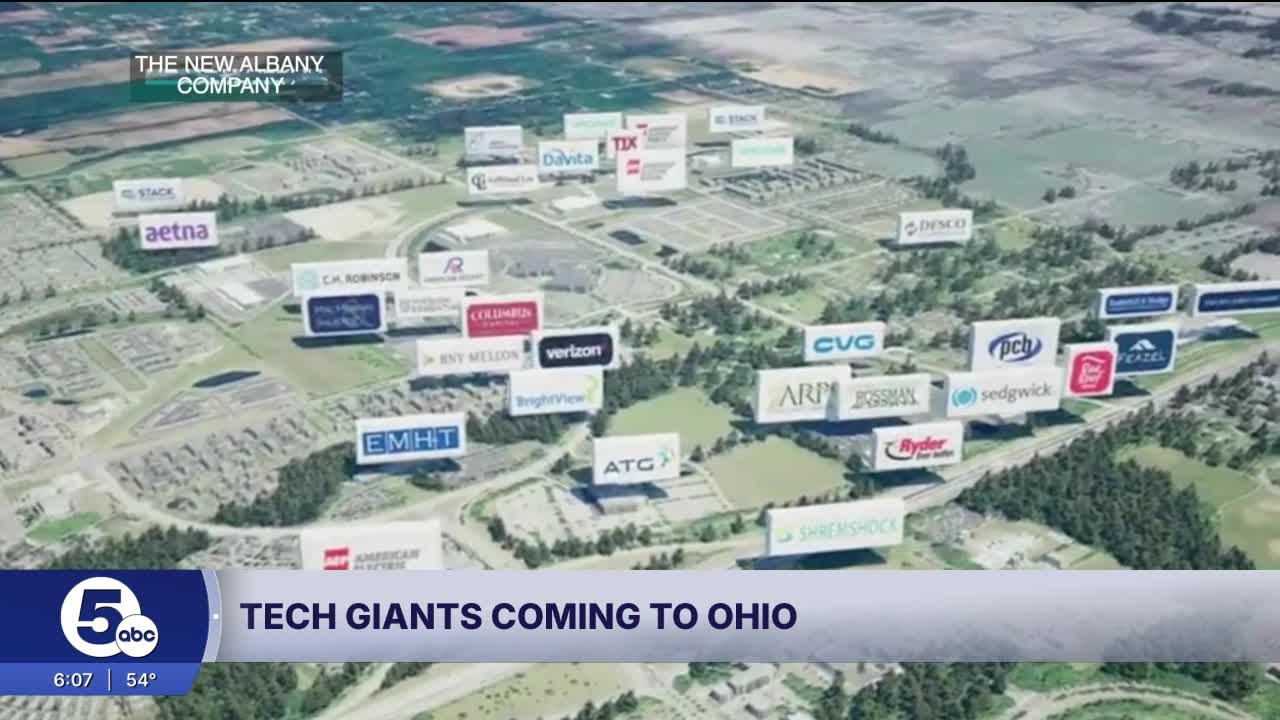



NEW ALBANY, Ohio — On a sunny afternoon in late April, Alex Klosterman jumps behind the wheel of a city van to narrate a drive through a sprawling business park northeast of Columbus.
By now, he’s mastered this hourlong tour, past offices, warehouses, manufacturing hubs and the vast site where Intel Corp. is building a semiconductor plant — the investment that earned this stretch of central Ohio the nickname Silicon Heartland.
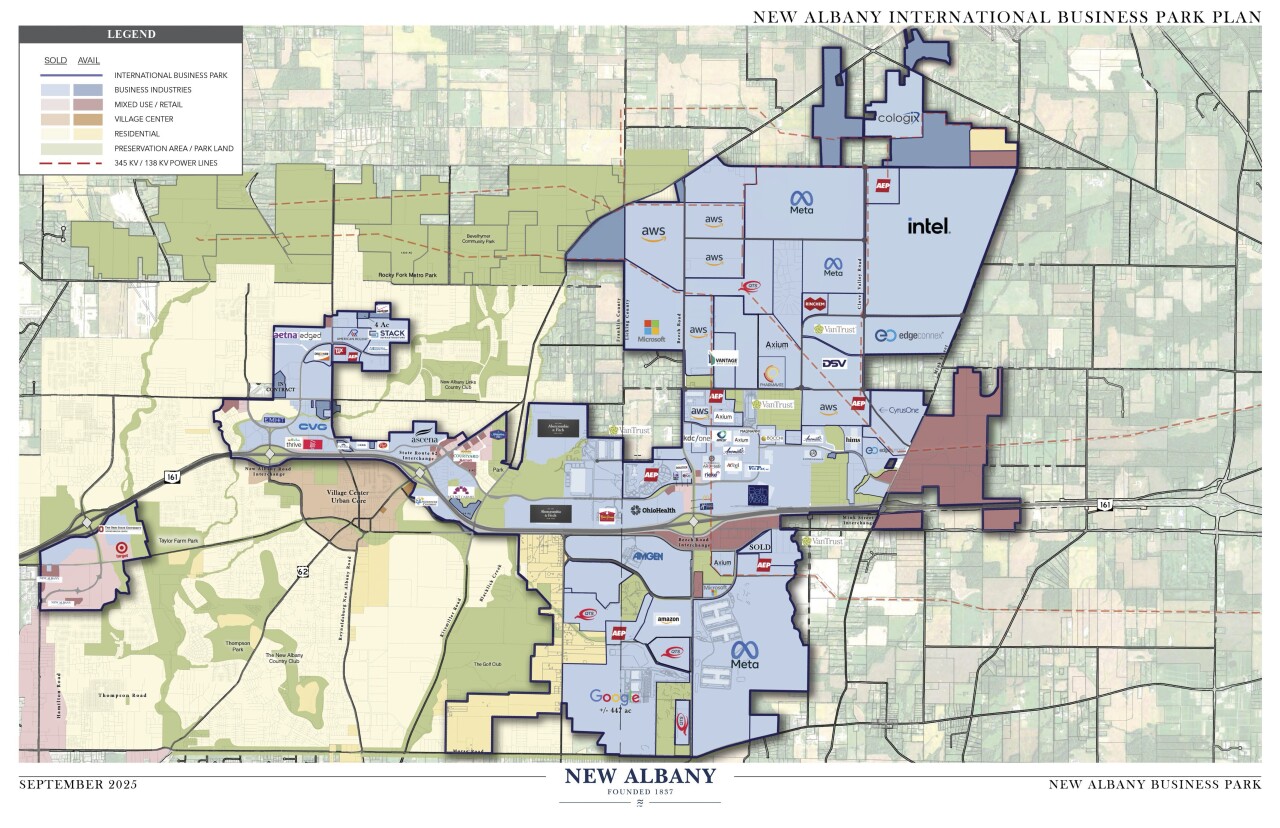
Looking at a map, it’s hard to comprehend the size of the New Albany International Business Park, which spans 12,000 acres. You could fit the whole city of Westlake inside it, with room to spare. And it’s here, in this meticulously planned community lined with white, paddock-style fences, that Ohio’s recent data center boom was born.
Since 2010, companies have opened 40 data centers in the park. There are 28 more on the drawing board or under construction, according to the city of New Albany.
So far, the projects are tied to 15 businesses, ranging from Google, Meta and Amazon Web Services to Discover Financial Services and the parent company of retailers TJ Maxx and Marshalls.
And for the last six months, New Albany’s community development team has been flooded with questions from leaders in other Ohio communities, where public officials are trying to understand what data centers really are — and whether to welcome them.
RELATED: Is a data center a blessing or a curse? It depends on the community.
That’s why Klosterman, an economic development specialist for the city, knows this tour so well. New Albany officials have been meeting with visitors twice a week, on average. Sometimes it’s just a few people. Sometimes it’s dozens.
A group from Van Wert, a city in northwest Ohio, recently arrived on a tour bus. A team from Perry Village, a Lake County community weighing a large data center project, came armed with a decibel meter to measure the noise level near the buildings.
(Since 2015, New Albany has received only four noise complaints, officials said. The city has worked with the tech firms to resolve most of those problems within a few days.)
Economic development organizations from Indiana and Michigan are reaching out, too. But, for now, the staff in New Albany is only providing tours for groups from Ohio.
"We’re just really trying to help educate people on what our experience has been,” Jennifer Chrysler, the city’s community development director, said during an interview. “It doesn’t mean that it’s going to be the experience that everyone has.”

'All these disruptions in the economy'
New Albany is an affluent, carefully choreographed suburb, with just over 11,000 residents and a median household income of about $200,000. The public schools sit on a 200-acre campus inspired by the University of Virginia, complete with a rotunda.
About 9,000 acres of the business park sit within the city’s boundaries, straddling the Franklin-Licking County line. The master developer behind the park is the New Albany Company, founded by retail magnate Leslie Wexner and business partner Jack Kessler.
When Chrysler started working for the city in 2005, data centers weren’t part of the conversation.
Abercrombie & Fitch was New Albany’s largest employer, with headquarters and distribution at the park. The retailer was responsible for 75% of the city’s income.
"Our goal was to diversify the business park and bring in different types of revenue streams, but also bring in different types of businesses that could help us sustain any ebbs and flows that might happen within the economy,” Chrysler said.
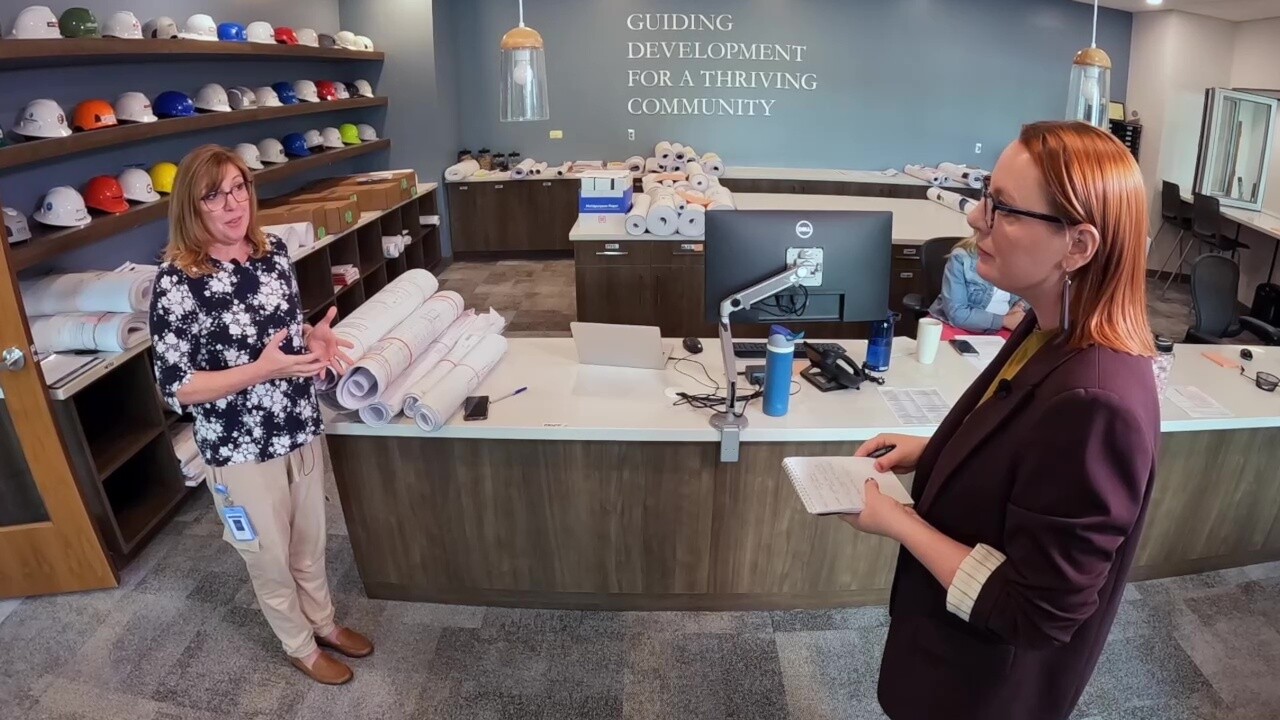
Now there are six main industry groups at the park, from high-tech manufacturing to logistics; a whole supply chain for health and beauty products; research and development; and, of course, technology.
The New Albany Company says the businesses employ 26,000 people. That doesn’t include the roughly 25,000 construction workers on the site.
During the driving tour, Klosterman points out land being gobbled up by Meta, which made its first investment at the park in 2017, building H-shaped computing warehouses.
Now the company, which owns Facebook and Instagram, is putting up giant, tent-like structures — with durable fabric stretched over frames — to power artificial intelligence. The modular, weatherproof tents go up much faster than traditional warehouses.
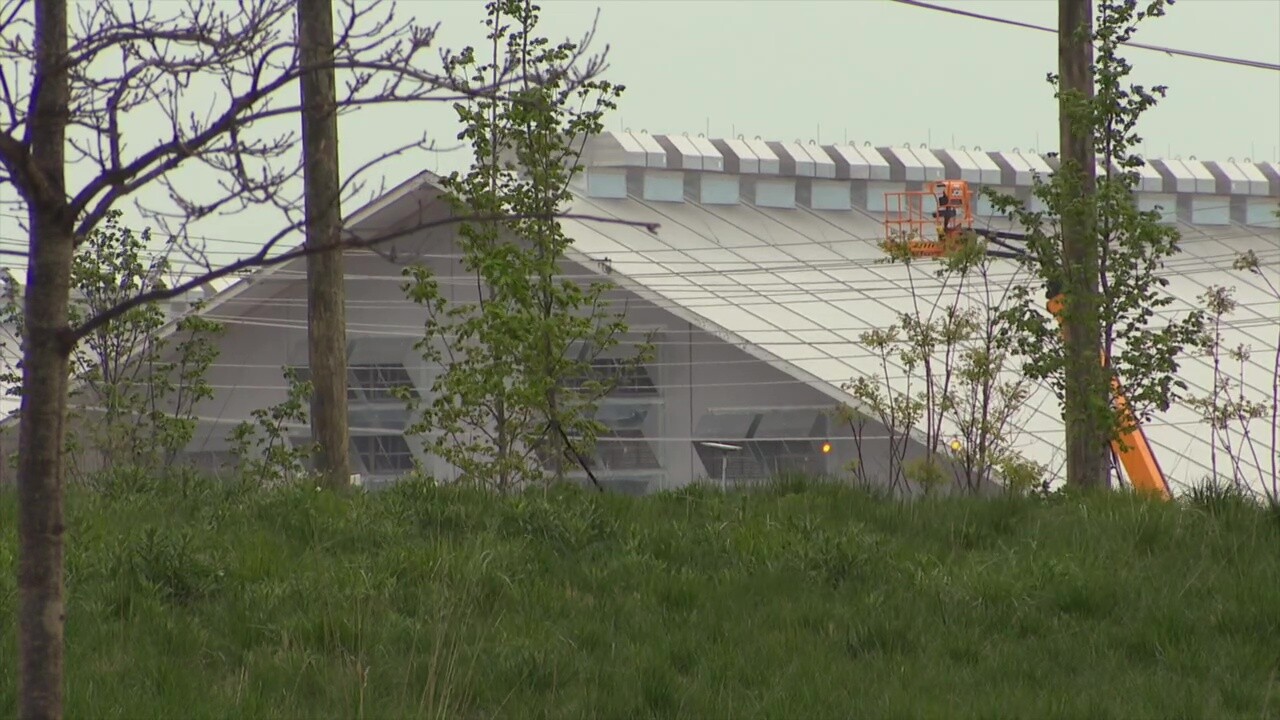
At this point, data centers probably are filling at least a third of the land in the park, Chrysler said. They started arriving around 2010, starting with smaller facilities that serve single businesses, like TJX and Discover.
Around that time, American Electric Power made major investments in the park — bringing redundant power and heavy transmission lines.
Amazon Web Services followed in 2015, kicking off a wave of massive data center projects. Google started construction in 2019. Then development snowballed.
"We’re seeing all these disruptions in the economy, with manufacturing and with AI and the reliance on technology,” said Chrysler, who once thought it would take years longer to fill most of the land in the park. “So it’s really growing a technology cluster within your community, not just necessarily data centers.”
'The secret sauce'
When leaders from other Ohio cities, villages and townships visit the business park, they often ask one question: How did New Albany find a financial upside from data centers — enormous buildings filled with servers and relatively few long-term employees?
Many of the data center projects at the park qualify for tax incentives, ranging from sales-tax exemptions on construction materials and equipment to partial property-tax abatement on the buildings.
RELATED: Ohio's spending billions on tax breaks for data centers. Now an incentive battle is brewing.
In 2024, the state provided $554.9 million in sales-tax breaks for data centers — and local sales-tax breaks for those projects totaled $166.8 million, according to new calculations from the Ohio Department of Taxation.
Those numbers illustrate the sharp uptick in these construction projects, including the building boom taking place in New Albany.
State officials originally expected Ohio to forgo only $130 million or so in sales-tax revenues on data center investments in 2024, according to tax estimates. Numbers for 2025 aren’t available yet, according to a spokeswoman.
But New Albany, as a city, mainly relies on income taxes to fund its operations. For data centers, officials came up with a deal framework that requires the companies to make minimum annual payments — in exchange for partial property-tax abatement.
Basically, the city expects to get as much money from a data center as it would from income taxes generated by a brand-new office building or a modern manufacturing facility. Companies end up meeting their obligations through a mix of payroll taxes, payments tied to rising real estate values, special fees and cash.
That means a data center campus with 200 to 250 employees has the same impact on the city’s bottom line as an office complex or production facility with 2,000 workers. And the data center, with a much smaller workforce, puts less demand on basic city services.
"That’s kind of the secret sauce that we share with communities,” Chrysler said.
The business park relies on water and sewer services from neighboring Columbus. The data centers all have agreements that cap their water use, and many of them routinely use less water than nearby manufacturing plants, Chrysler said.
American Electric Power has built electrical substations throughout the park. Now, some data center companies are starting to build on-site, natural-gas power plants, taking advantage of a recent change in Ohio law designed to encourage more development.
"We’re not trying to say this is the formula that everybody should use — or that they should be built everywhere,” Chrysler stressed.
But thanks to the money coming in from tech projects, New Albany is getting ready to issue bonds to expand its police station. The city recently wrapped up construction on a park and is building a new veterans’ memorial.
"We think it’s an exciting opportunity for those communities who feel that it’s an appropriate fit for them,” Chrysler said. “And they’re really the only ones that can make that determination.”
Michelle Jarboe is the business growth and development reporter at News 5 Cleveland. Follow her on X @MJarboe or email her at Michelle.Jarboe@wews.com.
