

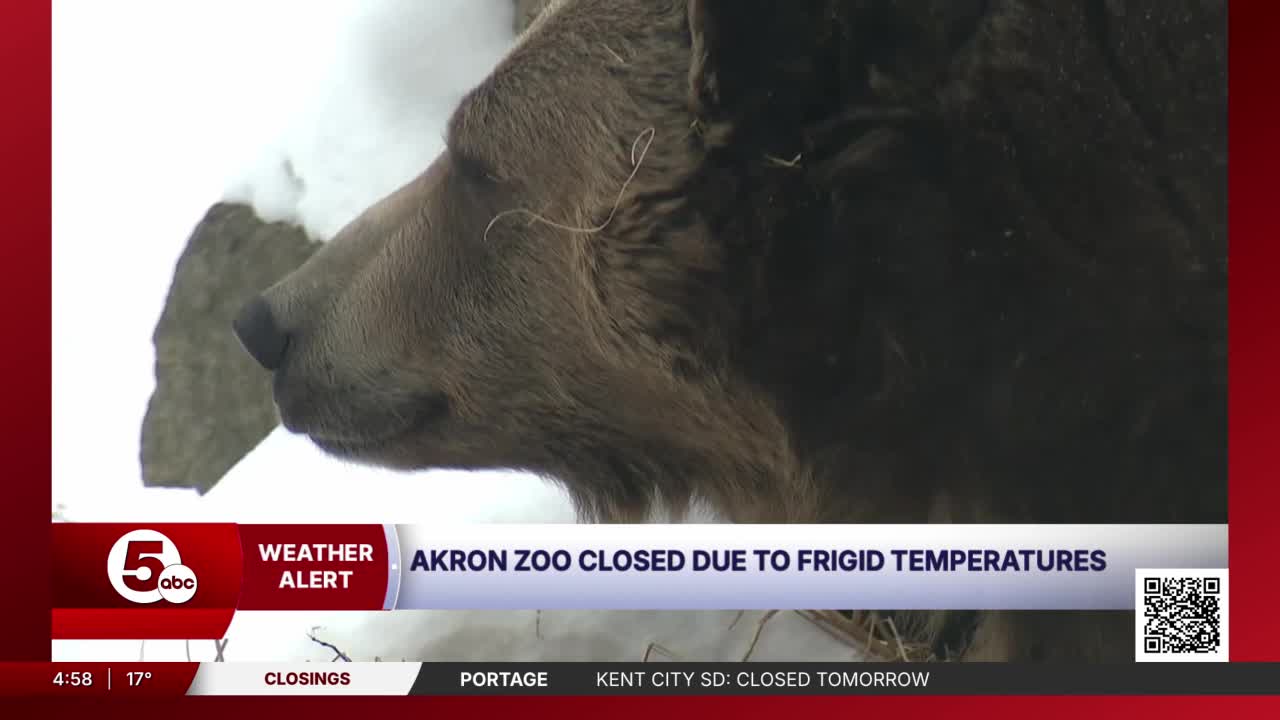


AKRON, Ohio — This frigid stretch of January has been tough on the Akron Zoo. Tuesday marked the fourth straight day the zoo was closed, and with another bitter day on the way, it will also be closed on Wednesday.
However, zookeepers continue to show up daily to make sure the animals are safe and warm.
The Akron Zoo released a video showing multiple animals enjoying the snow, including otters slipping, sliding and taking a dip in water. The arctic blast is not keeping them from having a blast.
"They're just thriving in their habitat. Of course, they do have access to an indoor space that is heated, but they have the choice," said Jessica Lelesch, a lead zookeeper.
On Tuesday afternoon, a News 5 crew captured video of coyotes and a wolf relaxing in the piled-up snow.
Sleeping lions huddled together and slept together in some extra hay provided for warmth. The zoo's biggest animal, Jackson the grizzly bear, also dug around some added hay. Lelesch said grizzlies have built up their fat storage for the winter.
"I call it their bulking season, and that allows them to stay warm throughout the winter," she said.
Noel, a black alpaca, doesn't mind the cold temps, but also has a heat lamp and a straw bed to stay warm.

Heated rocks are also in place to keep lions and tigers comfortable. A heated pool is available for white storks, but the pool has been empty in recent days because the storks, along with flamingos, have been brought inside a building.
Some of the most popular and entertaining animals, the gibbons, have also been moved inside. That includes a baby named Leuco.
"Because we have an infant who is just about six-months-old, they are locked in, and they stay inside all winter long," Lelesch said.
Lelesch said while several of the species are native to the winter conditions, the zookeepers do daily checks to make sure the animals are withstanding the conditions and not showing signs of frostbite or hypothermia, such as discolored skin.
"It just depends on the species. If we believe that there is concern for frostbite or hypothermia, then we will make special heating accommodations for those animals," Lelesch said.
Zookeepers are considered essential employees, and Lelesch said they take their jobs seriously to protect the animals.
"The keepers are running around making sure that our buildings are staying warm, that our animals are staying through this snap, and then we go home and worry about ourselves because it's also cold and we have to stay warm too."
Temperatures are expected to remain very chilly this week. Zoo officials will monitor weather conditions before deciding whether to reopen on Thursday.
