

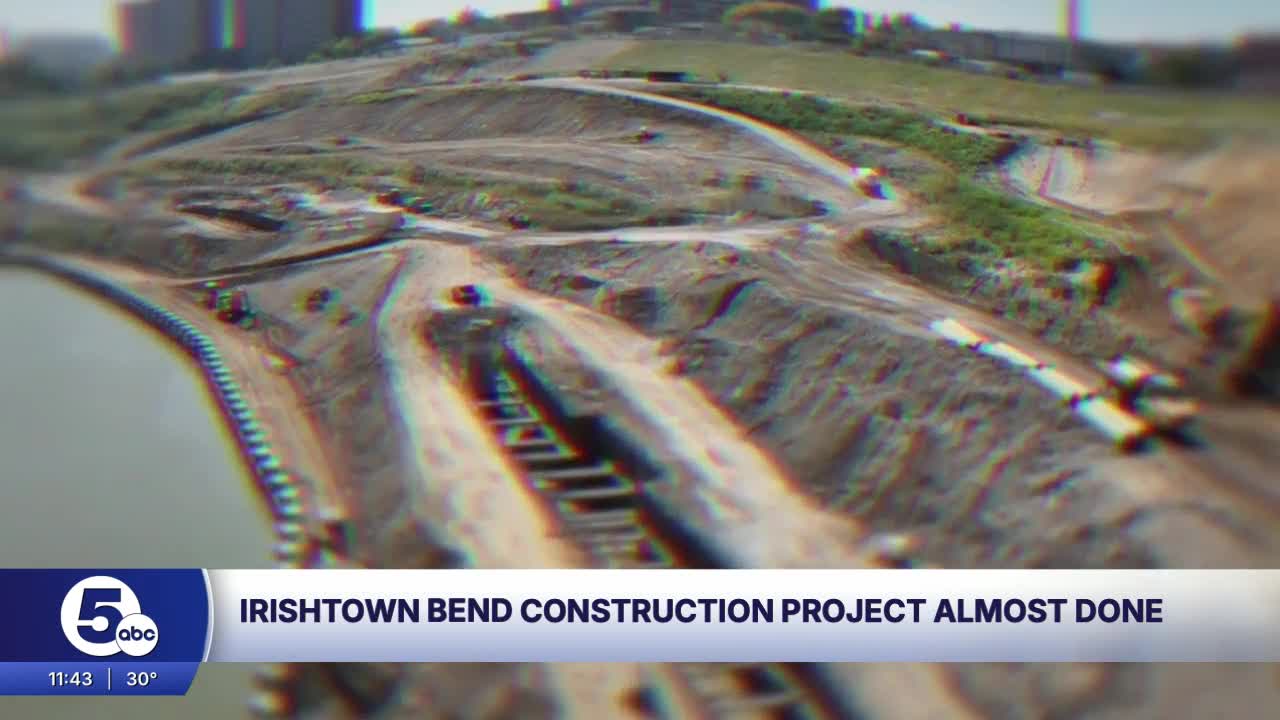



CLEVELAND — From the breezeway at Riverview Tower, on the 10th floor near his apartment, Brian Brown has a sweeping view of all the change at Irishtown Bend.
Over the last few years, he’s watched workers tear down buildings, clear brush and move massive amounts of dirt to shore up the shaky slope above the Cuyahoga River.
That $65 million stabilization project is almost done now, set for completion early next year. Sprays of wildflowers dotting the hillside hint at what’s next: A 25-acre park that Brown and his neighbors at Riverview, a 506-unit public-housing complex, will be able to reach from the high-rise’s back door.
“I’ll probably get out there every day that I’m able to walk,” said Brown, who is 65 and uses a cane because of his arthritis. “At least, try to get two, three miles.”
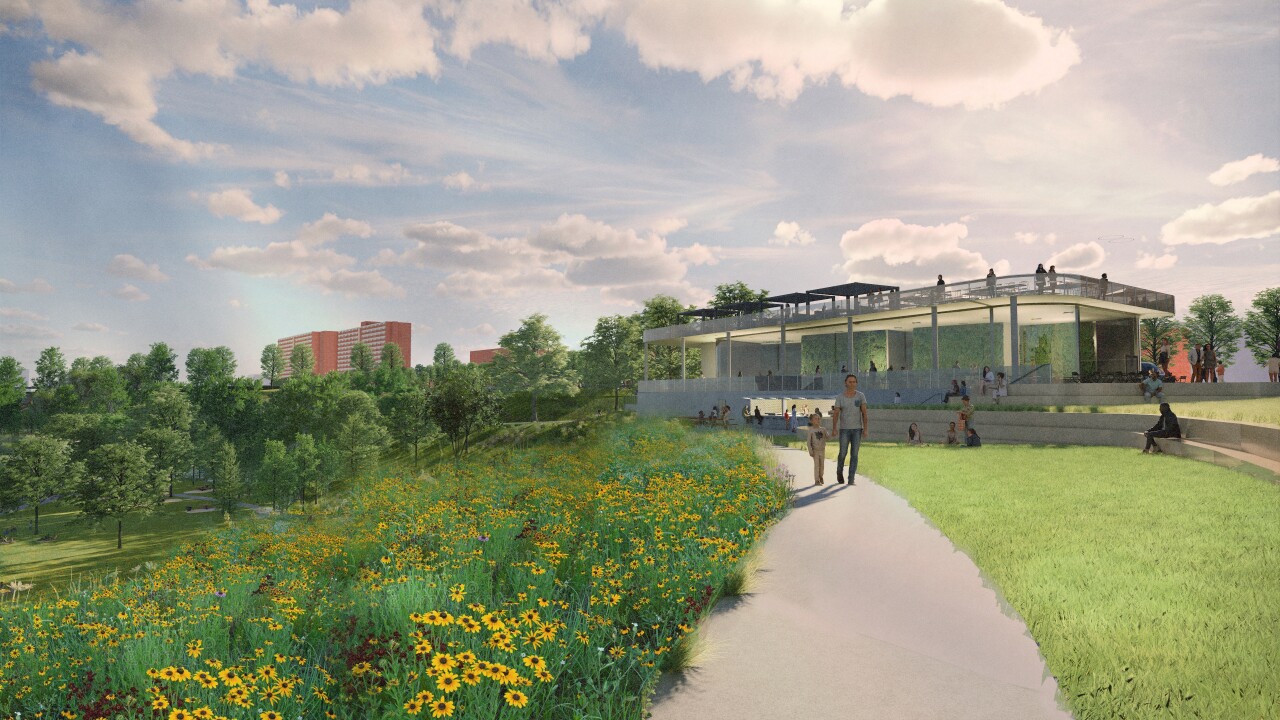
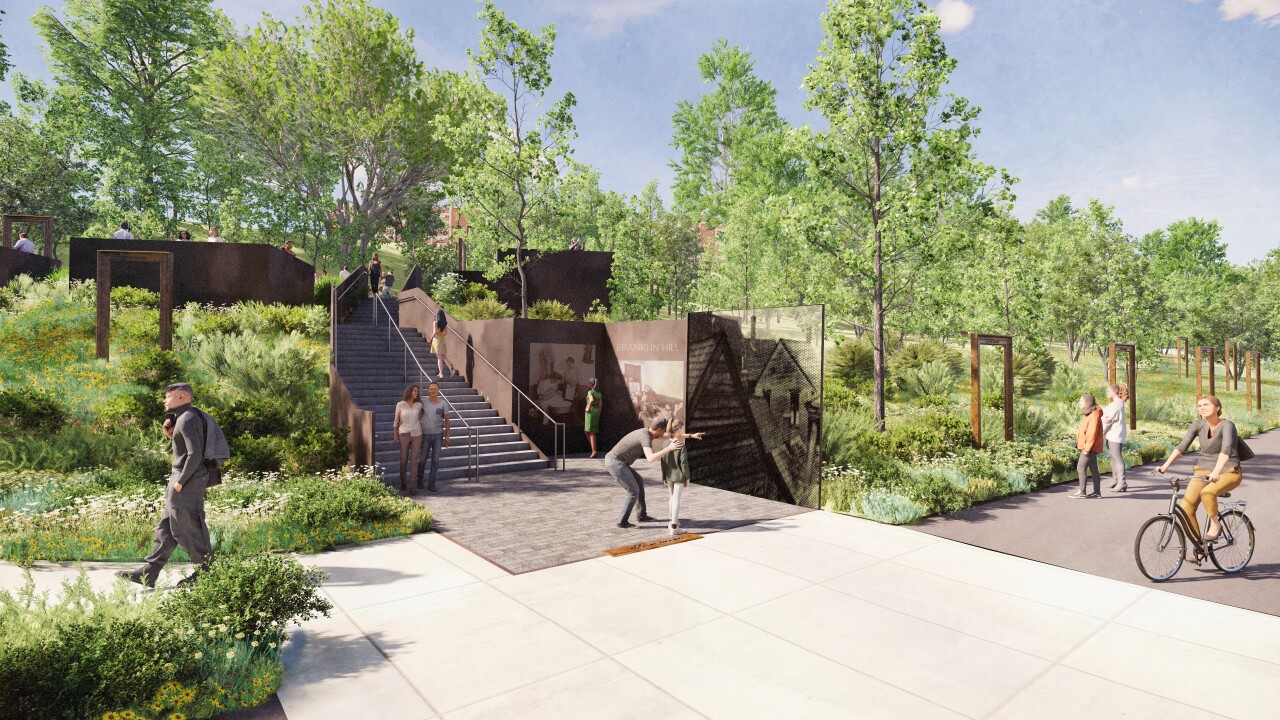
The next wave of construction will start in the spring, linking the property to more than 100 miles of trails. The park plans show an amphitheater, a playground and a heritage area, in a nod to the hillside’s history as a settlement for Irish immigrants. There will also be grassy lawns and clusters of native trees as people make their way down the switch-backed slope.

The first pieces of the park could open by 2028, said Brian Zimmerman, CEO of the Cleveland Metroparks. The Metroparks will manage the park and oversee construction.
“It’s possible that it may become its own reservation here … kind of in the heart of all things riverfront,” Zimmerman said.
LAND Studio, a nonprofit, is still working toward its $45 million fundraising goal for Irishtown Bend Park. Last fall, the project won a $10.8 million grant from the National Park Service. That grant is being paired with matching funds from the Jack, Joseph and Morton Mandel Foundation; the George Gund Foundation; the state; and other donors.
Separately, the Metroparks is getting ready to build the last piece of the Cleveland Foundation Centennial Lake Link Trail, which will cut across the site. Trail construction will start in the spring.
“It took the work of many to get this far,” Zimmerman said. “And it will take the work of many to continue the progress here.”
'How government should work'
Discussions about turning the hillside into a park have percolated for decades. The project’s finally happening because of a geological problem – and an economic threat.
The slope, off West 25th Street in the Ohio City neighborhood, was unstable and at risk of collapsing into the river, keeping freighters from making their way to the Cleveland-Cliffs steel plant in the industrial valley.
The challenge was part-nature, part-man-made.
Consultants working on the project found a weak layer of clay deep under the slope. And in the 1960s, the U.S. Army Corps of Engineers dumped dirt dredged from the river on top of the hill, adding tons of weight and significantly changing the topography.
In 2010, the Port of Cleveland, a government agency focused on maritime activity and economic development, launched a push to find a fix. But it took more than a decade, and partnerships with many other government agencies and nonprofits, to pull together the land and money – federal, state and local – for construction.
“This project, to me, is an example of how government should work together to solve problems,” said Linda Sternheimer, the port’s senior vice president of urban planning and engagement.
The port broke ground for the stabilization work in August 2023.
RELATED: Work begins on Irishtown Bend stabilization project
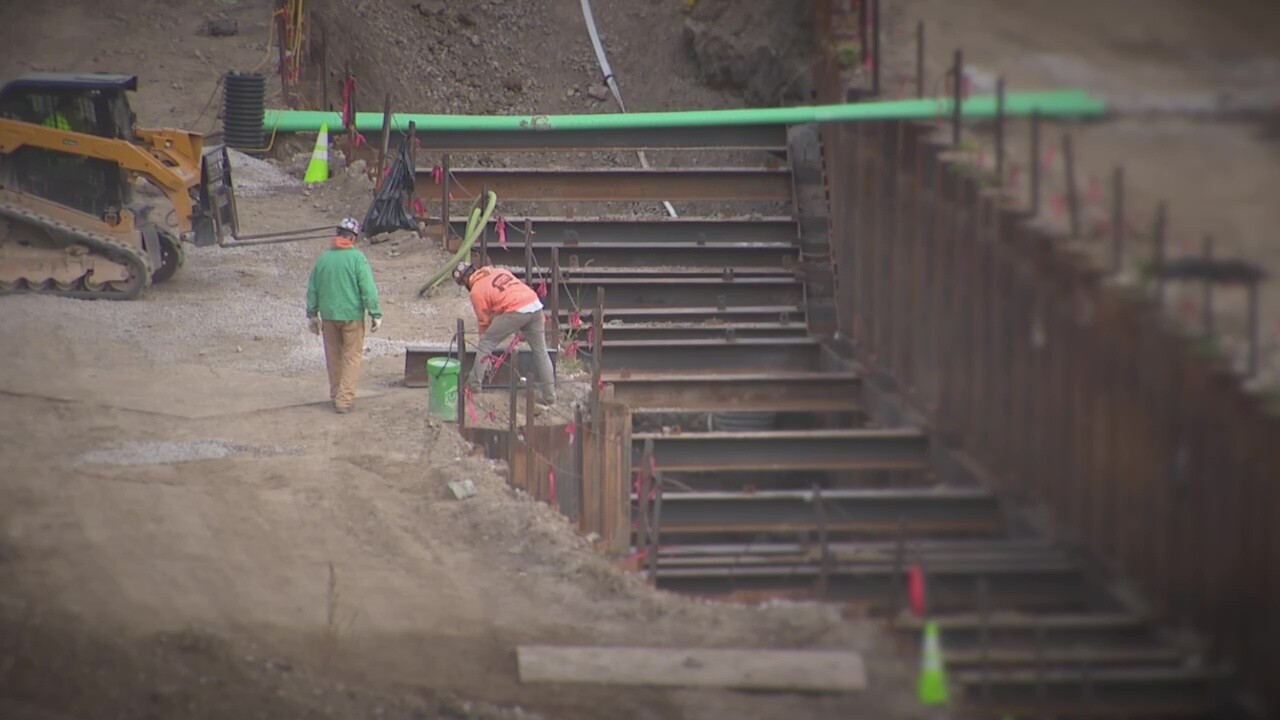
After divers inspected the riverbed, crews drove more than 200 steel pipes 60 feet into the earth at the water’s edge. They filled the pipes with concrete to create a roughly 2,300-foot-long retaining wall. That heavy-duty bulkhead also includes sheet-metal panels and anchors stretching back into the hillside.
Sternheimer said that the wall accounted for half the cost of the project.
Using heavy equipment, workers shifted about 230,000 cubic yards of dirt around – enough to fill more than 70 Olympic-size swimming pools. They used some of that dirt to reshape the terrain downhill, while removing some of it from the site entirely.
And they found a few surprises. Before construction began, archaeologists removed more than 60,000 pieces of artifacts from the area where the Irish shantytown once stood. Those artifacts are being stored and catalogued.
Construction workers unearthed less significant objects, including trash that people dumped on the overgrown hillside over many decades. “I can’t even remember the count of tires that we had to pull out and remove,” Sternheimer said, with a laugh.
The stabilization project also involves repairing underground pipes, including a key sewer line that serves the city’s West Side, and realigning Franklin Boulevard.
And there’s still one building – a long-vacant former Royal Castle restaurant at West 25th and Detroit Avenue – that needs to come down.
That building, with a large billboard on the roof, sits at the northern end of the future park property. It was the subject of a court battle and a 2023 legal settlement between the port, other civic organizations and father-and-son property owners Tony and Bobby George.
The settlement allowed the port to start the stabilization project – and to tear down the rear portion of the vacant building. In exchange, the Georges got a pledge of $1.25 million in cash and three new billboards in other locations. They also have the right to lease and operate – but not to own – a café planned at that corner.
The parties are still working through the final stages of the settlement process, including the Georges’ planned donation of the corner property to a nonprofit that’s holding land for the park.
'A waterfront city'
On a recent Wednesday morning, Sternheimer looked out over the construction site from the top of the hill.
“It’s just amazing to think that, in a couple years, people will be here enjoying the park,” she said. “And I’ll be able to bring my family here to enjoy the park.”
Brown, who has lived at Riverview Tower for 15 years, had a voice in shaping the park plans. He and some of his neighbors participated in community meetings about the project in the run-up to construction. They asked for easy access to walking trails and a playground nearby, so tenants can take their grandchildren somewhere nearby to play.
“We wanted a way for us to get into the park from our building, without having to go all the way down the street,” said Brown, who can see the river from the high-rise but has no easy way to reach the water right now.
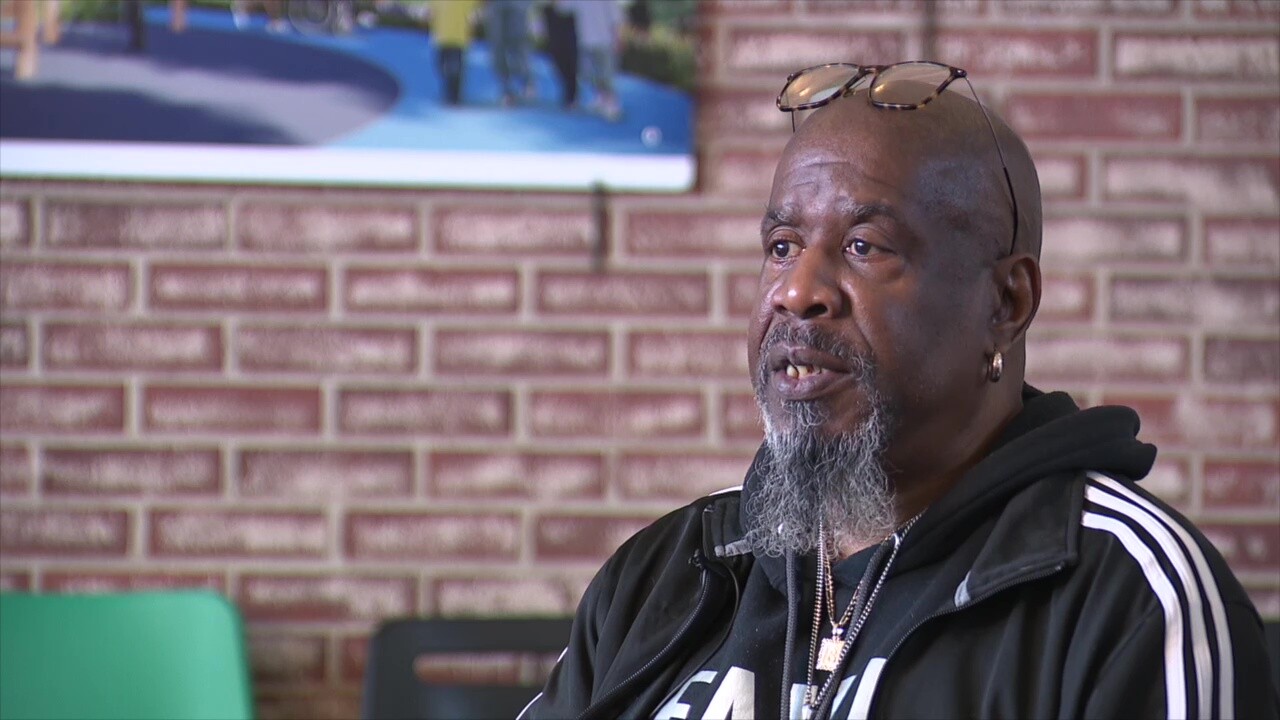
He’s looking forward to strolling down to the planned boardwalk. Renderings show places to linger and watch passing boats, from kayaks and rowing sculls to the giant ore-haulers that slowly maneuver through the river’s tight turns.
Zimmerman expects the park to be both a neighborhood asset and a destination for visitors from across the region – and beyond. “So many people will come from other parts of the world to see this great American urban park,” he predicted.
From the other side of the river, at Rivergate Park, it’s possible to see just how big the hillside is – and imagine what it could become. It’s part of a broader effort to reimagine both of the city’s waterfronts, the Cuyahoga River and Lake Erie, and to increase public access.
“Clevelanders, you know, we have not thought of ourselves as a waterfront city,” Zimmerman said. “We talk about Finland and Sweden and all these other wonderful areas. But Cleveland, we’re the freshwater capital of the world right here. … This is a fantastic ecosystem. And we’re only now just starting to hit our stride.”
