

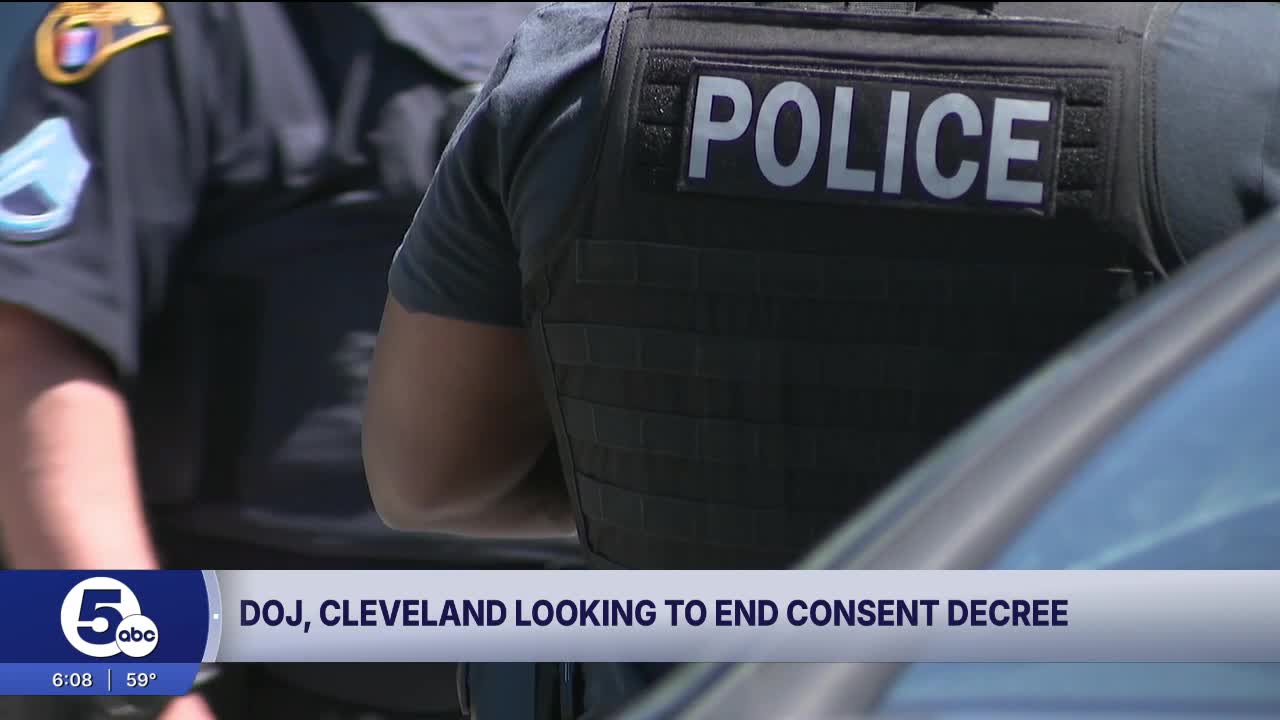


CLEVELAND — The City of Cleveland announced it filed a joint motion with the U.S. Department of Justice to end federal oversight of the Cleveland Division of Police at a news conference Thursday morning.
The motion asks a federal judge to terminate Cleveland's 2015 consent decree, saying the city has achieved "substantial compliance" with federally mandated reforms.
Bibb noted the city has received positive assessments from the federal monitor, who evaluates Cleveland's progress, including use of force, search and seizure, and crisis intervention training.
"We didn't just check boxes. We didn't just write policies. We changed the culture of policing in Cleveland," Bibb said.
"We invested in training. We strengthened supervision. We built real systems of accountability that are now a part of how this division operates every single day," he said. "The results are real. A 97% constitutional use of force rate in Level 1 and 2 incidences. A 100% thorough investigations in serious use of force cases. A 55% reduction in force related complaints, a less than 2% arrest rates in crisis intervention situations, and less than 1/2 percent use of force in those same moments."
Cleveland Police Chief Annie Todd said most of the current members of the division of police were hired after the consent decree was put into place.
"I was here when the consent decree started. I was here before the consent decree started, and what I see now is a completely different operation," Todd said.
They said the city's civilian oversight structures, including the Community Police Commission and Civilian Police Review Board, would remain in place after federal oversight ends.
Case Western Reserve University law professor Ayesha Bell Hardaway, who spent years serving on the federal monitoring team overseeing Cleveland's progress - and as interim head monitor - noted there are eight other areas of reforms in the consent decree that were not mentioned in the city's motion.
"Regardless of structures that may be put in place, the substance of the work remains," she said.
Hardaway also noted the Trump DOJ has not been supportive of consent decrees and that the city would likely not be in this position if Kamala Harris won the presidency.
"For them to file this motion in agreement with the Trump DOJ certainly does make for strange bedfellows at this time," she said.
The current federal monitor has also said there is still work to be done to achieve the massive reforms outlined in the consent decree.
U.S. District Judge Solomon Oliver, Jr., who oversees the city's consent decree, will decide whether to approve the motion and end federal oversight. Oliver scheduled a hearing for Friday.
The city has been under federal oversight since 2015 after a U.S. Department of Justice investigation found Cleveland police engaged in a pattern or practice of excessive force.
"In 2015, Cleveland entered into this agreement during one of the most painful chapters in our city's history," Bibb said. "Trust was broken, our systems weren't where they needed to be, and our community demanded better."
RELATED: Monitors: Cleveland earns 20 upgrades in consent decree report, but 'significant work remains'
