



CLEVELAND — With the proliferation of data centers across the state and the country, the Cleveland City Council will consider legislation asking whether it's time to pump the brakes.
Councilman Charles Slife is proposing a moratorium on any new data center in the city.
"This ordinance if passed would afford Cleveland City Hall an opportunity to analyze its land use and establish regulations that are in the common good," said Slife.
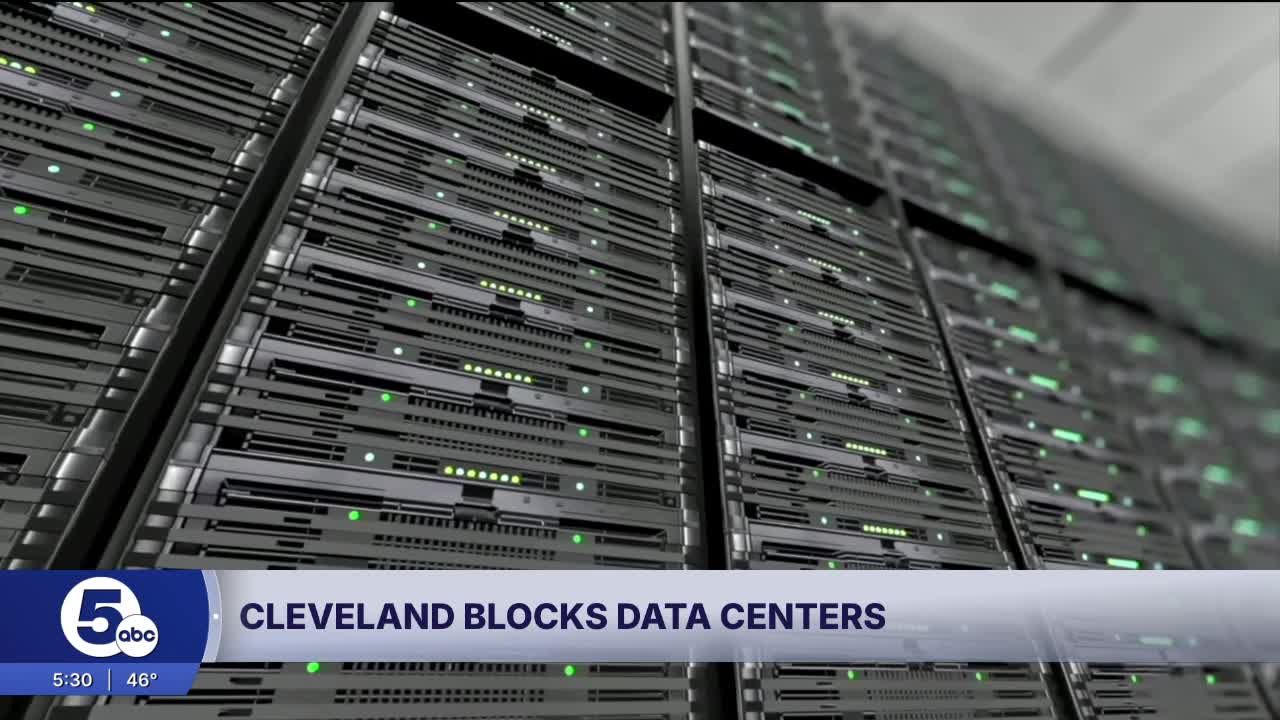
As our computer needs grow with AI, streaming, cloud storage, so too does the need for Data Centers, large buildings with massive computers that store, manage and process our digital information, with proposals for them popping up all over Ohio and the country. Currently, there are more than 4,100 active data centers in the United States, with another 2,700 in the planning or building stage.
"While I support economic development I can't support it when it's being exploitative," said Slife. "Let's be clear economic development when done poorly can grow the economy while increasing unemployment, accelerating poverty, widening income disparities, essentially exacerbating the very challenges we seek to overcome in this city."
Slife said the pause would give the city time to assess and ensure the right neighborhood protections are in place.
"For the people saying well, these are going to rural areas, there's a lot of vacant land in the city of Cleveland, there's a lot of old industrial facilities that could be retrofitted for this, so the city of Cleveland right now is receiving interest from data center operators," he said.
And whether it's a new build or the conversion of an old one, Slife fears a proliferation of data centers in Cleveland could prevent the city from attracting more beneficial economic investments that would create more jobs, which the city runs on.
"Nearly 2/3s of our revenue that we rely on to provide city services comes from income tax receipts, and the low job counts for square footage that data centers offer make them a weak economic development case.
Received messages from residents city-wide opposed to data centers," he said.
Data centers use a large amount of electricity, and Slife said that, given the already fragile power grid in some parts of Cleveland, that would not be good, and supplying their own power source, which the state can authorize, wouldn't be much better.
"You might live near a semi-industrial zoned property, it could become a data center, and the State of Ohio could authorize them to build a natural gas power generation facility on site, and now you're living near a power plant," he said.
That's actually something that a bipartisan group of Senators is considering requiring of new data centers.
"They should not be taking electricity or water or any other utility from hardworking, honest rate payers," said Senator Josh Hawley (R-Missouri), who is co-sponsoring legislation with Senator Bernie Sanders (I-Vermont).
Senator Bernie Moreno told News 5 earlier this month that he also supports energy independence for any new data center.
"You're going to make certain you provide your own electricity, you're not going to have rate payers compete with you for electricity and drive up their cost," Moreno said.
Gov. Mike DeWine is saying this month that, instead of individual communities issuing these moratoriums, it should be left to state lawmakers.
"I think these matters are generally dealt with better by the legislature," DeWine said. "The legislature can hold hearings, hear from parties pro and con, get some of the nuances of any of these particular issues. That, to me, is a better way of handling most of these public policy issues. That's why we have a legislature. We have a process, and I think that process should be followed."
For Slife, that's a hard pass.
"The Ohio Legislature has an outright contempt for the City of Cleveland," he said. "I don't trust the state, we need to regulate things at the local level and other cities should be joining us so that we could all collectively hold the state accountable."
Slife's legislation now goes to committee.
John Kosich is the Cleveland City Hall and state and federal politics reporter at News 5 Cleveland. Follow him on X @KosichJohn, on Facebook JohnKosichTV or email him at kosich@wews.com.
