

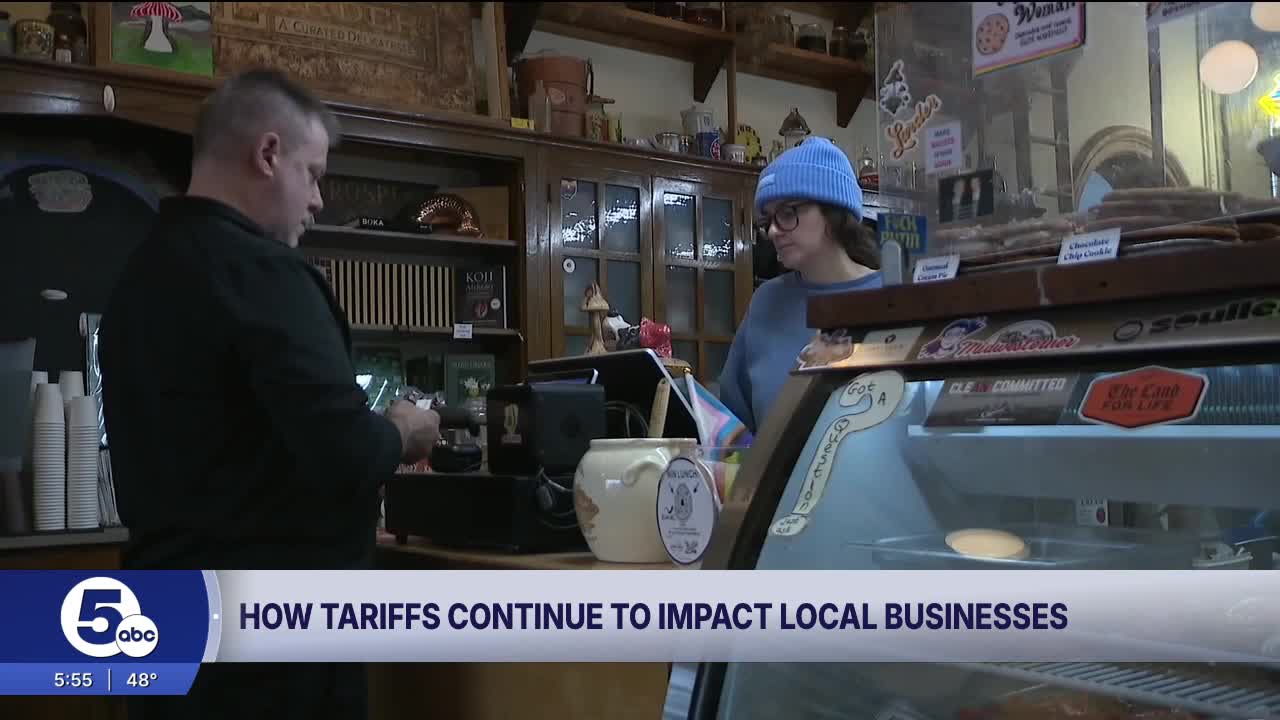


CLEVELAND — Tariffs have been a big topic of discussion since President Trump took office. And now, the Supreme Court has ruled against some of those tariffs. Right here in Cleveland, businesses say they’re hurting because of the increased cost of imported goods.
Inside Ohio City is Larder, a Jewish delicatessen where co-owner Jeremy Umansky isn’t happy about the added charges he’s seeing. He’s been importing koji spores—a plant seed used for culinary molds—from Japan since the restaurant opened nearly ten years ago. But now, tariffs are nearly doubling the price.
“This, roughly, costs me about $260 U.S., and I had a tariff payment of $423 and change just to release this to me,” said Umansky.
As a chef, Umansky prides himself on using unique, top-quality ingredients—ingredients that are now even harder to get.
“No, you can't find them domestically at all,” Umansky continued. “The intention for a great food based business to create the highest quality and most delicious things there are, and when you limit the pool of what people have to do that without having infrastructure here to replace that want and desire you see, see things start to crumble.”
He’s not alone.
Christopher Feran, a coffee consultant and owner of Aviary, said he’s feeling the increase as well—this time with coffee. He says Americans drink about 800 times more coffee than is produced in the United States. About 30% to 40% of that coffee comes from Brazil, which is now facing a 50% tariff.
“When your critical supply chains are cut off or suddenly become more expensive, we have to find coffee from elsewhere in the world, and the supply just simply doesn't exist anywhere else,” said Feran.
Leaving buyers with little choice but to pay the added cost.
“Well, we buy in container loads, so I’m buying 40,000 pounds at a time. If I’m paying $150,000 for a container of coffee, then suddenly my tariff is $75,000,” Feran said.
News 5 asked Ohio Gov. Mike DeWine about tariffs and the impact they’re having.
“We have not been aggressive enough in getting reciprocal agreements and reciprocal equality as far as the tariffs and some of our trade partners. So I think being tough in negotiations is a good thing when you get down to the specifics, then, you know, we do have, clearly, do have winners and we do have losers,” said Dewine.
Umansky and Feran said they’ve gotten creative to stay afloat. But they don’t know how long businesses can sustain these higher costs—and they’re not confident they’ll get that money back.
“I just want someone to explain this, because we're not getting answers,’ said Umansky.
“I think there's very little likelihood we're actually going to see refunds issued, and if we do, I think it's going to take years,” said Feran.
