

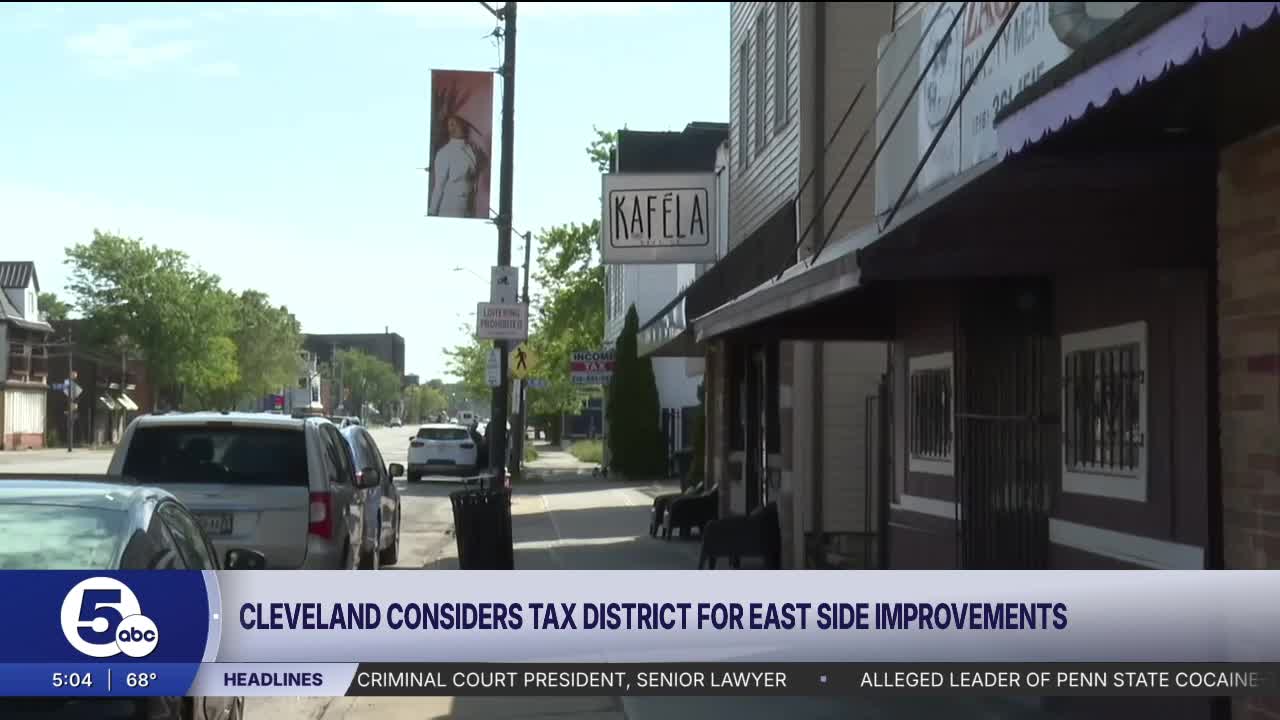


CLEVELAND — Cleveland City Council is set to consider a proposal Wednesday aimed at generating new investment in some of the city’s East Side neighborhoods.
Council is considering legislation that would establish the East Side Tax Increment Financing District, covering portions of the St. Clair-Superior, Hough and Central neighborhoods.
The proposal was introduced back in May and is now on the council’s agenda for consideration Wednesday.
If approved, the TIF would create a way for the city to capture a portion of future tax revenue associated with new development and increased property values within the district.
The money could then be used to support public improvements and redevelopment in the area.
Tom McNair, Cleveland’s Chief of Integrated Development, said the goal is to reinvest public dollars in neighborhoods that have experienced decades of disinvestment.
“This is a way for us to reinvest public dollars in the public realm in a way that can help lift neighborhoods up.”
The proposed district is part of the city’s broader Housing Innovation District strategy.
Potential investments could include housing development, parks, storefront improvements, streets, lighting and other public infrastructure.
The legislation also provides service payments to the Cleveland Metropolitan School District, with additional funds directed to city-established funds for public improvements and urban redevelopment.
The city’s presentation estimates the East Side TIF could generate significant new value over a 30-year period, depending on how much development occurs.
City officials say the goal is to create a cycle in which public investment helps attract new development, which then generates additional tax value that can be reinvested in the neighborhood.
“This is a way for us to reinvest future growth that will come from the investments that we make, right? To stabilize those neighborhoods and get them back into the positive tax rolls,” McNair said.
City officials have emphasized that approving the TIF would not immediately transform the neighborhoods.
Instead, it would create a financing mechanism the city could use as development moves forward.
McNair said there would still be significant work ahead with residents and the broader community.
“The world doesn’t change tomorrow when this passes,” he said. “This is a monumental step in the next part in the process. However, there’s a lot of work left to do.”
Cleveland City Council is scheduled to consider the East Side TIF Wednesday.
