

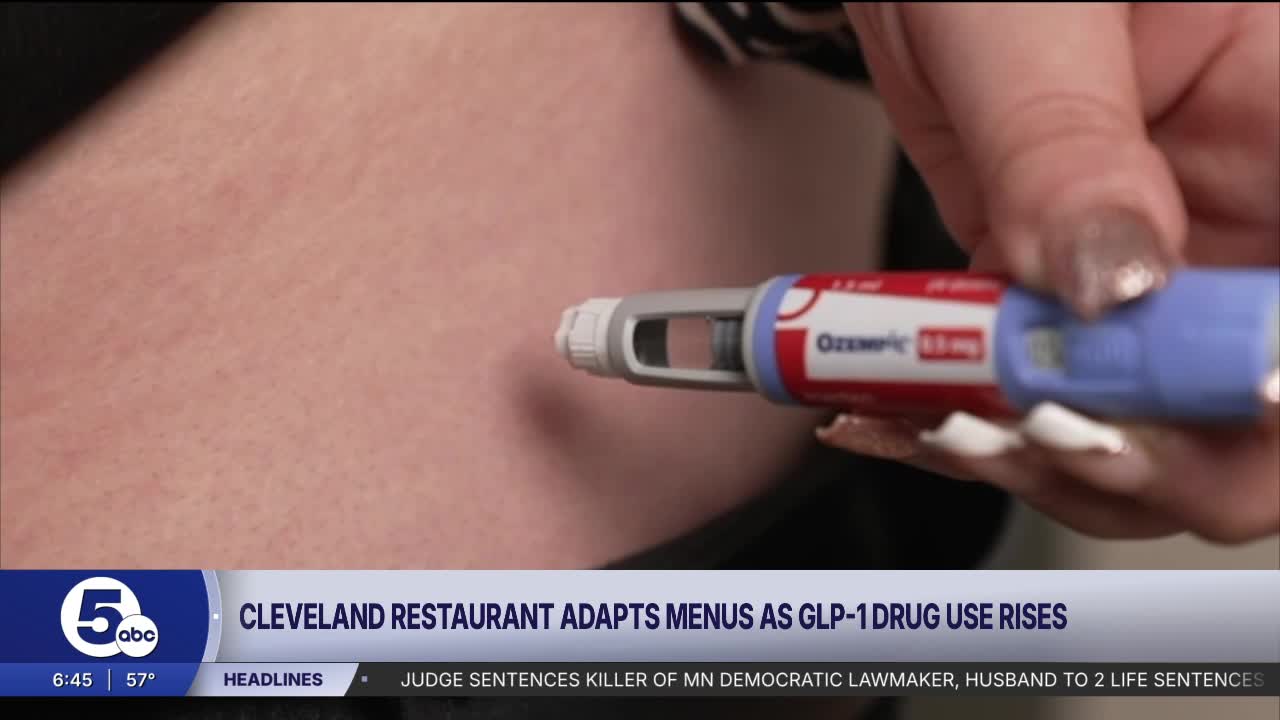


CLEVELAND — Restaurants have spent the last several years adapting to major challenges, from pandemic disruptions and rising food costs to labor shortages and inflation. Now, a new trend is reshaping the way some Americans eat out, the growing use of GLP-1 medications.
A new study from the Ohio Restaurant & Hospitality Alliance and Ohio State University researchers found the rise of GLP-1 drugs, often used for weight loss and diabetes management, is changing dining habits across the country.
Researchers surveyed nearly 1,000 people in the Midwest including, in Ohio, for their report.
"Our study came out and told us that about 23% of households in America, which includes Ohio, are taking some form of GLP whether it's the shot or the pill," said John Barker, president and CEO of the Ohio Restaurant & Hospitality Alliance.
The changes are already showing up in restaurant spending habits. According to the study, two-thirds of GLP-1 users reported spending less at restaurants, bars and fast-food chains. Four in 10 users said their spending on sit-down dining, carryout and meal delivery dropped by more than 10%.
“People still want to go out, they still want to go to weddings, they still want to go to a bar, but they're going to change how they do it,” said Barker.
Researchers say restaurants may need to rethink portions, menus and dining options as customers look for smaller meals, shareable dishes and more flexibility.
At Mallorca in downtown Cleveland, owner Laurie Torres says she is already seeing those changes among customers.
Torres estimates about 20% of diners at the restaurant are asking for smaller portions or different options because of GLP-1 medication use.
She says customers are sharing meals more often, ordering lunch-sized portions at dinner, and looking for more protein-focused dishes.
“We've had to change our menu because a lot of GLP-1s concentrate really on proteins so we are focusing a lot more on having protein-based products, protein-based entrees,” Torres said.
Torres says independent restaurants can quickly adapt to changing customer preferences because they are able to make menu adjustments without the same restrictions larger chains may face.
“This is one time that independent restaurants have an advantage because we can make changes overnight,” Torres said.
Barker says restaurants are also seeing shifts in beverage choices, with some customers opting for fewer alcoholic drinks and more non-alcoholic options.
Torres says Mallorca has noticed more diners choosing non-alcoholic beverages, but she believes that trend began before GLP-1 medications became widely used.
Industry leaders say adapting to changing consumer habits is nothing new for restaurants, pointing to previous shifts toward gluten-free, plant-based and heart-healthy options.
Torres says the restaurants that can evolve and adapt will be best positioned to keep customers coming back.
