

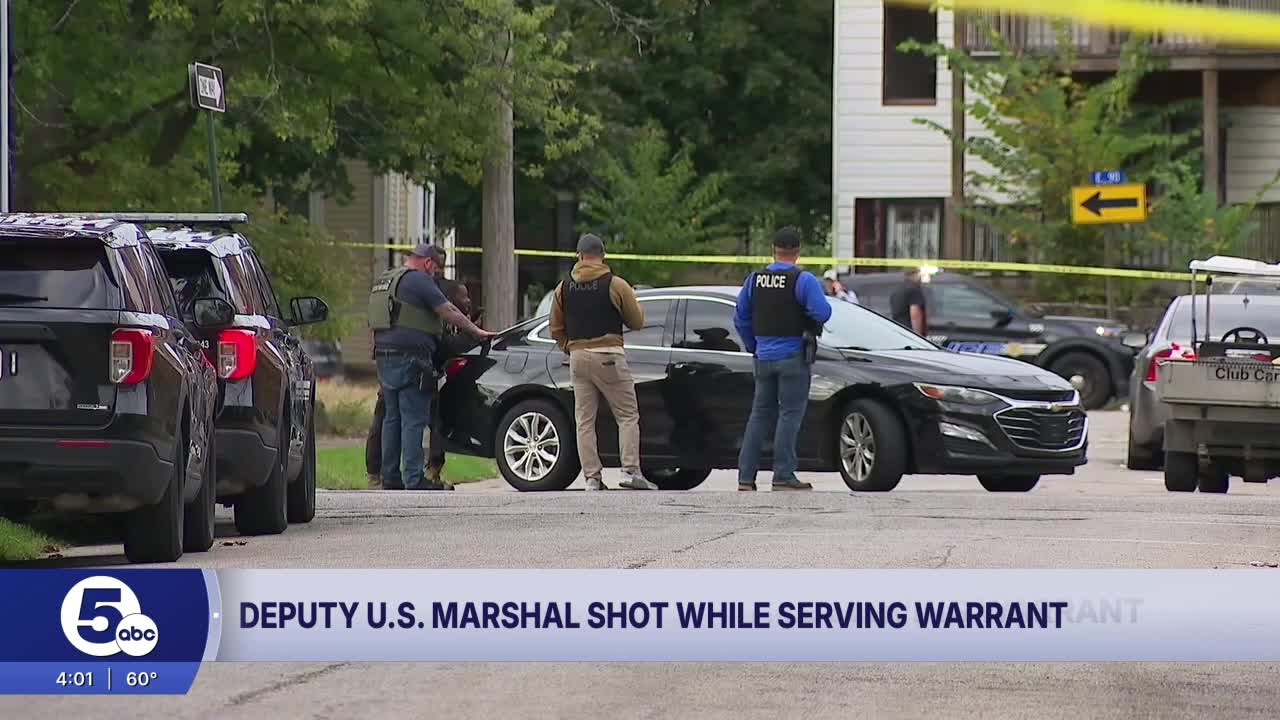


CLEVELAND — A deputy marshal was shot while serving a warrant in Glenville on Wednesday morning.
According to U.S. Marshal Pete Elliott, around 8 a.m., the suspect was tracked to a home on the east side for a felonious assault warrant out of East Cleveland.
The suspect was identified by law enforcement officials as Larry Wiley.
The suspect fired on the task force and struck a deputy marshal, and officers returned fire, said Cleveland Police Deputy Chief Ali Pillow. No one else was injured in the exchange.
U.S. Marshal Elliott became emotional while addressing reporters.
He said the suspect had three prior assaults on police officers and has spent almost 20 years in jail for various assault charges. Court records confirm the police assault convictions.
"It is pissing me off," Elliott said. "Another violent criminal on the streets shooting at our people."
Watch Elliott's full remarks:
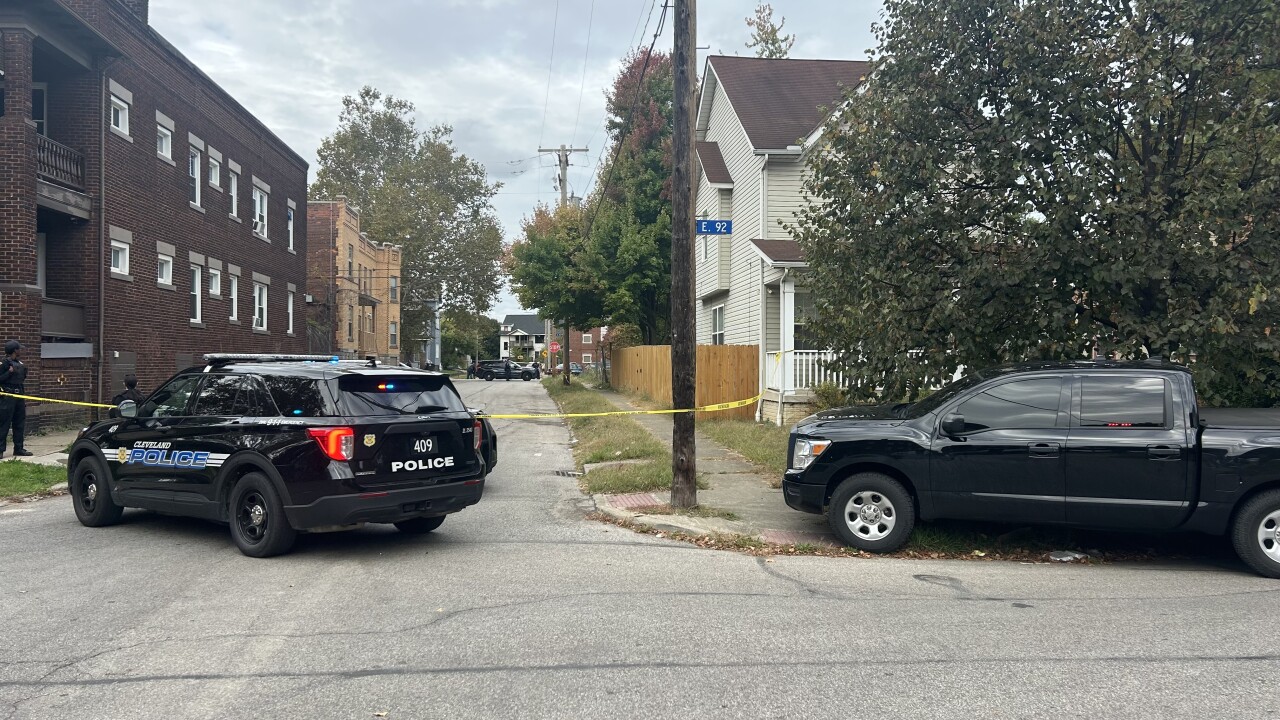
The shooting was followed by a heavy police presence on East 91st Street at Stewart Avenue, including sheriff’s deputies, U.S. Marshals and Cleveland Police, as well as negotiators and officers in full tactical gear.
Wiley barricaded himself inside a residence, leading to a standoff that lasted four hours.
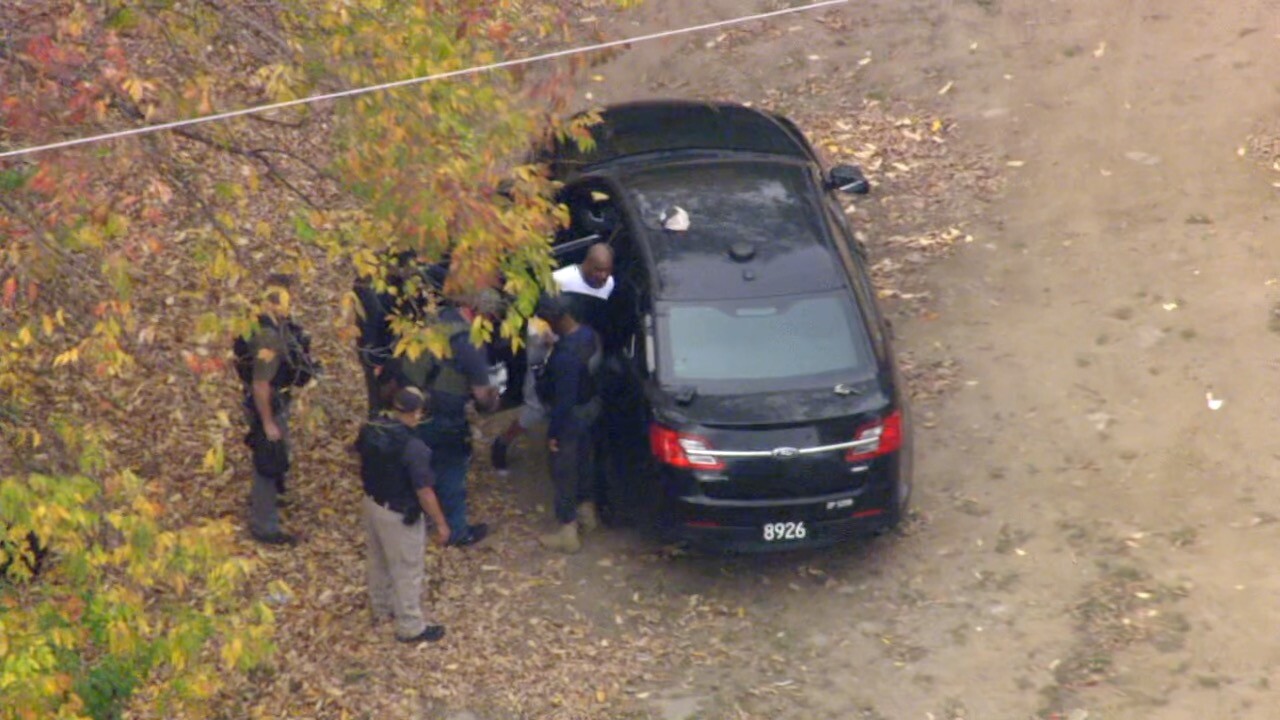
Deputies with the Cuyahoga County Sheriff's Office negotiated with Wiley, and sheriff deputies took him into custody.
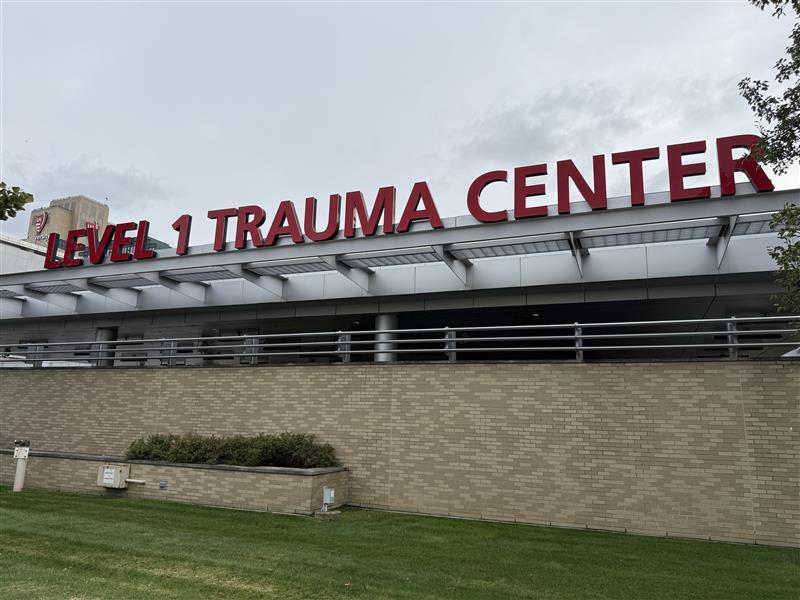
The deputy marshal was transported to the University Hospitals Cleveland Medical Center on Wednesday morning and was released from care on Thursday afternoon.
"He's a warrior, he is a tough individual, he is going to survive," Elliott said.
'This is not common'
William Buckway, who works in the apartment building where the shooting occurred, said he heard the gunshots on Wednesday morning.
"I was actually going in that building — it's the building I work in — when I heard gunshots going off and saw a police officer running out the building," Buckway said. "The officers seemed pretty calm at first until I heard the gunshots."
Buckway said the location is a multi-unit apartment building.
"This is not common, but I'm kind of numb to it already," Buckway said.
Inside the building, Taleesha Witherspoon's three kids took cover as law enforcement tried to coerce the gunman out. She stayed in contact with them on FaceTime.
"I was nervous. I was freaking out. I was scared. I was just calling them. They were FaceTiming me, keeping in contact with me," Witherspoon said.
After more than two hours, Witherspoon was finally able to reunite with her children.
"I’m nervous. I want to get back to my kids and make sure they’re okay because it was kind of stressful for us," Witherspoon said.
'The most dangerous job'
This is the first instance of a U.S. deputy marshal being shot as a member of the violent fugitive task force since it was formed, said Elliott.
While on scene, Cleveland City Councilman Mike Polensek recalled that Elliott started the Northern Ohio Violent Fugitive Task Force in 2003 after Cleveland Police Officer Wayne Leon was shot and killed by a fugitive in June 2000.
There are 350 members of the task force, which searches for suspects accused of murder, rape, robbery and shootings every day.
"They have the most dangerous job in the United States serving warrants on violent criminals," Elliott said.
Their goal is to take violent fugitives who pose a danger to the public off the streets. It's a dangerous job that could turn deadly.
"I pray for my men and women every single day of my life for their safety," Elliott said.
Since its inception, the task force has arrested more than 60,000 violent fugitives.
'One silver lining in a very dark cloud'
Elliott asked for more to be done to help law enforcement— bringing up Senate Bill 188.
S.B. 188 coincidentally had its first hearing on Wednesday. It makes it a crime for someone to barricade themselves, increasing penalties for resisting arrest.
There are levels to the penalties depending on the situation. But if the bill becomes law, the most serious crimes could result in a first-degree felony charge. A conviction would come with a mandatory prison sentence of up to 11 years and up to a $20,000 fine. Right now, it's just a misdemeanor or a low-level felony for failing to comply.
The bill also makes it a crime to help someone barricade themselves, with serious cases resulting in a second-degree felony. The maximum penalty would be up to eight years in prison and $15,000 fine.
The bill has a long way to go, but bill sponsor state Sen. Tom Patton (R-Strongsville) told Statehouse reporter Morgan Trau that the shooting in Glenville may fast-track it.
“It might be the one silver lining in a very dark cloud that maybe this will get, 'Hey, wow, this just happened; we just talked about it this morning, guys, let's move it quick,'” Patton said.
However, House Speaker Matt Huffman (R-Lima) told Trau that increasing consequences isn’t always effective.
“People who are committing crimes aren’t deciding ‘Well, what level of felony is this?'” he said, adding that people commit crimes for various reasons. “I don’t think the reaction is always, 'Well, let’s raise penalties.' The reaction might be 'Better training,’ a whole variety of other things.’”
Law enforcement officers are expected to come down to Columbus and testify in support of the bill.
