

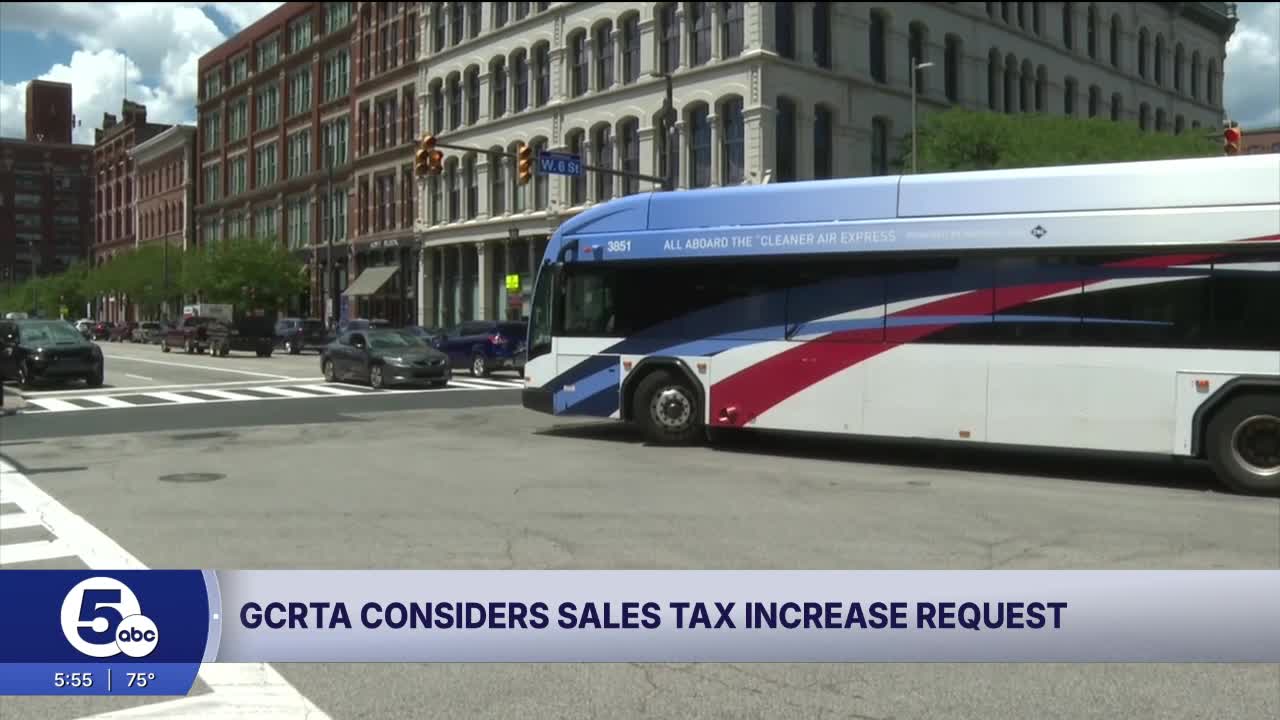


CLEVELAND — When the Greater Cleveland RTA was first created more than half a century ago, it went to the voters and asked for a 1% sales tax, which to this day provides more than 75% of its funding.
Voters in 1975 not only approved it, but they did so with 71% of the vote.
It was the last time they asked voters for money.
"Being 51, 52 years old with 1970s funding and being expected, which makes sense, to provide 2026 mobility is a little tough," said Greater Cleveland RTA CEO and General Manager India Birdsong Terry.
This issue was highlighted over the last year as the RTA looked to close a $78 million budget deficit as a result of rising expenses, including a 24% hike in healthcare costs and expiring COVID and infrastructure funds.
The RTA first proposed a 12% cut to services, which was eventually lowered to 3%.
They also put in place a hiring freeze, the elimination of vacant positions and implemented other cost-saving measures, but it won't be enough to hold off further cuts later this year if nothing is done.
"It's a very strong possibility that we would be looking at additional service cuts in preparation for 2027," said Birdsong Terry. "We would have to locate $10 million every January for the next three years foreseeably to get to a $30 million gap that we're trying to shore up."
That's why the RTA board is being asked to consider going back to voters for the first time in half a century and seeking either a quarter- or half-percent increase in the Cuyahoga County sales tax, which would raise $70 to $140 million a year for the agency.
"Our hope is that we would be able to get to a place that's comfortable and also provide stability financially for a company and also allows us to expand," said Birdsong Terry.
The board heard research conducted with voters and community leaders on the headwinds and tailwinds they'd face at the ballot box.
Some are impacted by the perception of public transit, others by who else might be asking voters for additional funds in the upcoming elections, as well as the time needed to make the case to voters, which might be difficult if they're looking at this November.
"We're about to enter the most expensive gubernatorial and senate race in Ohio's history and that's going to eat up a lot of oxygen," said Vanessa Tey Iosue of Burges and Burges Strategies, which conducted some of the research.
When voters approved that 1% tax in 1975, Cuyahoga County's sales tax was only 4%.
Today, it stands at a state high of 8%, which Birdsong Terry knows might make it a tougher sell, especially with voters continually facing higher costs.
"Our economic climate is very challenging, it's going to be tough for anybody at the ballot box," she said. "It's our job to be able to educate the public. We want to make sure people understand that we're important, we're not going anywhere and we want to make sure that our opportunity to grow is not stunted."
The board will hold further discussions in the coming weeks on how they want to proceed on a sales tax request, how much they'll seek and whether the upcoming election will give them the time needed to win over public support.
