

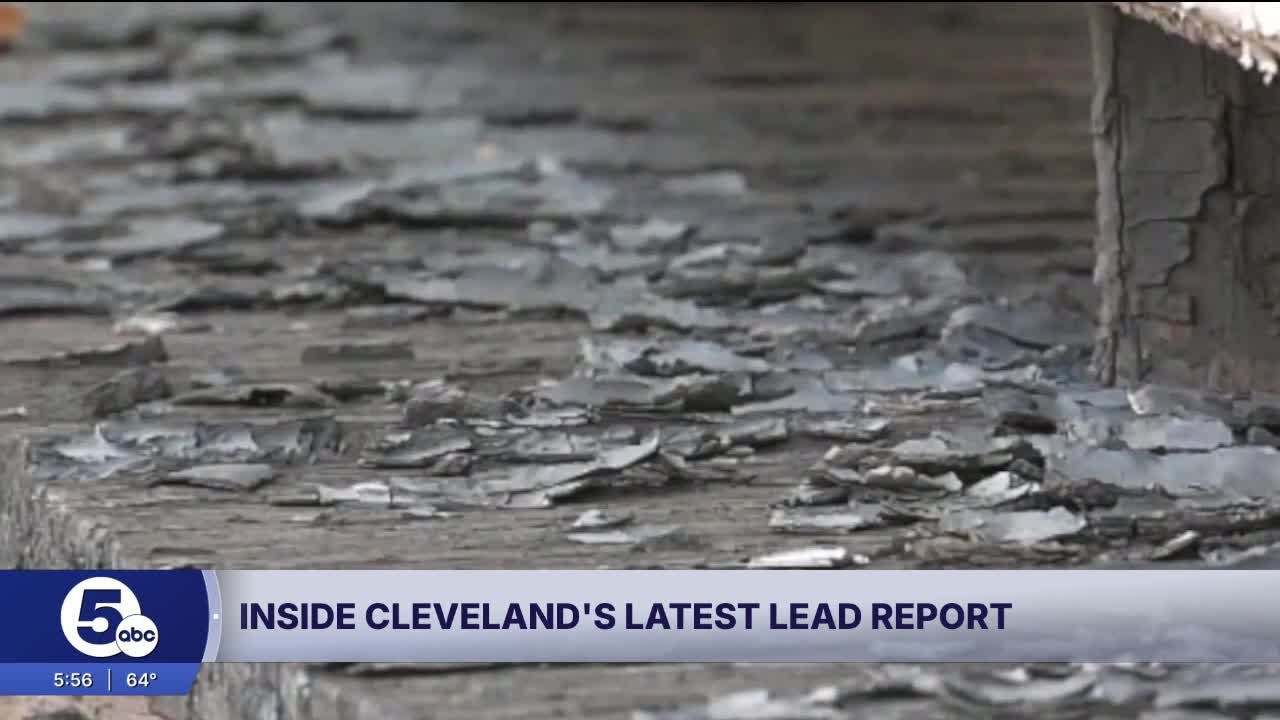


CLEVELAND — Nearly two months after taking over the newly created position of Senior Advisor for Lead Accountability, Rebecca Maurer provided Mayor Justin Bibb with an assessment of the city's ability to handle lead abatement.
It's a position created earlier this year after the city lost a $3.3 million grant for lead abatement for taking too long to spend it.
"Losing that money was devastating and frustrating to all of us in the City of Cleveland," Maurer said in her report. "I know we don’t ever want to lose another dollar that could have gone into home repair."
That's why one of her first priorities was to get a handle on the status of all the funds administered by the city earmarked for lead-safe home repair.
She also found an astonishing lapse in communication when it was discovered that there were literally 787 voicemails in the office voicemail box that had never even been listened to because no one had the passcode to access them.
"When we got into the voicemail box with the help of IT, we discovered there were 787 unlistened-to voicemails going back to July 2024. It was devastating. Parents, landlords and health care providers – they had all reached out to this number asking about the program. And we simply hadn’t gotten back to them. This was made even worse because the program was actively looking for qualified applicants. Lead is already a deep matter of trust in this city. People already feel left out and left behind. And we had just made that broken trust 787 times worse."
She said the Bibb administration provided the resources needed to tackle that backlog, with every call addressed over the last few weeks.
Maurer said the team has two enemies in this business, lead and bureaucracy, pointing to the latter in an instance where the city created narrower guidelines for acceptance into an abatement program than even HUD required, which made it hard to find qualified participants.
"Here's an example," she wrote. "HUD asks that owner-occupants have a child in the home or at least visiting the home. We had a senior citizen who applied for the program after a child was poisoned on his property, and a lead hazard control order (LHCO) was put on his property. He wants to make his property lead safe. The LHCO has resulted in his house being 'placarded,' meaning children are not supposed to be visiting. He is following that city rule and ensuring that no children are inside his property.
"This makes it hard for him to see his grandkids as much as he would like. Because his grandkids aren’t at his property anymore, we initially turned him down from participating in the program, even though his grandchildren aren’t in the home precisely because of the lead issues."
Maurer wrote of the team of workers the city has in place.
"The staff working on lead-safe home repair are committed, passionate, and skilled. But bureaucratic and technical restrictions have made grant spending slow. We are making strides to speed things up, but time is of the essence."
