

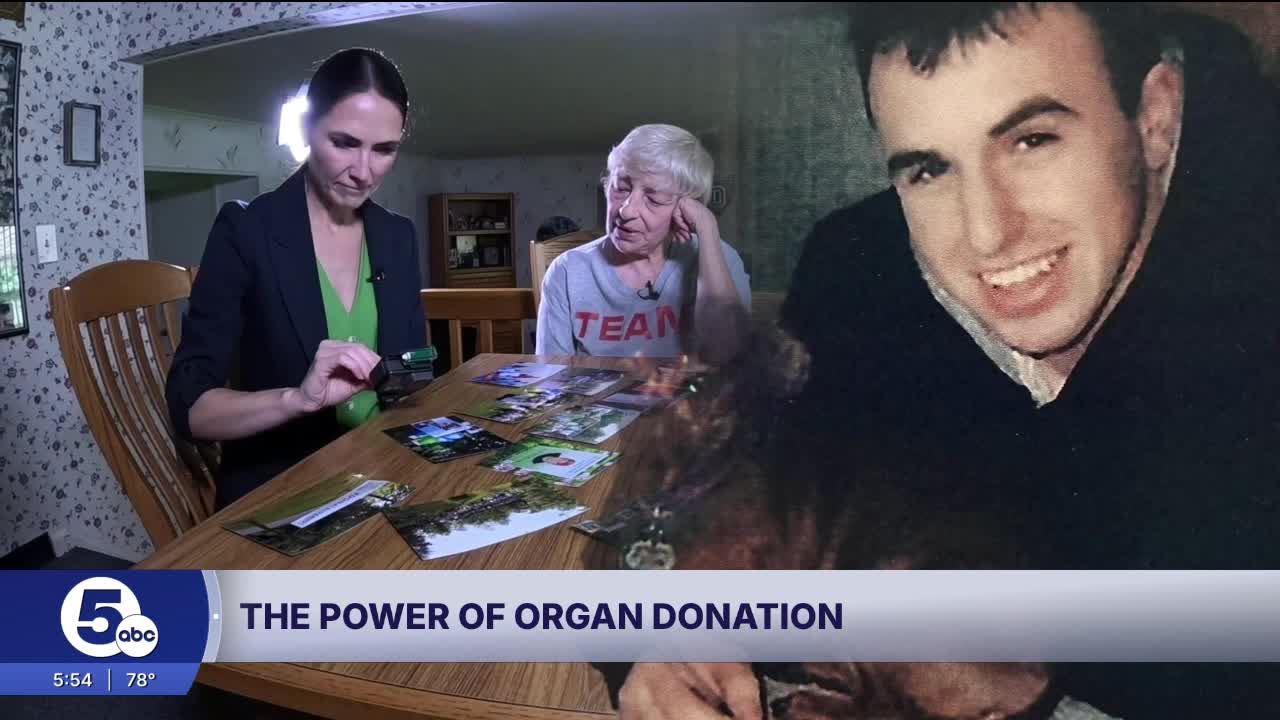


“Donation is not just between two people; it has a ripple effect,” said Lynda Corea.
If anyone knows the impact of organ donation, it’s Lynda.
Her son, Michael, was both a recipient and a donor.
“I thank God that I’ve really had so many miracles in my life,” she said. “Mike was a miracle. And I always tell people, I thank God for loaning him to us for 22 wonderful years, and only one absolutely horrible day.”

Looking at photos of Mike, you see his bright smile was ever-present.
“He had a great smile,” said Lynda. “And great eyes.”

Mike never lost that sparkle and lived every day to its fullest, she said, despite facing significant health challenges from the start.
He was born with biliary atresia, but Mike never let the rare childhood liver disease slow him down. Even though it meant significant lifestyle and dietary restrictions, and eventually, a life-saving liver transplant at age 13.
Lynda said he did amazingly well after surgery, and that second chance at life allowed Michael to achieve his childhood dream of becoming a Buckeye.
“He graduated with honors, and he went to the only college he would even apply to,” she said.
The Ohio State University.
But six days before his OSU commencement, tragedy struck.
A driver hit Michael’s motorcycle.
His sister read him his diploma from his hospital bedside — fulfilling his dream of being an Ohio State graduate.
His family then honored his final wish.
“He told everyone from the time he got his transplant, ‘I’m gonna be an organ donor when I die,’” said Lynda.
It is rare that organ recipients meet the donor requirements, but Michael did.
“He became one of a handful of people in all of the United States to be an organ recipient and an organ donor,” said Lynda.
It is a gift received and given that the family memorializes every year on the back of their Team MAC shirts at Lifebanc’s annual Gift of Life Walk & Run.

“Twenty years, people have not forgotten him,” she said of all the loved ones who join them every year.
Team MAC stands for "Michael Allan Corea." The shirts are in Buckeye colors of scarlet and gray.
“And this is T-shirt row,” she said, pointing to a photo showing a string of T-shirts strung up at the event, each one representing someone being honored for their gift of life.
“It’s always so meaningful,” she said.
The event this year is set for Sunday, Aug. 23, at Blossom Music Center.
Last year, 1,500 people attended, said Lifebanc.
Everyone came together to remember their loved ones.
“It really becomes not just a walk and run but a little like a memorial service,” said Katie Payne, CEO of Lifebanc.
For Payne, it’s personal.
Her brother passed away in an accident and was a donor, which she said led her into health care to help others.

“We are here to support donor families,” said Payne. “Our mission is to heal and save lives through organ, eye and tissue donation.”
The nonprofit said it’s seeing an increase in organ donors and transplants over the past year with more than 326 organs transplanted and 296 lives saved in just the first six months of 2026.
They said it is a reflection of the generosity of the people of this community — making the selfless decision to be an organ and tissue donor.
“What better testament to life could there be?” said Lynda.
She said the gift of life has also helped with the grief of losing her son. Seeing his living legacy is healing, she said.
Lynda built a friendship with the woman who received Mike’s lungs, Barbara, and attended her funeral years later.

“The thing that got me the most was when her grandchildren came up to me and said, ‘You know, if it wasn’t for Mike’s gift we would’ve never known our grandma.’ And that’s the ripple effect that I talk about,” Lynda said.
She has dedicated her life to raising awareness about organ donation and leads bereavement sessions for families.
The family also established the Michael Allen Corea Scholarship Fund at Ohio State University for organ recipients.
I asked Lifebanc what it feels are the biggest misconceptions about organ donation.
Payne said a lot of people believe if it’s indicated on your driver’s license that you’re an organ donor, or if you’re registered, hospital staff won’t try to save you during a medical emergency.
“That could not be further from the truth,” she said. “Most physicians are not looking at your driver’s license, and most nurses don’t have a clue if you’re registered or not. They don’t have access to the donor registry to know that. They are focused on saving the person right in front of them and valuing that life.”
