



MANSFIELD, Ohio — Whether in a middle school classroom or an adult learning summit, people of all ages are grappling with how to effectively use and critically evaluate today's artificial intelligence.
At the Richland School of Academic Arts, 7th and 8th-grade social studies teacher Dan Jones has incorporated a custom-built AI tool into his curriculum. Rather than serving as a shortcut to answers, the technology acts as a conversation starter to guide students' knowledge and encourage deeper thinking about historical topics.
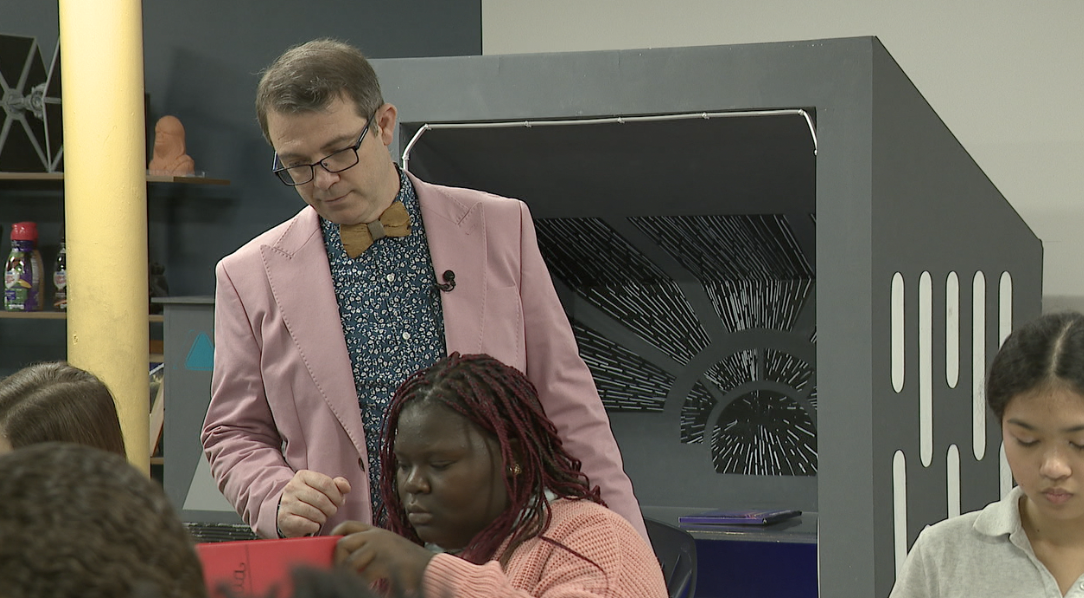
"As soon as I started working with [AI], I immediately knew this was going to change education forever," Jones said. "It’s a tool, it’s not an end. I can customize that chatbot so specifically so it didn’t write on behalf of my students."
"It doesn’t tell you any answers," 7th grader Mei Chang explained. "It helps you come up with better organization, better wording, and it helps you add on more things to it."
On top of the back and forth with AI, Jones has used to help visualize content and allow students to learn at their own pace, offering options consisting of traditional recorded lessons, catered slide decks, and even videos and podcasts to help students understand the topic.
The quiet classroom offers Jones an opportunity to directly connect with each student to see how they're progressing.
"I have a conversation with every single student, every single day," he said.
News 5 first visited the Richland School of Academic Arts to talk about AI two years ago, when AI was still in its infancy in Jones' classroom.
RELATED: Northeast Ohio school embraces AI in the classroom
"I had to scale back how much I was using because there are pieces and parts that I really wanted to get it right," Jones said.
Watch that 2024 story here:
Going forward, Jones hopes his students can take these newly acquired skills and apply them to other facets of their lives.
"It’s essential they have the exposure and the skillset so they can recognize it when they see it," he said.
It's not just teens learning about AI
Hope Town, a Windham-based nonprofit that provides recovery housing and other resources for those dealing with addiction, has quickly become a go-to training space for artificial intelligence in Portage County.
Since September, the nonprofit, created in 2019, has been offering AI training classes in tandem with AI Owl.
"We started going down this journey that AI was going to change the way we work," said Christopher Lattimer, automation supervisor at Hope Town.
News 5 sat in on one of those classes, which took place virtually. The instructor, James Sturtevant with AI Owl, told News 5 he started teaching this class across the state just six months ago.
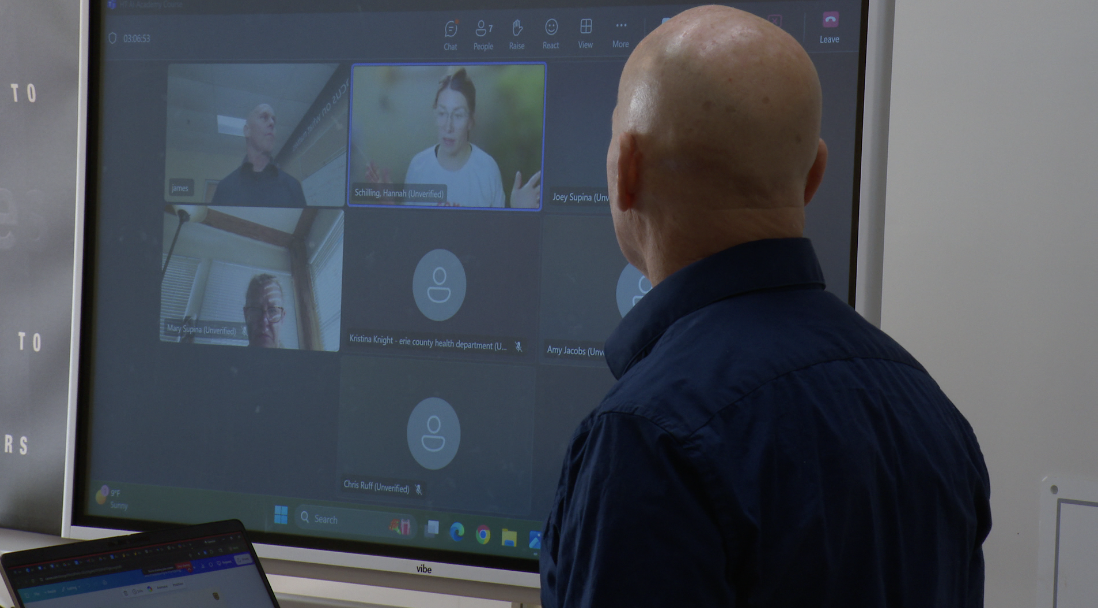
"Everything I look at that I presented in September seems prehistoric," he said.
Hannah Schilling, who is based in Hamilton County, sat in on the class.
"[AI has] been like a consultant I've been leaning on as a way to build efficiency," she said. "It's been an art finding way to weave in and create this tapestry where AI is a part of that work, and it's not leading the work."
So far, they've taught about 100 people since launching the courses in September.
RELATED: An unexpected nonprofit is leading the way on teaching AI in Portage County
The idea was born out of Hope Town's own curiosity and its own early integration of AI, such as its virtual receptionist.
"We wanted to build it for ourselves," Ted St. John, founder of Hope Town, said. "Nonprofits, we're lean, we're a small organization, we do a lot of things, and we need help. So we looked at AI as an assistant and took that and realized other nonprofits are going to need help, and other people are going to need your help."
And then there's AI on social media
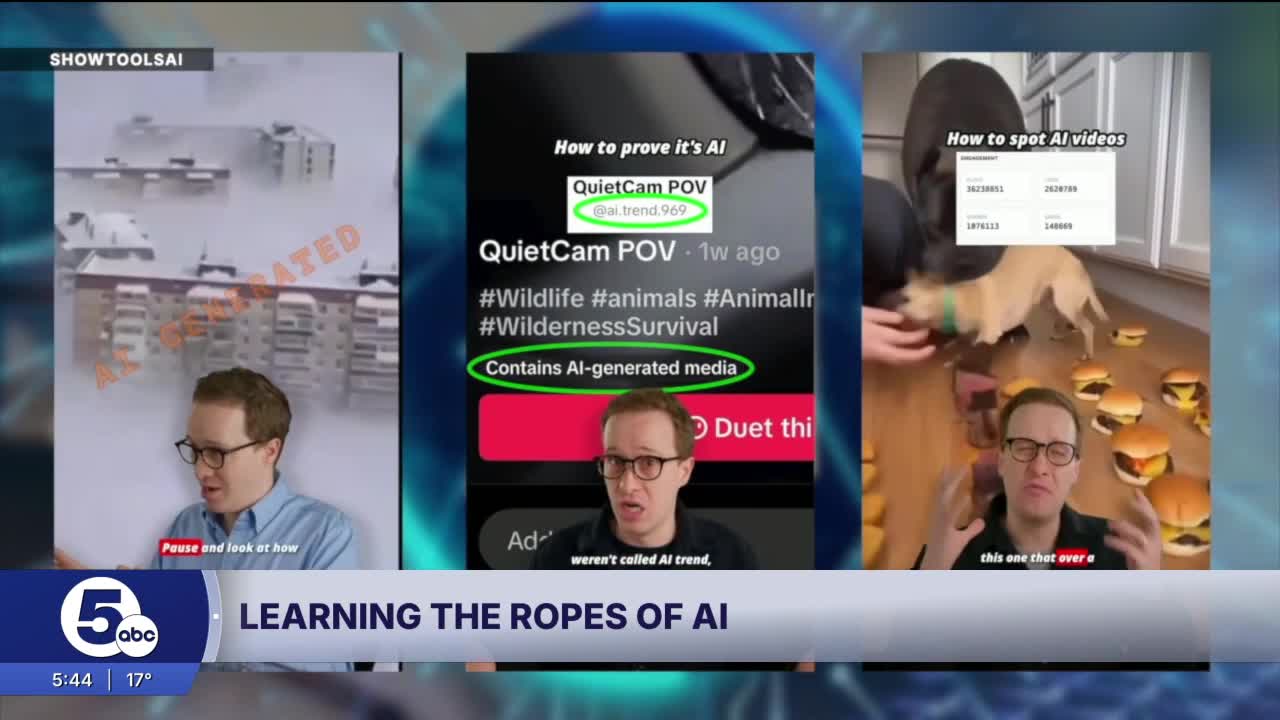
Jeremy Carrasco has built a different kind of classroom online, creating ShowtoolsAI to help people identify artificial intelligence and fake videos on social media.
In just nine months, his platform has become a resource for teaching AI detection skills to a broad audience, garnering more than 400,000 followers on Instagram and another 325,000 followers on TikTok.
"The reason why we want to identify AI is we want to know how to trust," Carrasco said. "Once distrust in real videos hits a breaking point, and I think we're closer than the AI companies understand, that means a lot of our social interactions online become very fraught."
Carrasco told News 5 the technology reached a turning point in mid-2025 when AI-generated videos became sophisticated enough to fool people beyond those with bad eyesight.
His expertise stems from years of working in video production and live streaming, where he developed skills to spot tiny imperfections in video streams.
"If we teach media literacy skills about how to identify sources you trust, even look how old the account is and see if it's realistic, they're already that good at social media, and they've been posting for two months," Carrasco said. "There are tells that normal people can do without being great at AI video spotting, and I do think it's part of the toolkit that should be taught."
As generative AI becomes more and more convincing, Carrasco offers some advice for those trying to identify AI-generated content videos:
Look at the background: Look for people in backgrounds whose facial features might warp or whose anatomy doesn't make sense.
Listen closely: Pay attention to how people speak, as AI struggles with natural speech patterns, emotional nuances, and conversation timing.
Who is the source: Examine the creator's other content for patterns, such as posting similar video styles with different people each time. How established is the source? Has the content creator been around for a while?
"Follow sources you trust primarily and don't form your worldview based on things that you just happen to cross on social media anymore," he said.
