




CLEVELAND — Nearly 6,000 people have responded to a survey about the future of Burke Lakefront Airport — and 85% of them want to see a more accessible lakefront in Cleveland.
As Mayor Justin Bibb’s administration seeks Congressional support to close the city-owned airport, public sentiment is part of the conversation. So far, survey responses show broad support for devoting more waterfront land to parks, trails and restaurants, along with sports and recreation facilities.
Representatives from the North Coast Waterfront Development Corp., the nonprofit shepherding the city’s lakefront plans, presented that preliminary feedback to a Cleveland City Council committee Wednesday. The group is still running the survey online and going to community meetings to seek input on early redevelopment ideas released last month.
“We wanted something for people to react to,” Scott Skinner, the group’s executive director, said during an interview this week. “And we’ve gotten that in spades.”
RELATED: What could replace Burke Lakefront Airport? New study shows the possibilities.
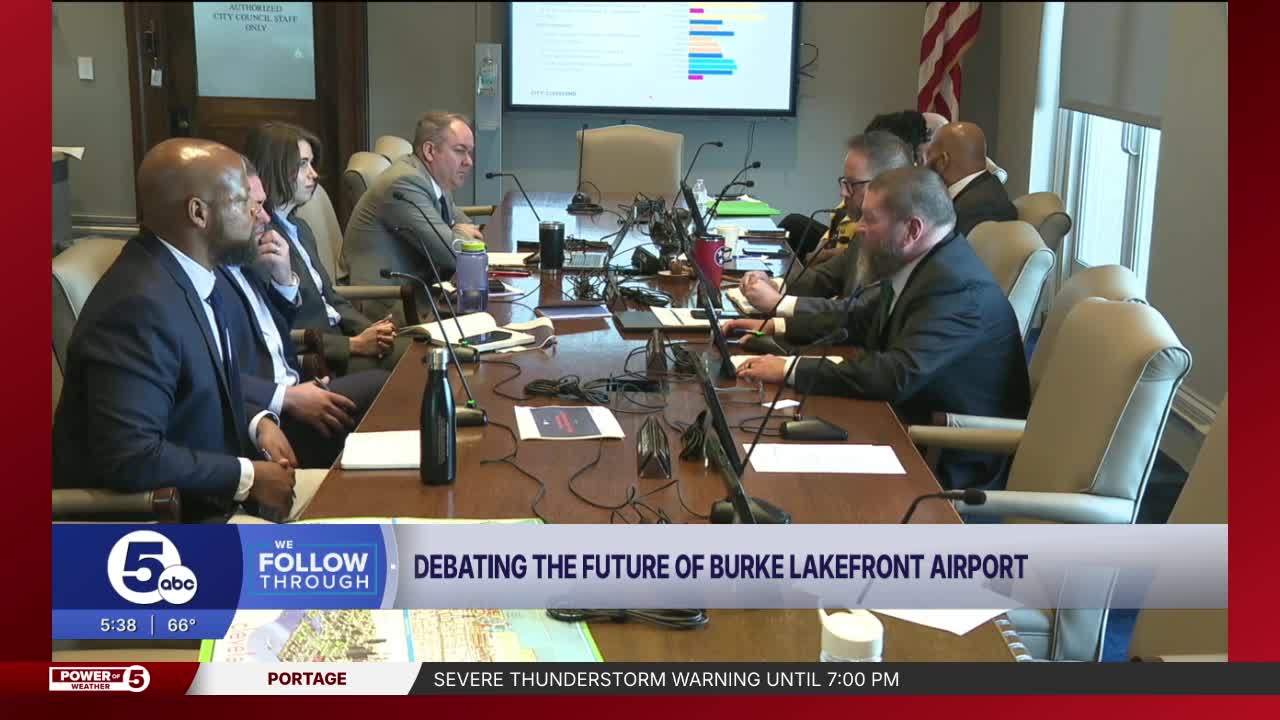
Council members heard more on Wednesday about the rationale behind the concepts being floated for the 450-acre site. During a lengthy transportation committee hearing, they wrestled with the potential risks and rewards of closing the nearly 80-year-old airport.
“It all sounds good, right? But so does me being 6’5” and playing in the NBA,” said Councilman Brian Kazy, who represents Ward 13 on the city’s West Side.
He questioned whether the city and the lakefront nonprofit are biting off too much, between pushing to reimagine Burke and working to kickstart development on 50 acres to the west, including the land where Huntington Bank Field currently sits. The stadium is set to be demolished after the Cleveland Browns move to Brook Park in 2029.
“Are we getting in over our heads?” Kazy asked.
East Side Councilwoman Deborah Gray said change is inevitable — and necessary, if the city’s going to keep and add residents. “I want my grandkids and my great grandkids to have more than what I had to enjoy in my time,” she told her colleagues.
Longstanding Councilman Mike Polensek, who represents Ward 10 on the East Side, isn’t sold on shutting Burke down. “You’re lobbying to kill a city asset,” he said, adding that any proposal to replace Burke needs to be an economic engine for the city.
RELATED: Burke Lakefront Airport tenants, pilots are fighting back, trying to prevent a shutdown
But newcomer Tanmay Shah, who took office in January on the West Side, said he’d be happy to scrap the airport, which he described as a playground for the wealthy.
“We’ve talked about developing the lakefront for decades in this city. This is such a huge opportunity,” he said. “And we have ownership of this. … But it is hard for me, at the same time, being in favor of closing the airport, to get behind a vision when there really isn’t a vision of what this would look like.”
Council isn’t considering any legislation related to Burke. City leaders are focused on Washington, D.C., instead, where Congress has the power to cut red tape and legislate an airport shutdown. The Bibb administration hopes to get a verdict on its request this year.
In a recent interview with News 5, Republican U.S. Senator Bernie Moreno said he’s not ready to take a stance on closing the airport.
“I haven’t seen enough,” he said. “I’ll just say that. And I don’t think the community has seen enough.”
City officials also plan to meet with the Federal Aviation Administration this month, said Jessica Trivisonno, the mayor’s deputy chief of staff and chief strategy officer. But the agency has made it clear that regulators aren’t in the business of closing airports.
A study released last month, commissioned by the North Coast nonprofit, shows a mix of low-slung buildings and recreational facilities would generate five times more direct tax revenue for Cleveland than Burke does today.
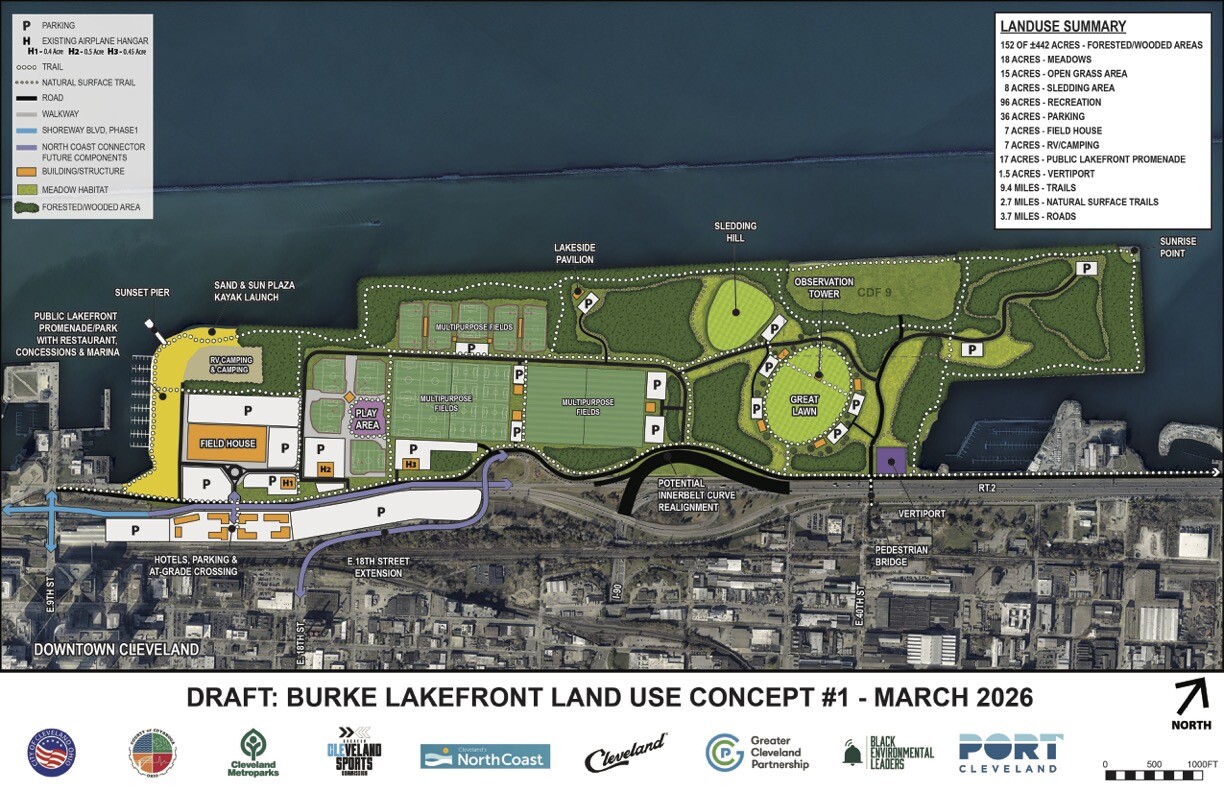
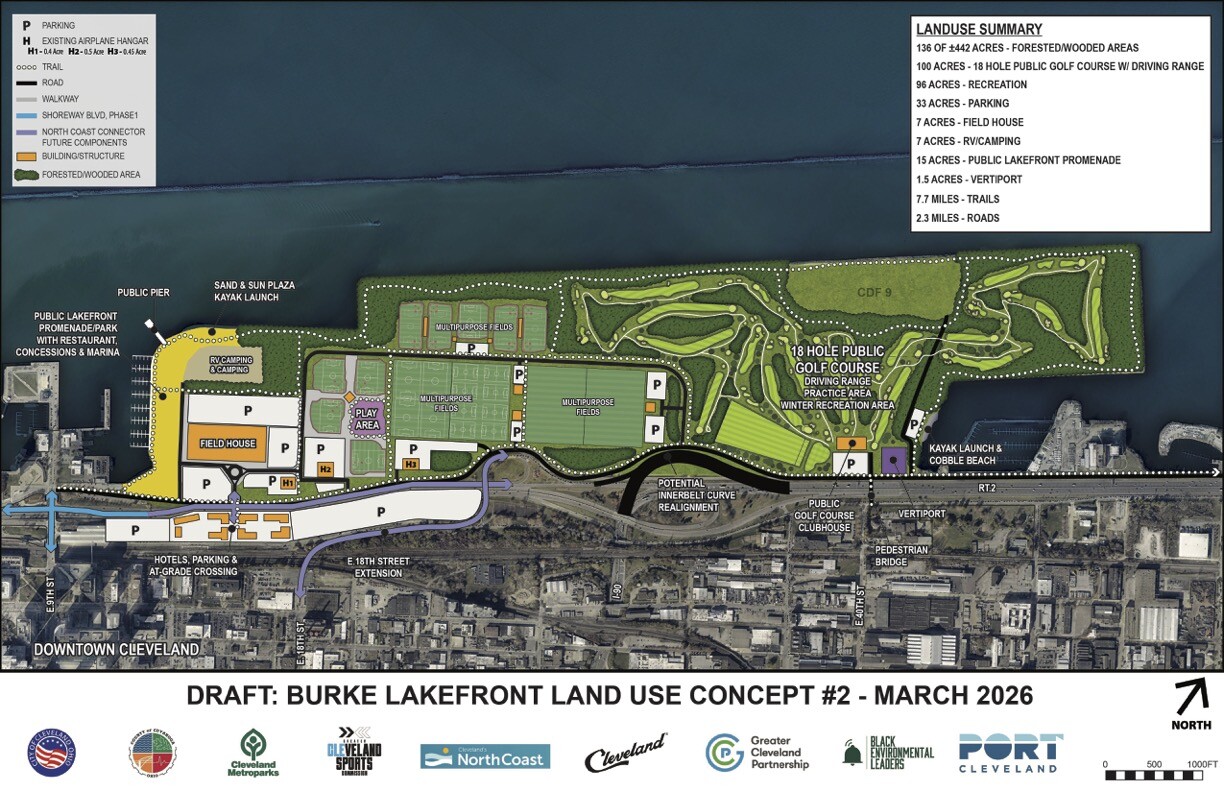
That study puts the potential cost of that type of development somewhere between $480 million and $844 million — likely in the $600 million to $700 million range.
The concept plans — starting points for more discussions — center on a youth sports complex, with a large indoor fieldhouse and expansive multipurpose fields. Those facilities would host tournaments and other events, catering to traveling athletes and local families.
“These complexes are enormous drivers of economic development and economic impact. … We think it’s a great way to simultaneously create the space for Clevelanders as a rec center but also bring people in, and bring visitors in,” Skinner said.
The drawings also show a waterfront campground for recreational vehicles, leaning into a travel trend that took off during the pandemic. The campsite is one of several money-making concepts — private uses that still could incorporate public access, while offsetting free amenities like parkland and approximately 10 miles of trails.
Other uses that would bring in money — and rely on private financing — could include an 18-hole public golf course and a 1.5-acre vertiport, a place where helicopters would still be able to take off, land, park and refuel. Burke is currently a hub for medical helicopters.

Over time, if the real estate market shifts, some of the open space could be replaced by offices or apartments, Skinner said. But it doesn't make financial sense right now to pitch hundreds of apartments at Burke, when there's room for housing closer to the center of the city — including on and around the current stadium site.
“It’s not the end of the conversation,” Trivisonno said of the preliminary ideas. “It’s really just the beginning.”
And she said that conversation needs to include the Cleveland National Air Show, which is fighting the city’s push to close Burke. The nonprofit air show’s board recently said that the end of Burke would mark the end of the annual event, which relies on ticket sales, parking fees and on-site concessions to pay the bills.
On Wednesday, Trivisonno and Skinner showed council members how the sprawling athletic fields proposed at Burke could be roped off to create a ticketed viewing area for the air show. Trivisonno said a meeting with air show representatives is scheduled for late May.
“There’s nothing that would stop us from continuing to have an air show,” she said, suggesting that planes could still fly over the lake while taking off from and landing at city-owned Cleveland Hopkins International Airport.
Brandon Kralovic hopes that’s true. A Cleveland State University student and avid aerial photographer, he’s been a big air-show supporter since his freshman year, when he woke up to the roar of the Blue Angels buzzing Downtown. He wants the Labor Day tradition to survive.
He also likes the idea of doing something more with Burke.
“If that is what happens, and it really goes for the community and we have all these new facilities, I could definitely see that being a good benefit,” said Kralovic, who stopped to chat on Euclid Avenue.
He was walking with Isaiah Hale, a fellow student who would love to see Cleveland do more with its lakefront. To Hale, accessibility and affordability are key.
“I like this idea where it’s looking like we have a lot of space for cool parks,” he said, looking at the early site sketches. “But again, once we get into the idea of golf courses and stuff, then we get into conversations like, how much is that?”
Jake Collins, who works in an office tower Downtown, hadn’t seen the North Coast nonprofit’s ideas for the site — concepts drawn up through a collaboration with a bunch of civic groups, including the Cleveland Metroparks, the Black Environmental Leaders and the Greater Cleveland Sports Commission.
He’s on board with making the lakefront more accessible to everyday Clevelanders.
“I think people would use that more than the general public uses Burke right now,” Collins said of trails, a marina, sports facilities and outdoor spaces designed for year-round recreation, from golfing to cross-country skiing.
But Keith Jones, a lifelong Clevelander who also works Downtown, isn’t convinced yet that Burke should fade away.
“It’s historical,” he said, questioning whether it’s possible to find middle ground in the fight between aviation groups and advocates for public access.
“If it’s not broke,” he said of Burke, “why fix it?”
Michelle Jarboe is the business growth and development reporter at News 5 Cleveland. Follow her on X @MJarboe or email her at Michelle.Jarboe@wews.com.
