

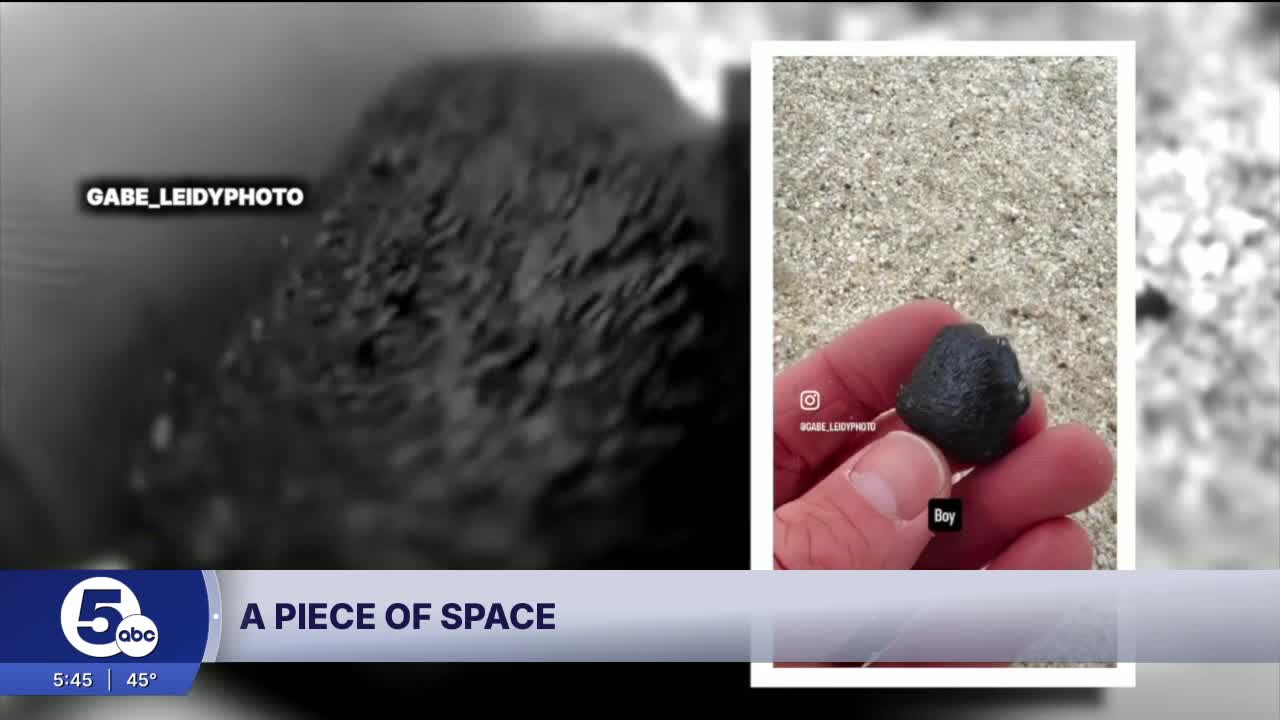


Gabe Leidy works in supply chain, but his passion is photography.
“Landscape photography, cityscapes, wildlife,” said Leidy.
But something out of this world caught his eye on Wednesday.
“The one thing that threw me is it wasn’t magnetic because I did have a magnet with me,” he said.
He found what appears to be a meteorite from that seven-ton asteroid that zoomed across Northeast Ohio at 40-thousand miles-per-hour Tuesday morning, says NASA, before fragmenting over Medina County.
“When I walked upon this thing it looked for everything in the world like exactly what I thought I was looking for,” said Leidy.

He said he loves getting outside and cool experiences, so he thought he’d give meteorite hunting a shot after work on Wednesday.
“I’d never done that before,” he said.
Leidy said he was in Sharon Center, which is within NASA’s strewn field map.
He said he picked a place that was more out of the way and with a clear line of sight, not a wooded area where it would be difficult to spot something out of place.
“I was like, ‘Man, if that’s not it, then what is it,’ you know,” said Leidy, about his find.
We showed Leidy’s quarter-sized rock to Ralph Harvey, professor of planetary geology at Case Western Reserve University.
“That is a pretty little button,” said Harvey. “I’d put my poker chips on that being a meteorite!”
While he said it’s tough to tell just by photos, there are hallmarks.
“It’s clearly got this melted rim all around it like it’s a little object that’s had a nice glassy surface flowing away,” said Harvey. “So, yeah, that’s very promising looking.”
The professor also said the description of where and how Leidy found it suggests an authentic find, too.
Leidy said he’s gotten similar feedback from other experts he’s shown it to.
“I’ve heard rumors from the people who’ve seen them and looked at these rocks that there’s a chance it’s a type called an HED,” said Harvey.
He said it’s an acronym that those who are into science will love.
“Howardite-Eucrite-Diogenite,” said Harvey. “Those are strongly associated with coming from the asteroid 4 Vesta where the Dawn Mission was recently. They look just like the right stuff.”
We showed Harvey some other photos of local finds.
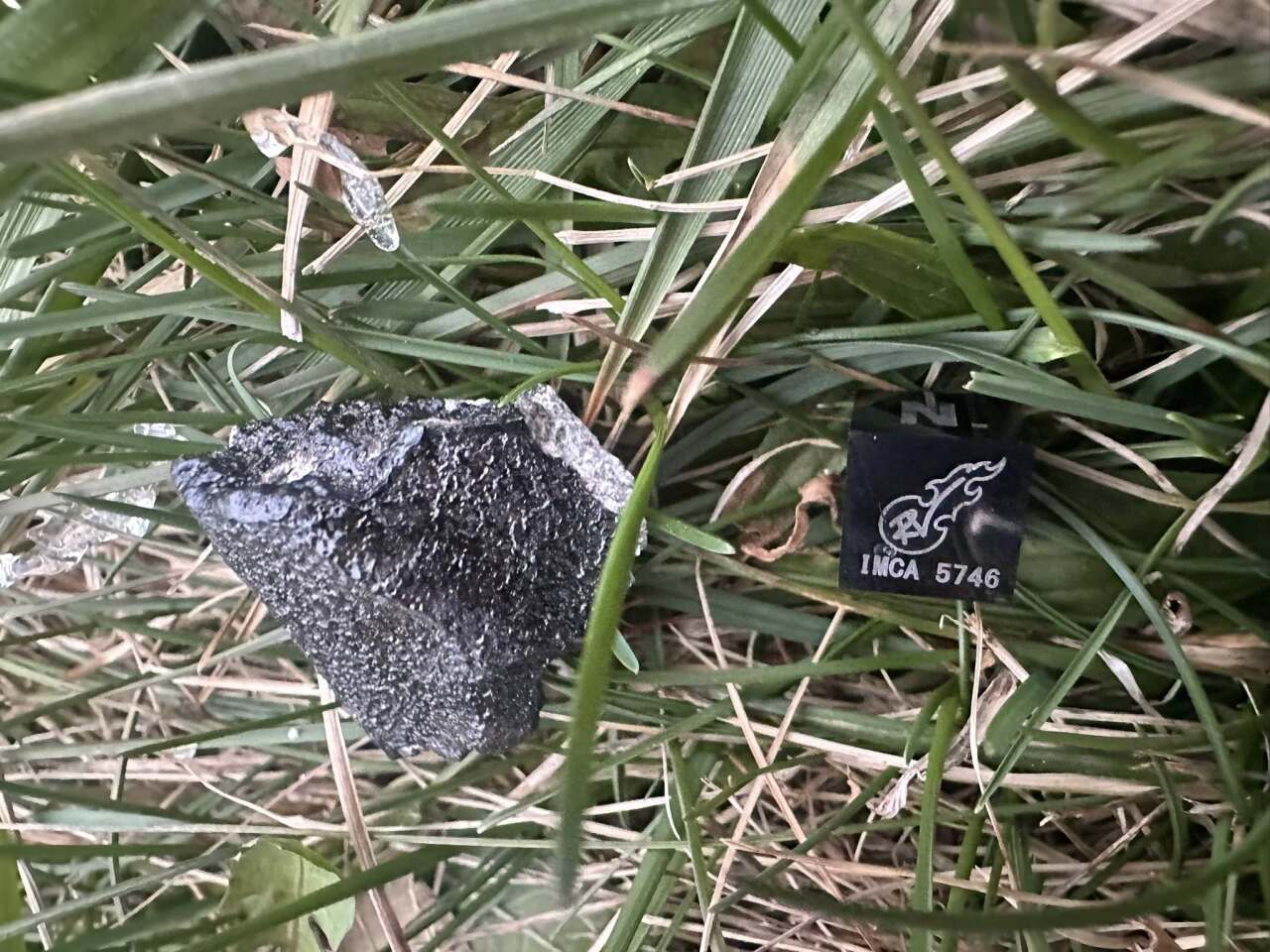
“There’s one that says it's credited to Roberto Vargas that is like a flake from one of these rocks and it definitely looks like a meteoritic flake,” said Harvey.
News 5 viewer Crystal Eklum shared photos of rocks her son Jace spotted at Medina Trails.

A bit less clear, said Harvey, but tough to say for sure.
“I don't see that black glass outer crust,” said Harvey. “That doesn't mean it's not a meteorite; this is one of those cases where context is everything.”
Speaking of context, Andy in Medina said he found a handful of smaller rocks in his barn, which had small holes in the roof and side.

“And that’s reason to look more closely at those specimens,” said Harvey.
As for Leidy, he said he feels lucky to have found what appears to be an otherworldly find.
“It’s got some weight to it, it’s dense,” said Leidy while holding the rock. “It feels like a piece of glass.”
He is grateful for the memento of a spectacular day in Northeast Ohio, and like so many of us, as poetically put by Harvey, grateful for an opportunity to connect with the cosmos.
A few more notes from the professor, he said to be mindful of where you're looking because the rocks are property of the land they fall on.
He said from reports so far, the fragments being found seem to be smaller than the size of a golf ball and that's likely due to how powerful the explosion was.
He is hopeful some of these fragments will find their way to the scientific community to learn more about our solar system.
He believes these rocks would be about 4.4 billion years old.
As for value, he said it's all speculative until you know what's on the inside. But they have value to collectors, scientists, museums and to people wanting to remember the incredible event.
