

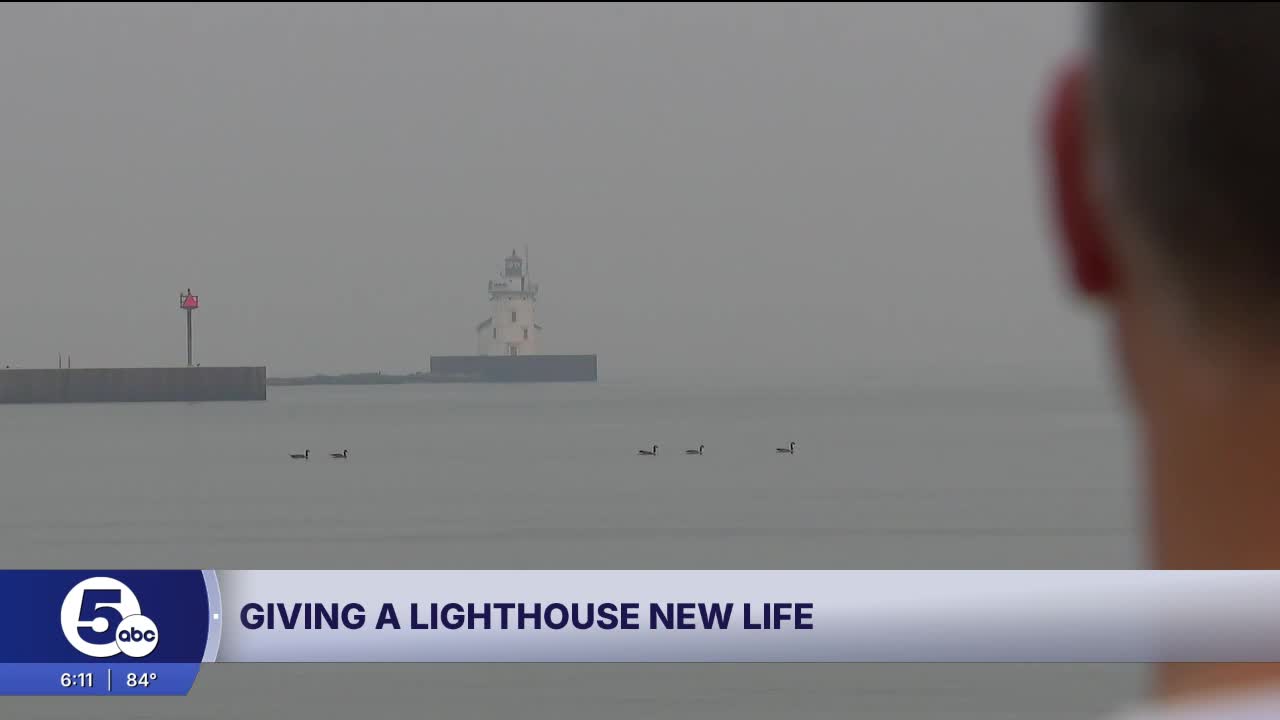



CLEVELAND — In 2023, Geoff Brediger competed to buy a historic lighthouse — and lost.
Now he’s getting a second shot at acquiring the property, an iconic but tricky piece of real estate that’s half a mile out in Lake Erie.
Brediger, a 48-year-old Lakewood pharmacist, is the founder of the Cleveland Light Keepers Collective. The new nonprofit is one of six groups that recently expressed interest in taking over the Cleveland Harbor West Pierhead Lighthouse, a landmark beacon that the federal government’s been trying to offload for almost a decade.
“Basically, the public hasn’t been out there since World War II,” Brediger said. “And so we want it to be available for the community again.”

Congress passed the National Historic Lighthouse Preservation Act almost 26 years ago, creating a process for the federal government to put significant properties into outside hands. Since then, officials have found new stewards for more than 150 lighthouses across the country — and upwards of 50 in the Great Lakes region.
Nonprofits and public agencies get the first chance to acquire the buildings, for free. If no qualified taker steps up, the government can auction properties off to private bidders.
RELATED: Fairport Harbor West Lighthouse, now privately owned, marks 100 years
And there’s just something about lighthouses, stalwart symbols of safety and hope, that makes people want to save them. But historic preservation isn’t easy. Especially when you’re talking about a property that’s only accessible by boat.
“There’s financial challenges around every corner, no doubt,” Brediger said.
To better understand what prospective owners are up against, a News 5 reporter and photojournalist recently visited the lighthouse with the U.S. Coast Guard.

Though it’s been vacant for decades, the building is still an active navigational aid — with a giant LED light upstairs. Large ships, with high-tech navigation systems, don’t rely on lighthouses anymore. But lights still guide smaller boats and serve as backup signals.

That LED bulb, which flashes red, runs on solar power. There’s no electricity at the lighthouse. There’s no running water or heat, either. Anyone who acquires the property will have to preserve access for the Coast Guard, which maintains the light.
Old blueprints housed at the National Archives in Maryland show that keepers originally lived in the tower. There was a kitchen on the first floor and a bedroom on the second.

Next door, a structure called a fog house held large — loud — warning equipment.
Now both buildings are gutted. Inside, there’s just rusting metal and rotting wood.
From the top of the tower, you can see the city’s skyline and miles of shoreline. Cliff swallows dart out from under the upper deck, where they’ve built dozens of nests.
“For me, it’s magical,” said Brediger, who has been inside the lighthouse twice in the past few years. “I mean, some people would go in there and see, basically, a structure that needs a lot of help – and kind of back off. And say, you know, there’s too much. There’s too much to fix up here, right?
“I go out there, and I feel, like, a peace. Like a fulfillment feeling. Like it’s good for my soul.”

'Inherently complex'
In April, the U.S. General Services Administration announced that it was seeking new suitors for the Cleveland lighthouse, which opened in 1911. Public entities, nonprofits and educational and community development groups were eligible to submit letters of interest.
The announcement indirectly confirmed that a previous sale deal was dead.
In September 2023, a local couple bid $425,000 for the property during an auction. The buyers, jewelry designer Heather Moore and car dealer Jim Brown, launched a website for the property and got a flurry of media attention.
But they never closed on the purchase, which required them to sign an underlying, 25-year lease with the U.S. Army Corps of Engineers and meet the government's requirements for liability insurance coverage.
“The high bidder ultimately decided not to proceed,” a spokesman for the General Services Administration wrote in an emailed response to questions from News 5.
Moore and Brown did not respond to multiple interview requests.
Brediger, who fell in love with lighthouses during a West Coast trip about 15 years ago, participated in that auction. But he dropped out of the contest as the price soared.
“It became irresponsible,” he said. “I had to back off.”

In February, he heard that the lighthouse was going to hit the market again. Since so much time had passed, the government wasn’t trying to negotiate a deal with the runner-up bidder. Instead, the General Services Administration was starting the process over again.
Within weeks, Brediger launched his nonprofit. He assembled a team of like-minded people, including boaters, fellow lighthouse-lovers and board members with backgrounds in business and education. The group submitted a letter of interest by the May 26 deadline.
This summer, prospective owners had a chance to visit the lighthouse. Now they’re preparing detailed applications to send to the National Park Service by mid-September.
The General Services Administration confirmed that six groups expressed interest in acquiring the property. The federal government has not released their identities yet in response to a public records request from News 5.
A spokesman said the agency is committed to finding a responsible caretaker.
“Offshore lighthouse transactions are inherently complex due to property rights, diverse federal missions and numerous stakeholders,” he wrote in an email.
'Lighthouse fanatics'
Nobody knows that better than Joe Santiana.
He’s the 73-year-old leader of the Ashtabula Lighthouse Restoration & Preservation Society, a nonprofit that acquired the historic Ashtabula Harbor Light in 2007.
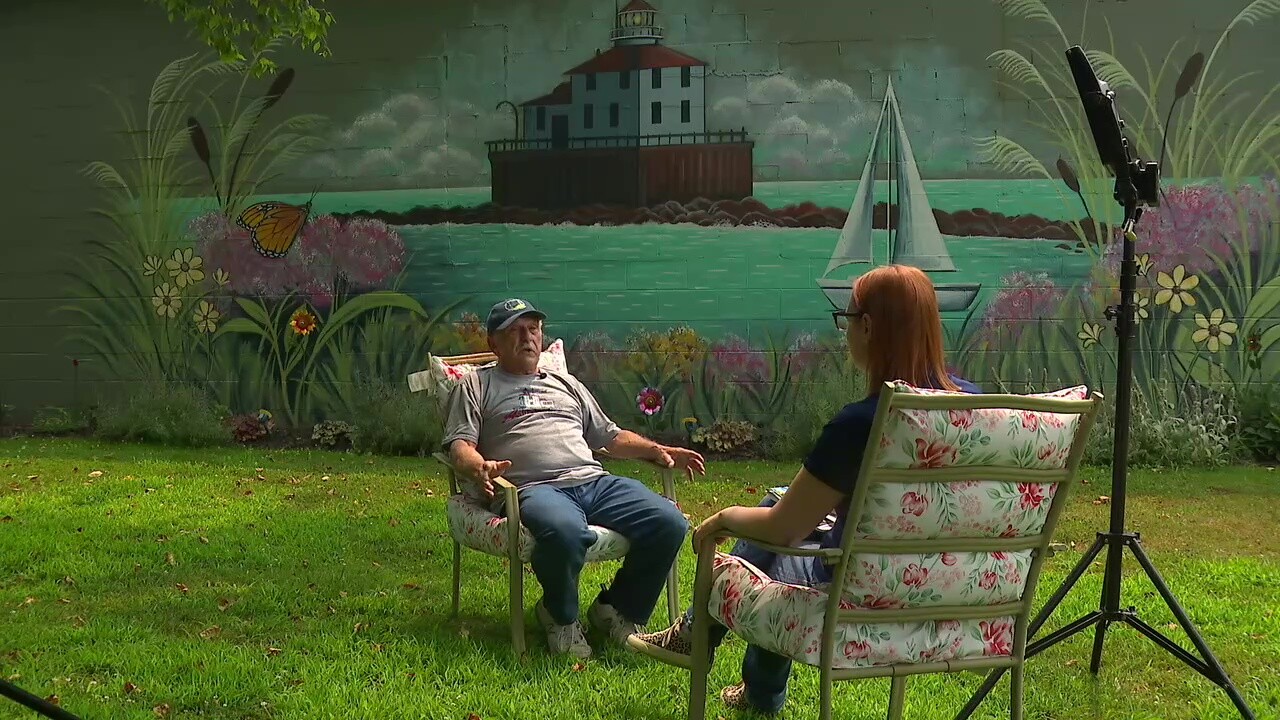
“Nobody else wants the job,” Santiana said with a laugh.
It took the group almost six years to gain control of the lighthouse — and much longer to restore it.
Like the Cleveland Harbor West Pierhead Lighthouse, the Ashtabula property is only accessible by boat. It’s perched on a concrete platform near the end of a forbidding break wall, where nature controls when you can visit and how long you can stay.
“Lake Erie blows up real quick,” said Santiana, who has weathered 75-mile-an-hour winds and other treacherous conditions.
Early on, he used lake water to power wash the inside of the lighthouse. Volunteers lovingly refurbished the building, turning it into a small museum and tourist attraction.
The nonprofit, which depends on memberships and donations, has probably spent $350,000 on the project. An annual fish-fry fundraiser, set for Aug. 22, helps cover the bills.
Liability insurance costs $5,000 a year, Santiana said, and rates are only going up.
The group owns a boat to take visitors out to the lighthouse. But they don’t have the manpower anymore to install a large dock in the spring and bring it back to shore in the fall. That process requires several divers and at least 10 other volunteers, Santiana said.
“It’s hard to find people, especially younger people, to take over for us,” he said.
Santiana has always loved lighthouses. Growing up, he’d go fishing at night at Lake Shore Park and watch the light beckon in the distance. The Ashtabula Harbor Light was the last manned beacon on Lake Erie, maintained by keepers until 1973.

Even if they can only see the property from a distance, tourists swing by Santiana’s antique shop in North Kingsville to get a stamp of the lighthouse for their official collectors’ passport books. Outside, a colorful mural of the lighthouse covers one wall of the building.
“If I live to be a little old man and I’m still here, I can look at it,” Santiana said.
Two decades in, the hard work is done. And the journey has mostly been worthwhile.
But Santiana wouldn’t do it again.
He’s navigated the headwinds any would-be owner faces in Cleveland, from finding laborers willing to work offshore to getting construction materials and visitors safely out to the property. But he hasn’t lost his love for the buildings — and the stories they tell.
“There are literally millions of people all over the world that are lighthouse fanatics,” he said. “I don’t know if there’s anything else like that.”

'It's not one person'
Brediger often walks to the end of the Cleveland West Pier, near Wendy Park and the historic U.S. Coast Guard Station, to look out at the lighthouse and dream.
He imagines everything from fishing to arts festivals to morning yoga on the platform at the base of the tower. First, though, he’ll need to convince the federal government to give the Cleveland Light Keepers Collective a chance.
“If you have a vision that other people think is hard, difficult to achieve, then they naturally back down and say, ‘Oh, that’s impossible. You can’t do it.’ Right?” he said. “But for me, this has become a passion project. It doesn’t matter how many people say that to me. I’m in it. And, hopefully, our application is the one chosen.”

Right now, he’s trying to build a coalition — a team of skilled tradesmen, historians, boaters and fundraisers.
He’s seeking guidance from community groups, like the one that owns the Lorain Lighthouse, and private owners, including the woman who purchased and painstakingly restored the Fairport Harbor West Breakwater Light as a summer home.
Back in 2023, when he dropped out of the bidding, Brediger thought he’d missed his chance to be part of history.
Now, he’s trying to build something bigger.
“It’s not one person,” he said of going the nonprofit route. “Now, it can be the whole city of Cleveland getting behind it. It can be a whole movement.”
Michelle Jarboe is the business growth and development reporter at News 5 Cleveland. Follow her on X @MJarboe or email her at Michelle.Jarboe@wews.com.
