

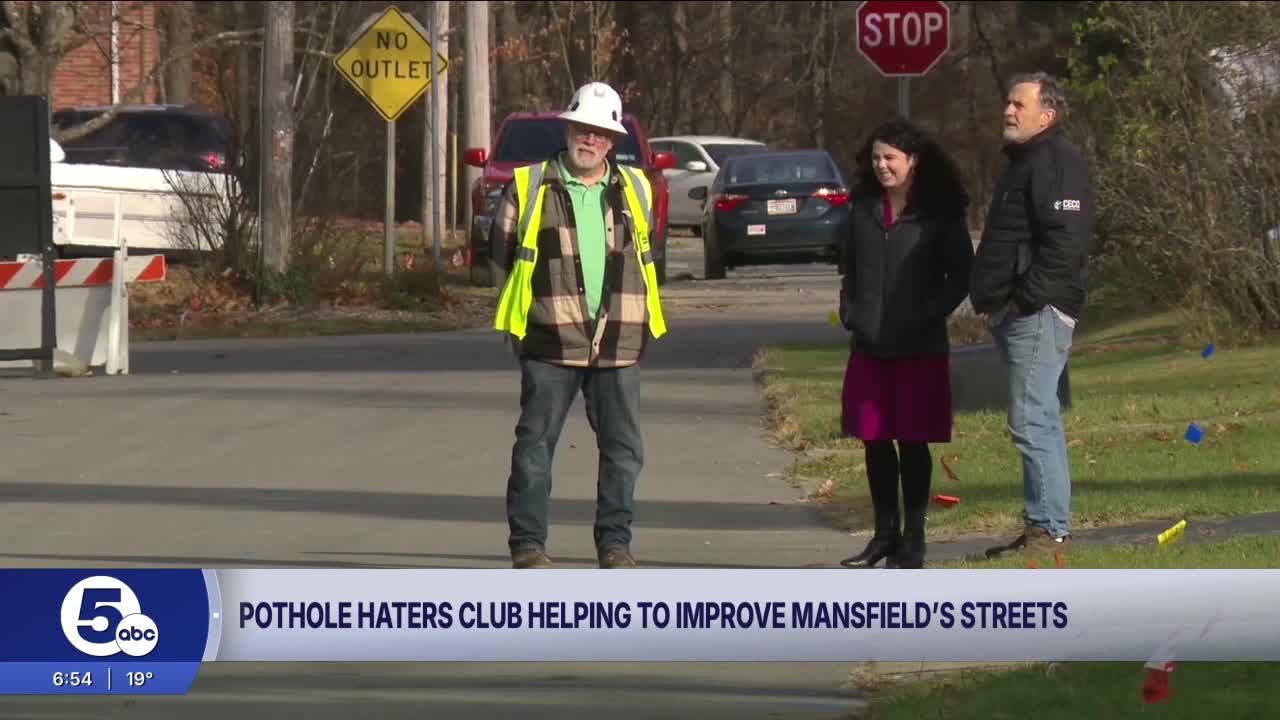



MANSFIELD, Ohio — You couldn't tell it today, but potholes, bumps, and cracks gave the city of Mansfield some bad street cred.
"Our streets were definitely among the very worst in Ohio," local Eric Miller said.
The transformation came from an initiative from concerned citizens like Miller.
"We had a history of politicians campaigning to say they were going to take care of the streets and failing in real life because of the daily demands put upon them," he said.
So, Miller and the Mansfield Pothole Haters Club came together to campaign for an income tax specifically for road paving and improvements.
It wasn't an easy sell. Miller said the club had to stir the pot a bit with a few controversial commercials, like one poking fun at some locals and another discussing a phobia of holes.
"You have to get people talking," Miller said.
That's what sealed the deal for the tax's passage and its renewal in the years since.
"I think that really speaks to the fact that people are seeing the impact of it," Mayor Jodie Perry of Mansfield said. "Every year we are doing about six miles of road."
Local officials said the income tax generated about $4.8 million annually. That's money the city wouldn't have for infrastructure without the tax.
"It's doubtful we would get any assistance from the state or outside federal assistance in any reasonable amount of time," Mansfield City Councilman-At-Large David Falquette said. "This is a good way to take some initiative and get things started."
With the tax in place, the Pothole Haters Club has turned its sights to what's underneath the city's surface.
The club recently helped pass a new tax aimed at the city's water line, which is over 70 years old. Tax dollars will go toward replacing the old four-inch lines with eight-inch lines over the next 10 to 12 years. The change should lead to fewer water main breaks, more water pressure for fire hydrants, and improved water quality for residents.
Miller knows that Mansfield's infrastructure will continue to age. He hopes a younger generation will continue the work he and the Pothole Haters began.
"In addition to paying attention to infrastructure," Miller said. "You also need a human infrastructure that will be attending to the infrastructure in the future."
