

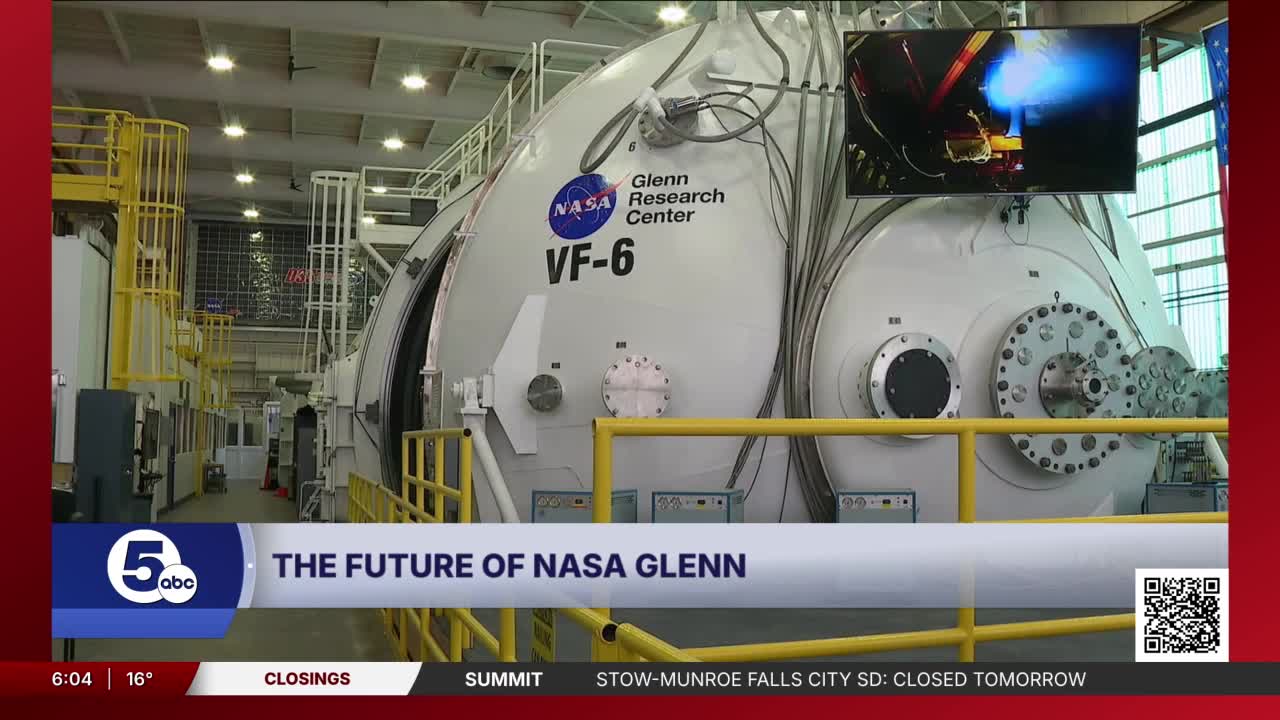


CLEVELAND — NASA's newly confirmed Administrator Jared Isaacman wrapped up his visits to NASA's facilities across the country with a trip to NASA Glenn Research Center on Tuesday.
The billionaire tech entrepreneur, who has traveled to space twice, took over NASA leadership in December. On that same day, the president issued an executive order calling for Americans to return to the moon by 2028, establish a lunar base two years later, and build out a space economy.
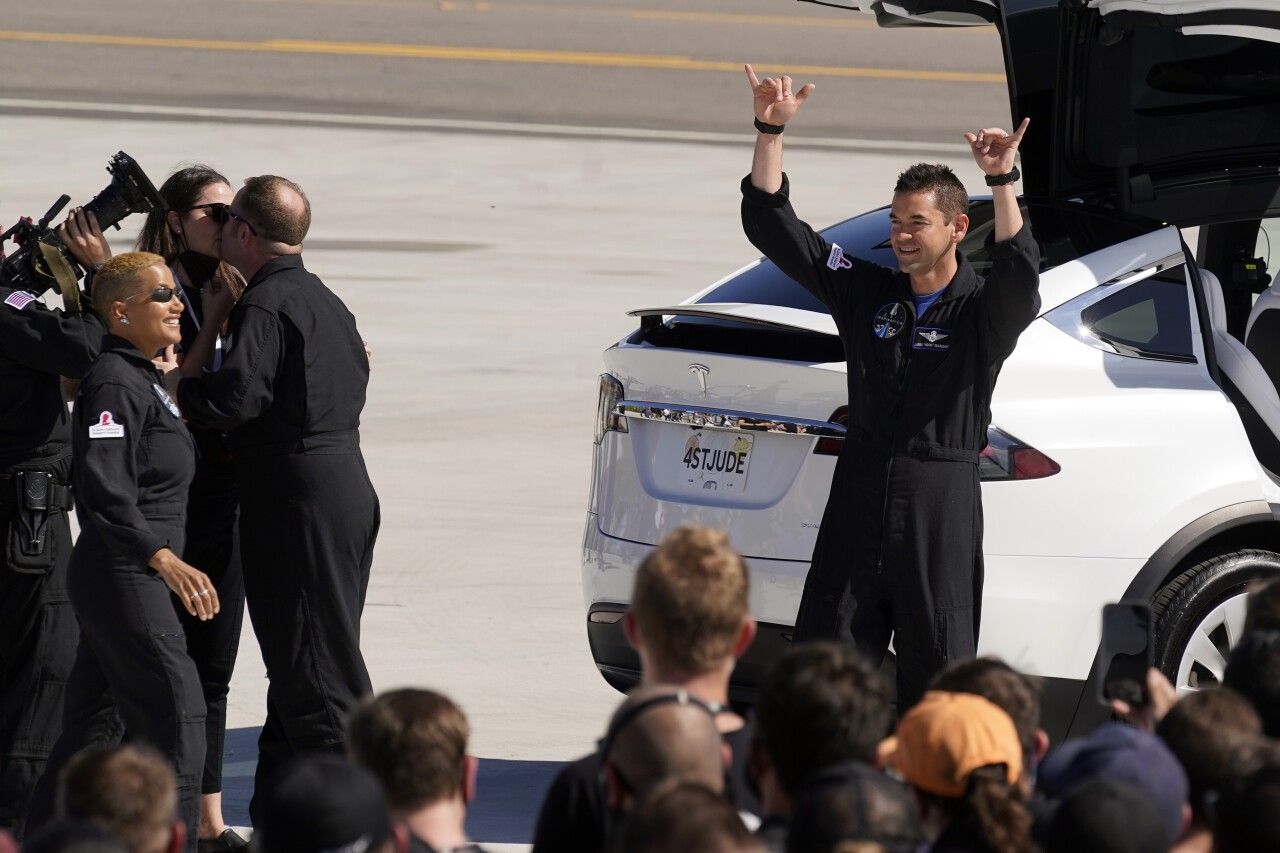
"I do see Americans on the moon by 2028," Isaacman told News 5. "We will achieve Artemis III by the end of 2028, and, most importantly, we are setting up what I hope will be dozens of missions to follow. Apollo ended at 17, Artemis should live on to 100 and beyond."
Watch News 5's full conversation with Administrator Isaacman :
Isaacman spoke with News 5 inside the Electric Propulsion and Power Lab.
"I happen to be a champion of nuclear power and propulsion," Isaacman said. "You can't really write op-eds on the importance of nuclear power and propulsion and not have a great appreciation for the work being done here at Glenn."
The visit comes as the Artemis 2 mission stands ready at Cape Canaveral, preparing to take American astronauts around the moon for the first time since 1972. Its launch window is expected to open on February 6.
NASA Glenn was recently selected to oversee the billions of dollars likely needed to bring nuclear power to the moon, helping humans establish a long-term presence there.
"The workforce showing up here every single day is literally changing the world," Isaacman said. "What we are doing with nuclear power and propulsion is going to power humanity's next giant leap among the stars. Not just what we're doing at the moon or Mars someday, our ability to explore the outer planets in our solar system directly depends on the work here at Glenn with nuclear power."
Watch News 5's report from September 2025 on NASA Glenn's growing nuclear power mission:
Here are some highlights from the conversation with Administrator Isaacman:
Clay LePard: Last year, NASA made the announcement that NASA Glenn was going to be spearheading the development of nuclear power and development on the moon. How important is that going forward?
Jared Isaacman: It's incredibly important. Fission surface power is very important for what we want to do on the moon. The president signed a national space policy that said we need to return to the moon and stay, building the infrastructure necessary to realize its scientific and economic potential. The only way you're going to really do the kind of resource manufacturing and refining at scale is going to be with nuclear power. You're going to need to do the exact same thing on Mars someday. So the moon is going to become a test environment for us for the capabilities that will be necessary to someday embark on a human mission to Mars and back. Nuclear power on the moon, we're going to need nuclear power on Mars. In-situ resource manufacturing, not as necessary for missions to and from the moon, but absolutely is for Mars. So the moon is an ideal environment to test it in. This is fundamental to our whole American leadership in space strategy.
LePard: How close are we to Mars?
Isaacman: It's very achievable in our lifetime. If I had to guess, not before 10 years, not after 20 years.
LePard: You think in 10-20 years we could have some sort of presence on Mars?
Isaacman: We could get there far sooner than that. It's the whole coming home part that's the challenge. If you think about it this way, the velocity necessary to send mass to the moon is very comparable to what's required to send mass to Mars. We have to escape Earth's gravitational influence to send lots of mass to the moon or Mars. Now, the commercial providers we've partnered with on the Artemis program, SpaceX and Blue Origin, they're pioneering rapid reusability of heavy lift, so when they are successful getting our lunar lander to the lunar environment, they now have the capability to send that type of mass to Mars.
So, we are paralleling efforts here. When Glenn works on nuclear power and propulsion and fission power, that same capability is going to be applicable to Mars. People may not realize it, but we are paralleling efforts to get to Mars now. A lot of activity is going to happen on the moon first, and rightfully so, because it's only a couple of days home from there. But we're dual tracking this.
LePard: For the average American, what do you want them to take away as the value of NASA when we are looking at Mars and we're looking at the moon?
Isaacman: NASA, we were established to do the near impossible in air and space. America will always need NASA. The world will need NASA. We have the most inspiring mission imaginable. We are going out and trying to unlock the secrets of the universe. Along the way, what we find can have a meaningful benefit back here on Earth.
When we go to the moon, we are doing it to fulfill a promise, a promise that was made more than 35 years ago. We spent $100 billion in taxpayer money over that time period to do it. We owe it to the American people. We owe it to all of the pioneers in the 1960s who've given us the foundation to undertake this today. But when we get there and we stay, we're going to mine resources there. We can extract Helium-3 that has applications in quantum computing. It has applications in fusion power, what could completely change the energy landscape here on Earth. This is game-changing stuff, and it's only possible because of what we pursue in space. This is NASA at its best when we are undertaking the near impossible, and when we do, we change the world back here at home.
LePard: When the people of Northeast Ohio see/read this story, what do you want them to take away from it?
Isaacman: I would just say for all of the people here in the vicinity of Glenn [Research Center], know that the workforce that's showing up here every single day is literally changing the world. What we are doing with nuclear power and propulsion is going to power humanity's next giant leap among the stars again, not just what we're doing at the moon or Mars someday. Our ability to explore the outer planets in our solar system directly depends on the work that's happening here at Glenn with nuclear power.
LePard: NASA Glenn, obviously, last year was a tougher year. There are about 600 fewer people working here now than a year ago. What do you take away from that kind of loss?
Isaacman: I think 2025 was a different year; 2026 is a brand new year. And you know what's different now than it was then? I'll tell you — we have a national space policy. The President of the United States signed an executive order the same day I was sworn in as the 15th Administrator of NASA that said make investments in the next giant leap capabilities to enable Americans to plant the stars and stripes on Mars, make investments in nuclear power and propulsion. Now a lot of that happens right here. You acknowledge 2025 was a different year. 2026, I think right now we are absolutely embarking on a second space age, and a lot of that activity is going to take place at Glenn.
LePard: Do you see any scenario where some or any of those people are brought back or those jobs are filled?
Isaacman: We always need the best and brightest from around the nation to contribute to NASA's world-changing mission. No doubt. OPM is Office of Personnel Management, is igniting a new hiring program for all the most important technological domains, including space. We're partnering with him on that. So again, what's different now than it was last year? We have a national space policy that says we need to do a lot of important things. The president says return to the moon, build a moon base, invest in nuclear power and propulsion, create a $50 billion orbital economy, and launch more missions of science and discovery. Of course, that's going to require talent to do so.
LePard: Last year, there was a lot of conversation about NASA's headquarters and the future of that. Is it still long-term set in Washington DC?
Isaacman: When I came into this role, it was filled with a lot of opportunities and a lot of challenges. We have the ability right now to really undertake world-changing science and discovery. That's my overarching priority. It takes the contributions of many in order to do that. And we don't all agree. So what's a good place for us to arrive at some common ground? I think it's in our nation's capital, so I suspect the headquarters will stay there. Honestly, it is kind of one of the lowest priorities on my list. I'd much rather be here and in the field at all the various centers working on the mission.
LePard: Artemis 2, hopefully right around the corner, right? What do you want people to take away when that rocket is going up?
Isaacman: It is just the opening episode in an extraordinary adventure. Artemis II, right around the corner. We are going to send NASA astronauts farther into space than we've ever sent humans before on a 10-day mission. We're going to return to the lunar environment, back around the moon, safely here to Earth. We're going to put our Orion spacecraft through all of its paces. So, really stress test the vehicle in preparation for Artemis III. We're going to return to the moon Artemis IV, V to Artemis 100 and beyond.
This is an opportunity for NASA to captivate the world's attention, but it's just the beginning. Are we in a space race right now? We are. We absolutely are. President Trump certainly appreciates the security implications of the ultimate high ground of space. This is the president that created the space force. This is the president who created the Artemis program under his first term that even called for America's return to the moon. This is the president who created a national space policy that not only called for the return of the moon, but now to build the lunar base and realize its full potential.
We are absolutely in a race. The high ground has always mattered, but just like our past, I think we are at our best when these kind of competitive juices are flowing, and we're just not going to lose.
