

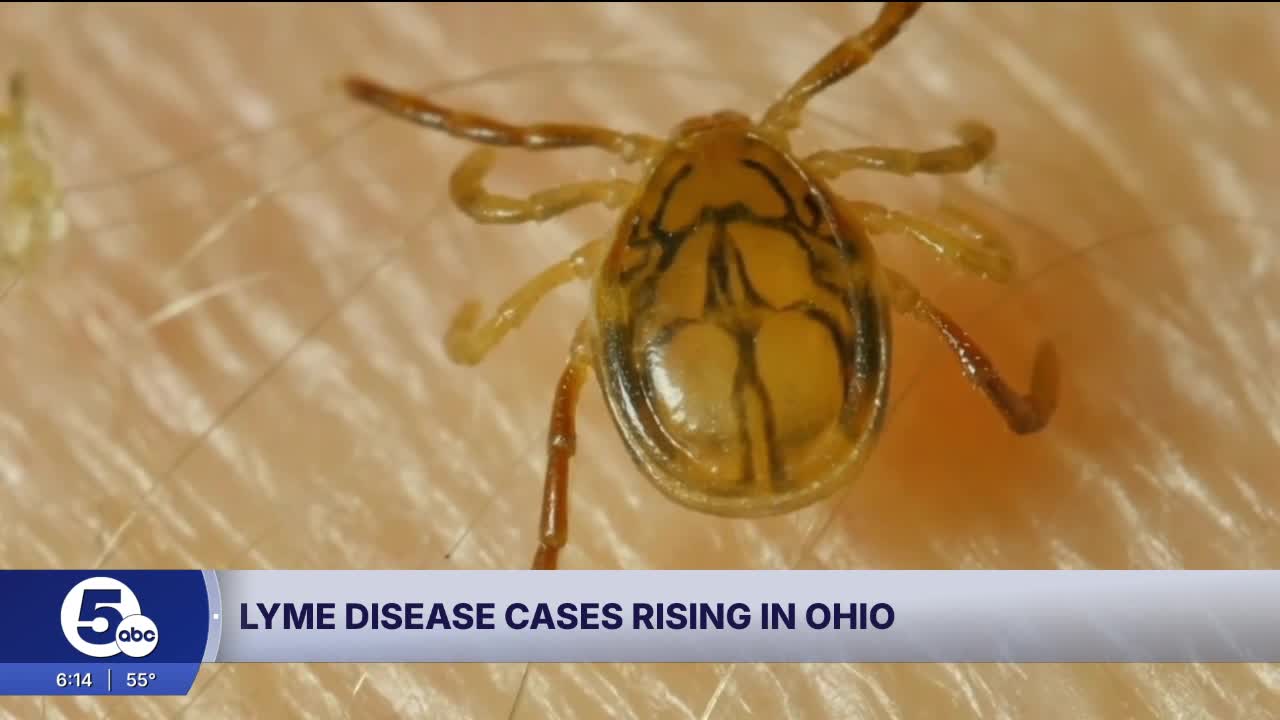


CONNEAUT, Ohio — Data showing a dramatic rise in Lyme disease cases in Ohio is prompting medical experts to increase their focus on the issue.
In 2010, Ohio recorded just 40 cases of Lyme disease.
By 2020, that number had climbed to 415. In 2025, the state saw 2,800 cases.
At the Conneaut City Health Department, Health Commissioner Nichele Blood noticed how milder winters are changing how they prioritize Lyme disease.
"Even though we are in the wonderful lake effect snow – we do get it – they're not as harsh as they once were," she explained. "So we're definitely starting to see the ticks increase more."
That's why Blood's office now offers "tick kits," thanks to an anonymous donation. The free tick kits help residents remove and collect ticks. The department also has plans to monitor tick populations through a process called tick dragging, a white cloth dragged along high grass areas, collecting ticks along the way.
Symptoms of a tick bite and Lyme disease can include fever, headache, muscle pain and a rash.
According to the Ohio Department of Health, early symptoms of Lyme disease typically begin 3-30 days after a tick bite and can include a bulls-eye rash, headache, fever, chills, muscle pain, joint pain and fatigue.
Blood urges residents to take precautions when spending time outdoors.
"If you are outside, protect yourself," Blood said. "Wear registered US EPA repellent against ticks and mosquitoes, wear long sleeves, pants, wear long socks, tuck your pants into your boots or socks to help protect against ticks."
According to the CDC, most cases of Lyme disease can be treated with 10-14 days of antibiotics.
Clay LePard is the Ashtabula, Geauga and Portage counties reporter at News 5 Cleveland. Follow him on X @ClayLePard, on Facebook ClayLePardTV or email him at Clay.LePard@wews.com.
