

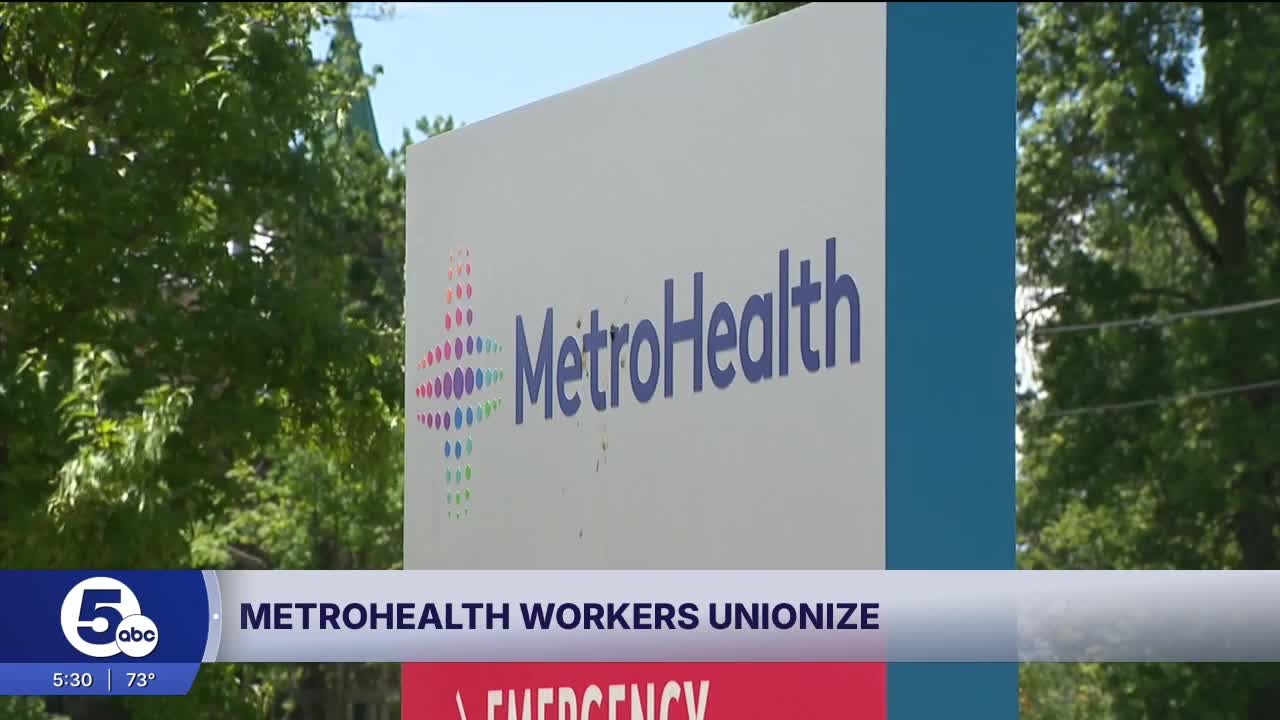


CLEVELAND OHIO — Healthcare workers at MetroHealth have banded together to form a union, aiming to improve the care they provide to patients.
“I moved to Cleveland without any ties to Cleveland because of this job,” said
For Dr. Vikas Gampa, MetroHealth has been more than just a workplace; it’s a cornerstone of the community.
“It has quite a reputation of serving the underserved and being part of the community,” said Gampa.
Nurse practitioner Alyssa Osysko was drawn to that same mission.
“I wanted to pursue my career further at Metro Health. I came back in 2022 as a nurse practitioner, “ said Osysko. “I think Metro is very invested in Cleveland, Cuyahoga County, and actually Northeast Ohio, and that spoke to me volumes, so I sought it out.”
But they said the workplace they love has changed in ways that concern them.
“We saw a lot of our colleagues burn out or leave and no longer support the care for the community that in the way that they used to,” said Osysko.
So they created the Primary Care Providers Union of Metro Health.
The group says its priorities include:
- More transparency in decision-making
- A seat at the table
- Fewer last-minute extended clinic hours
- Reducing double-booking patients
“When two patients showed up in a 20-minute slot and they both had the same exact appointment, and they both need 20 minutes. Well, we can't do that because there are other patients that also need 20 minutes,” said Gampa.
News 5 reached out to MetroHealth for comment on the union effort, but did not receive a response before the story was published.
On July 14, a MetroHealth spokesperson issued the following statement about the matter:
"Our providers have meaningful opportunities to engage in decisions that support patient care, and we will continue to welcome their feedback on all aspects of their experience at MetroHealth. That’s something MetroHealth President and CEO Christine Alexander-Rager, a family physician, is especially passionate about.
High no‑show rates often leave gaps in schedules while many patients are still waiting for timely care. Many of these missed appointments stem from real challenges in patients’ lives – childcare needs, transportation barriers, work constraints, unexpected family responsibilities and more. Using data to thoughtfully add overlapping appointments helps offset those gaps so more patients can be seen when they need it. This approach is widely used across healthcare.
The goal is to balance access and quality – expanding availability while ensuring clinicians have the time and support needed to manage increasingly complex care for our patients.
To help achieve that balance, we’re rolling out additional tools and resources in primary care, including ambient AI to assist with documentation. Early feedback has been positive, with many providers reporting reduced administrative burden and more time to focus on patient care. We’re always working to refine our approach with input from our providers."
The workers say the hospital has also not formally acknowledged the union.
“It's a fascinating thing. They won't respond to our ask for a union, but they are working with us to make the system better,” Gampa continued,” There's an emphasis now on asking for our input in a lot of the conversations that they're having at the executive level.”
When asked how it feels to see the hospital make changes without recognizing the union, Dr. Gampa points back to their mission.
“I look back at the motivation for doing this in the first place, and I do, which is our patients deserving better care, I’m like, oh, this is a win,” said Gampa.
While encouraged by recent progress, they say the fight for official recognition isn’t over.
“Our ask doesn't go away for a union, we just work towards it, and I don't know how long that'll take, but we're working towards it, but in the meantime, we'll make these changes,” said Gampa.
Nadeen Abusada is a Cuyahoga County and immigration reporter at News 5 Cleveland. Follow her on Instagram NadeenAbusada or email her at Nadeen.Abusada@wews.com.
