

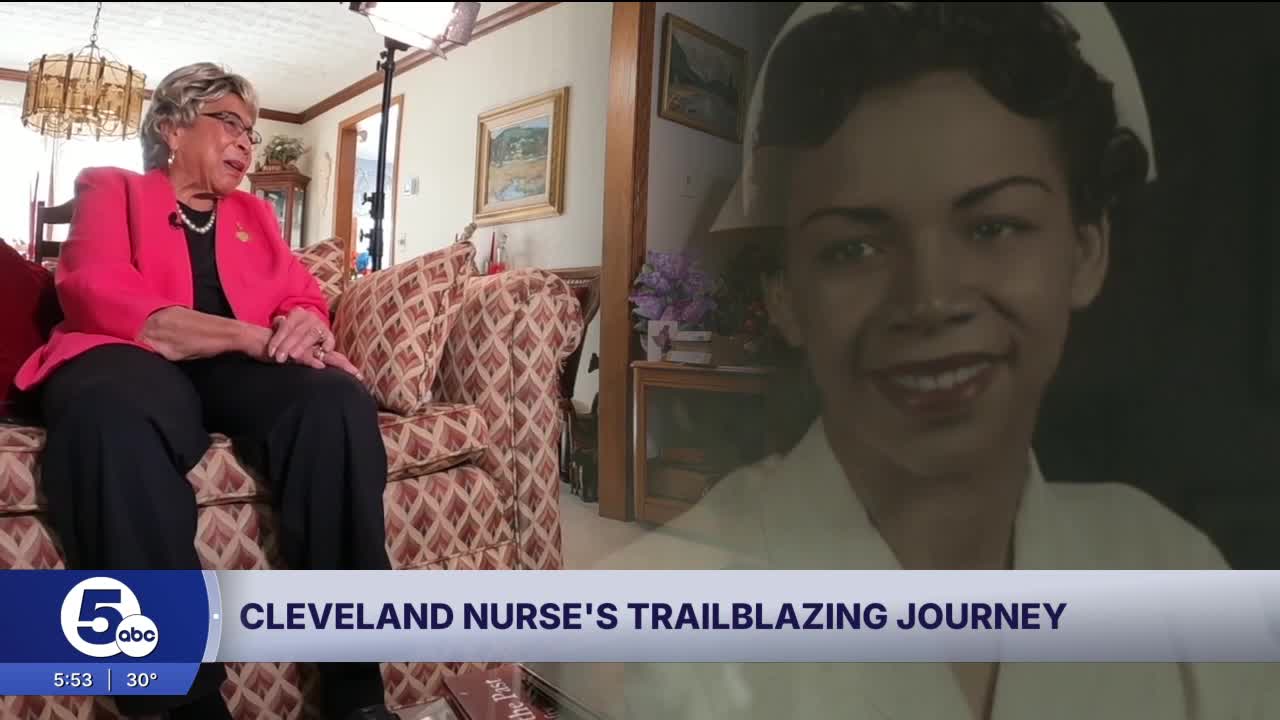


CLEVELAND — May Wykle is a healthcare pioneer who broke barriers as a kid and an adult.
Her determination to become a nurse has taken her around the world and helped her make history when she became the first Black female dean of the Frances Payne Bolton School of Nursing at Case Western Reserve University.
On Feb. 11, she turned 92 years old. As the nation celebrates Black History Month, I thought she’s someone you should know.

Wykle was born in 1934 in Martins Ferry, Ohio.
“One of the things that I was always told … ‘You’ve got to know your place,’” she said.
Wykle’s grandmother was a slave who was freed at the age of 12. Wykle’s godmother was also a slave who was freed at the age of 6.
She grew up in a time that’s hard for many to comprehend.
“I remember saying to my grandson once about when I was growing up bias was legal. And I said, ‘I had to ride on the back of the bus.’” Wykle said. “And he said, ‘Well, what did you go back there for?’”
Falling in love with nursing
Wykle fell in love with nursing at Martins Ferry Hospital, becoming its first nursing assistant of color after she graduated from high school.
“I was working with the nurse’s aide one day, and she says, ‘You know, we all threatened to strike if they hired you,’” Wykle said. “But she said, ‘After working with you, you're not so bad.’”
Wykle went on to become the first Black person to attend the Ruth Brant School of Nursing at that hospital.

“I had people come up to me from my own race and say, ‘Now, don’t mess up at that school of nursing, because they’re giving you a chance,’” Wykle said. “And then I had white people come and say the same thing: ‘We’re giving you a chance. Don’t mess up.’ So I was under a lot of pressure.”
“So there was always reminders of the times?” I asked Wykle.
She said, “Always a reminder. And one of the things I think is important for Black children is education because that's how I got over growing up.”
Degree after degree
Wykle earned her nursing diploma. She then earned her bachelor’s, master’s, and PhD from Case Western Reserve University, all after she was married with young children.
“And I always laugh because I said, ‘Lord, if you help me get my master's degree, I'm not going to call on you anymore.’” Wykle said. “Then when I went to get my PhD, I said, ‘Scratch that, would you? I didn’t mean that. I need you more than ever.’”
Wykle held leadership roles at hospitals across Cleveland, conducted groundbreaking research, collaborated with former First Lady Rosalynn Carter at Georgia’s Institute for Caregivers, and advocated for healthcare initiatives internationally.
"My first trip to Africa was to Uganda to help them start a Bachelor of Science Nursing program,” Wykle said.
Becoming dean of school of nursing
In 2001, the longtime Case Western Reserve University professor and recognized expert in psychiatric and geriatric mental health became the first Black woman to sit in the dean’s chair in the school’s Frances Payne Bolton School of Nursing.

She helped launch the first flight nursing program in the country.
"I wanted to help people — not only just Black people, but underserved minorities who had talent to come into nursing. And that's one of the things that I achieved."
Wykle’s legacy
Ronald Hickman Jr. describes Wykle as one of his strongest supporters and mentors.
“Dr. Wykle has a gift,” Hickman said. “She is a person that oftentimes can see the potential in others far ahead of time, before they see that same potential in themselves.”
Hickman, an alum of Case Western Reserve University’s School of Nursing, now sits in her old dean’s chair. He’s the first Black male to do so.
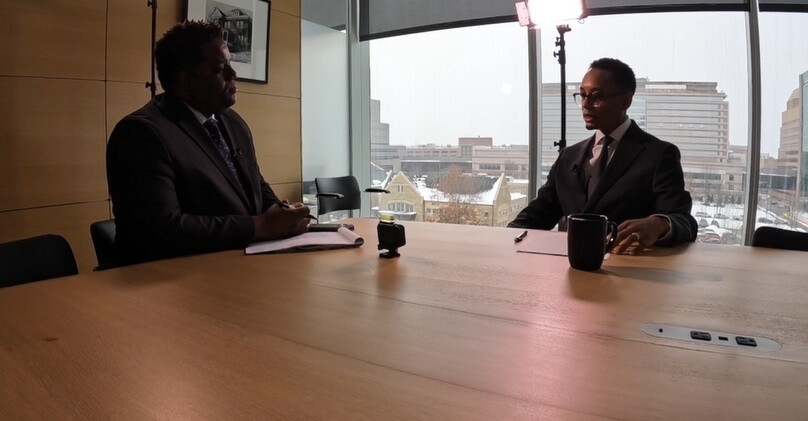
“So, I stand on broad shoulders, those shoulders of Dr. Wykle and others, because they—not only, I would say, did they—led a path for me, but they created that path forward,” Hickman said.
New exhibition honoring local healthcare trailblazers
Wykle is among the many pioneers featured in the Western Reserve Historical Society’s new exhibition titled Race, Place, and Community-Based Healthcare in Cleveland, Ohio, c. 1957 to Present. It honors the Black Hospital Movement.

Regennia N. Williams is the Distinguished Scholar of African American History and Culture at the Western Reserve Historical Society, who helped curate the exhibition sponsored by the Cleveland Council of Black Nurses.
"There’s just a lot of history that’s reflected. Even in the clothing,” Williams said.
The exhibition spotlights the doctors, nurses, and other healthcare professionals who helped build the former Forest City Hospital in Cleveland’s Glenville neighborhood. It was the city’s first interracial hospital, which operated from 1957 to 1978.
“Dr. (Ulysses Grant) Mason was one of those doctors during the Black Hospital Movement, in the early part of the 20th century, insisting that we need a hospital for Black people,” Williams said.

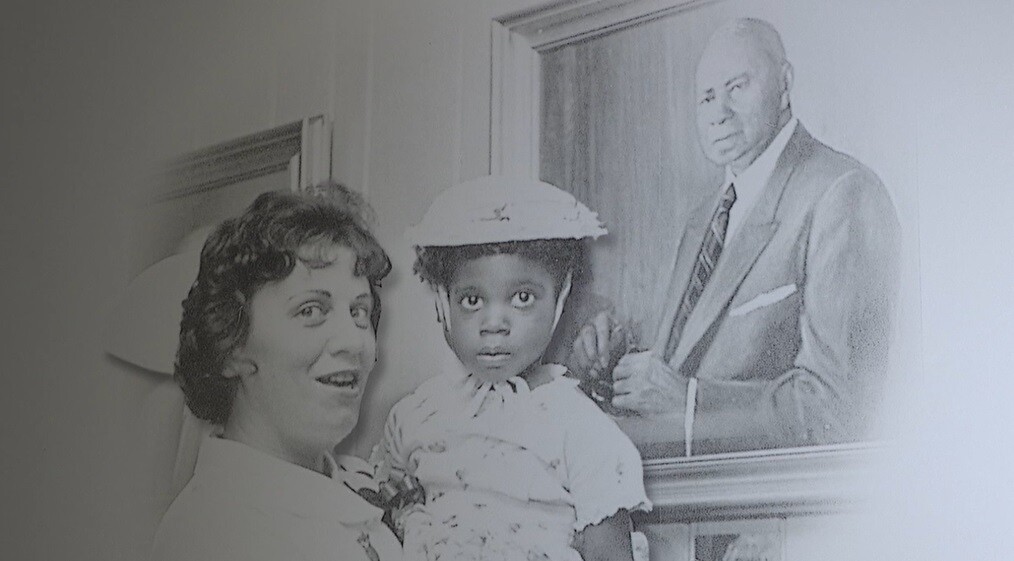
As Williams pointed to a prominent photo in the exhibit of a nurse holding a young girl, there are many artifacts, testimonies, and photographs in the exhibition.
"There’s something about that black-and-white image that suggests this is a moment in our past,” Williams said. “But this picture, again, because it has one of the founding doctors, Dr. Middleton Lambright Sr., in a portrait on the wall—suggests to me that there’s something about this hospital that serves the needs of all of the people, both the providers and the adults and the children."
A timeline in the room serves as a powerful reminder of the achievements of organizations and individuals, including Civil Rights Icon and nurse Harriet Tubman, to politicians like Congressman Louis Stokes, who played a role in advancing community-based healthcare in the global community.

There’s a Sankofa bird in the center of the timeline, which is a symbol from Ghana.
“Suggesting you can go back and get it,” Williams said. “Learning from the past. Go back and get those lessons from the past and bring them with you as you continue to move forward.”
The exhibition runs through Sept. 27.
Wykle still teaches
In her home office, Wykle is surrounded by awards. She is Dean Emerita at Case Western Reserve University, holds an endowed academic chair at the School of Nursing, and is an American Academy of Nursing Living Legend—one of the profession’s highest honors.
That office is also where she continues to teach General Systems Theory, a virtual course at Case Western Reserve University.
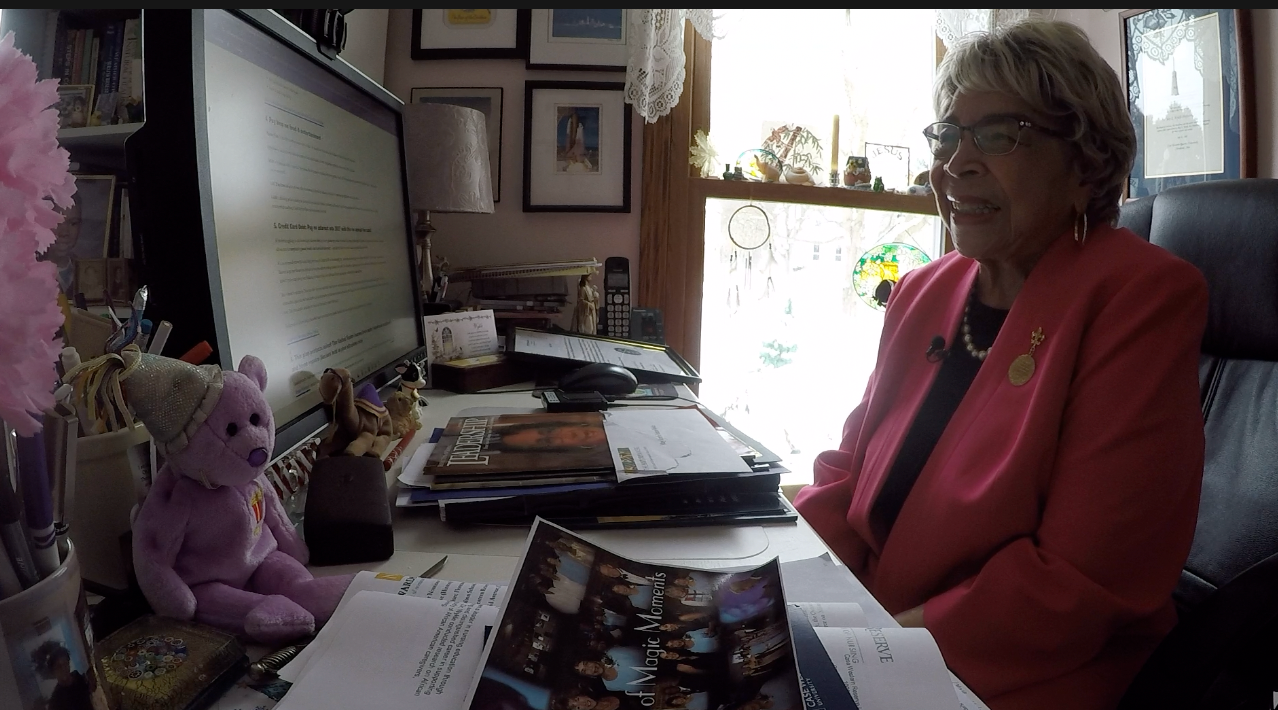
"I had to give up my yellow pad and pencil,” Wykle said.
I asked Wykle for her advice to anyone on breaking barriers. She said it’s important to stay true to yourself and ask how you can help others.
“And the main thing that I think is that you get rid of all the anger,” Wykle said. “You know, you could be very angry, all the slights and all the things that have happened to you through the years, and you have to put that away. We have to overcome that.”
Wykle’s life and professional experiences are unmatched.
"If I ever get able to write my memoir, I'm going to entitle it, 'You're not so bad,’” she said.
Damon Maloney is a Cuyahoga County and We Follow Through anchor at News 5 Cleveland. Follow him on X @DMaloneyTV, on Facebook DamonMaloneyTV or email him at Damon.Maloney@wews.com.
