



SANDUSKY — The Black church has been at the forefront of foregrounding the charge for equality and social justice in the Black community and has played a significant role in the advancement of African Americans from slavery until now.
“If you look at the things that Black people have achieved in America, all of that came about from the African American church. Like voting rights, civil rights, desegregation and educational rights. All your leading thinkers were theologians, Dr. King, Jesse Jackson, Ralph Abernathy as well as (other) African Americans.
And in Sandusky, it was Pastor Thomas Holland Boston.
“He is probably one of the best-known African Americans on the Underground Railroad,” said Sandusky library museum service manager, Jeremy Angstadt.
Boston was born in Maryland to free Black parents in 1809. He moved to Sandusky in 1839 with the goal of helping enslaved people reach freedom.
“If they couldn't find a place, they would go to him and either he would take them in, or he knew all the other people who were involved who would help them find a safe place,” said Angstadt.
Sandusky was critical during the Underground Railroad. It was one of the last stops before freed slaves made their way to Canada. The city was so well-known for its Underground Railroad ties that author Harriet Beecher Stowe included it in her best-selling novel, Uncle Tom's Cabin.
“Sandusky is one of those points where because of how the roads worked out, it kind of made sense to kind of funnel people to Sandusky. There were a lot of railroads that came here and that was one way that people who were escaping slavery could use it. Also, it was a port town, so you were able to get on a ship and either go over to Canada or Buffalo,” said Angstadt.
Currently, there are over 10 homes in Sandusky that were part of the Underground Railroad, including the Follett house.
“Eliza, the woman of the home, was really the driving force behind that. Because of her religious beliefs, she felt that people had a duty to help these people who were trying to escape slavery and trying to escape evil,” said Angstadt.
Another home, the Sloan house, was once the residence of Rush R. Sloan, an abolitionist who used it as a safe house for fugitive slaves on the Underground Railroad.
Sloane was fined $4,330 in 1852 for defending seven fugitive slaves against their owners.
Sloan often wrote about Boston being a reliable friend during the Underground Railroad, and many of his undertakings were the most entertaining.
“I think we need to know that it's not just the wealthy people who were a part of it, because those are stories and names we recognize. But we need to think about all the people we don't know, all the actions that they took, and all the contributions that the unknown people had made to this area like Boston,” said Angstadt.
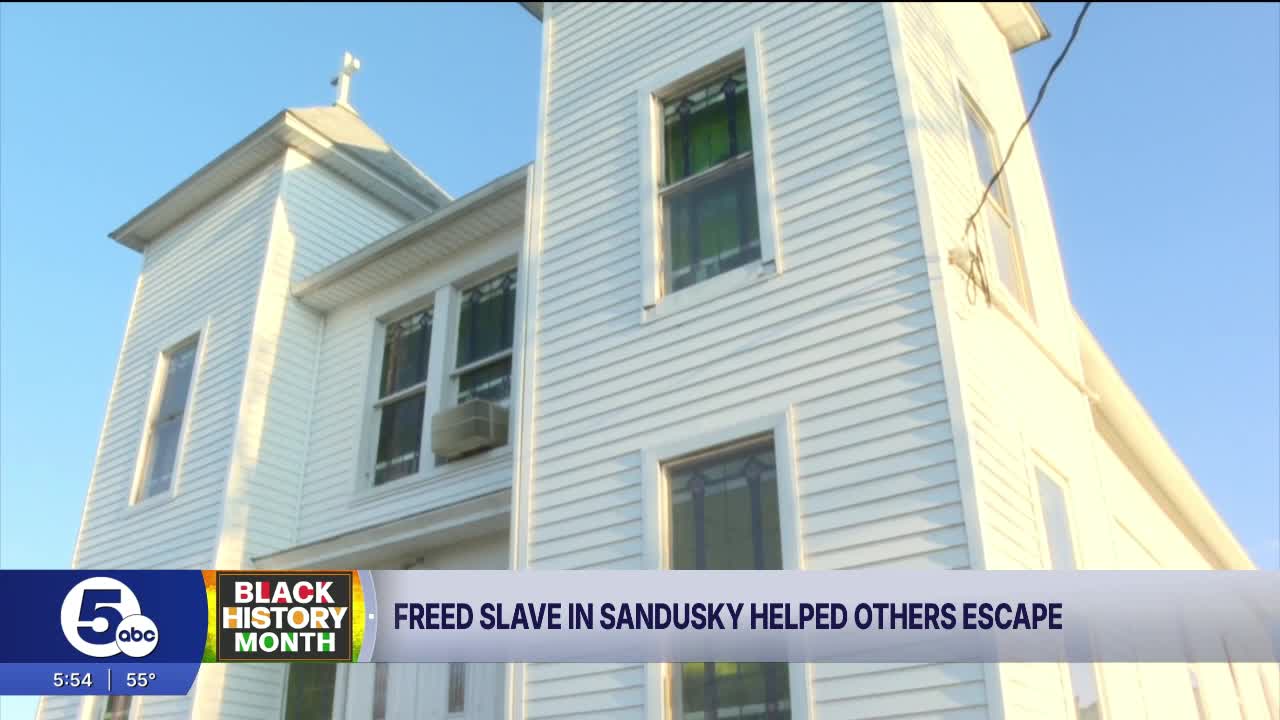
Boston’s legacy remains in Sandusky. He founded the Stephen A.M.E. church over 125 years ago. Rev. Thomas Holland Boston died in 1892. He is buried at Oakland Cemetery in block 13, with both his first and second wives and two of his daughters. Sloane was included in an article in the Firelands Pioneer that Boston was a kind-hearted man who had the respect of the entire community.
“Every Sunday that I come here, I remind them how old we are and the legacy that we must carry on. Thomas Boston was kind of an unsung hero, you don't really hear that much about him. There are just a few paragraphs about him and for us to know where we're going, we must know where we've been because we don’t want history to repeat itself,” said Hill.
Hill says he plans to visit Boston’s gravesite and honor him and his bravery with church members.
