



MASSILLON, Ohio — News 5 was granted a rare visit to the place where Ohio’s most dangerous teens are serving time.
Indian River Juvenile Correctional Facility in Massillon is one of three juvenile prisons operated by the Ohio Department of Youth Services.
In late March, back-to-back assaults at Indian River left one corrections officer with a concussion.
On April 2, DYS Director Amy Ast suspended intake for one month.
RELATED: Union fed up with staff assaults at Indian River, asks Gov. Mike DeWine for help
The suspension was lifted on May 1, the same day News 5 Investigator Tara Morgan toured Indian River, but our camera was not allowed to follow along.
"I think Indian River is safer, yes, as a result of some of the immediate changes we’ve made,” Ast said.
Ast showed News 5 a music and podcast studio and a CrossFit gym, where outside instructors, trained in trauma, come into the facility to work with the teens.
We also saw the school where teens can get certified in CPR and operate a forklift.
"The majority of the kids in these facilities are not harming people, and I do think our staff, they just do incredible work,” Ast said.
But Indian River needs more people to do the work.
"On this campus, we struggle with staffing. And I’ll be honest with you, the reports on the facilities don't always help us onboard people," Ast said.
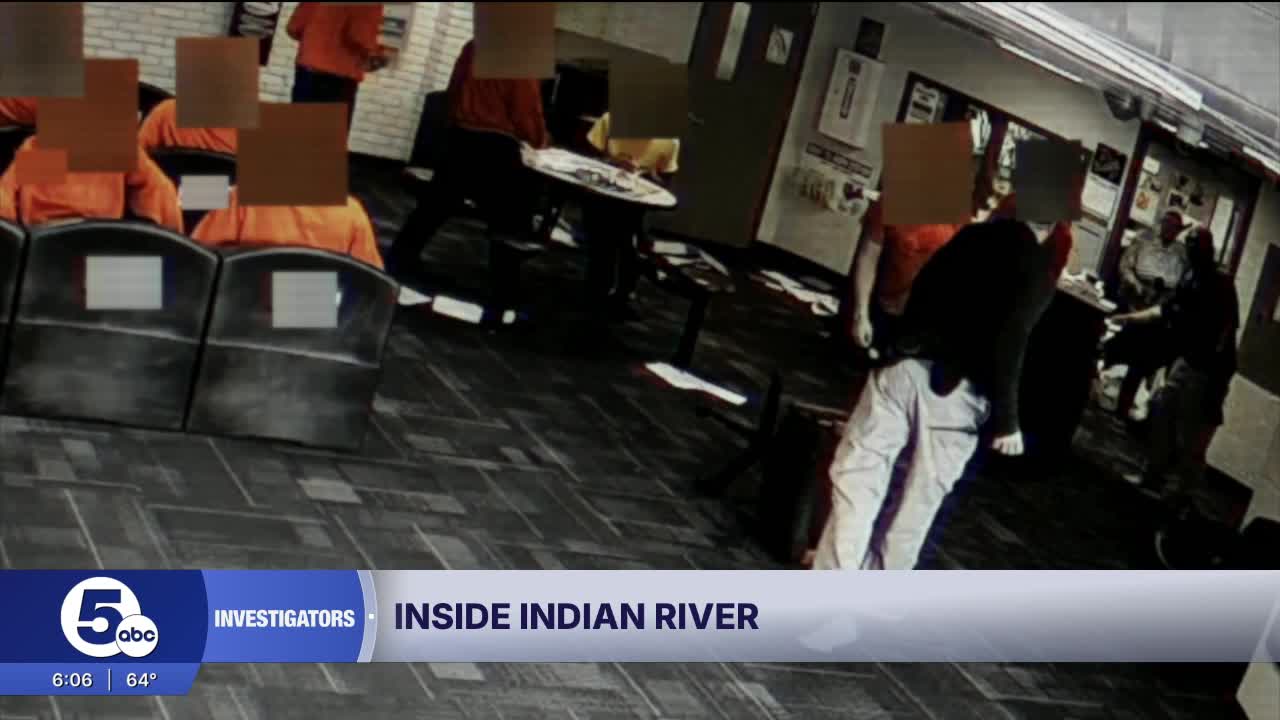
A 2022 video shows teens ransacking a room, leading to a nearly 12-hour standoff.
RELATED: Woman says her 16-year-old son started standoff at Indian River Juvenile Correctional
Teens have been caught on camera beating staff members, and a teen was paralyzed after being knocked down during a fight.
RELATED: Indian River guard details violent work life for staff at juvenile correctional facility
"A lot of people don’t want to put up with that; they’ll say it’s not enough money,” Corrections officer Tara Patris said.
Patris is an adult corrections officer who works at Indian River on the weekends.
After the assault on a colleague in March, Patris wrote Gov. Mike DeWine, saying the 14-year-old behind it laughed and threw up gang signs. One concern she brought up is that teens are not being held accountable.
News 5 asked Ast if gangs are running Indian River.
"No, no. The gangs are not running. Do we have youth that have histories of gangs, yes we do. Have youth that don’t have histories of being in gangs and come into this environment and start participating in gang activity, yes,” Ast said.
Patris said the staff doesn’t feel safe.
"I think their perception of safety is that we’ve got to do better, and I don’t disagree with them,” Ast said.
During the tour, Ast showed one common area in a unit where chairs circled a television set. The teens’ rooms lined a long hallway. You could hear some back-and-forth yelling through the doors that face each other.
"Ninety percent last month of the kids on this campus didn’t put their hands on anybody. Not a peer, and not a staff member,” Ast said.
Ast says they made deliberate moves at Indian River starting at the beginning of the year.
In February, they relocated teens who needed mental and behavioral health services to another facility, freeing up space.
"The behavior change for young people that are causing harm isn’t going to happen if you just lock them behind a door,” Ast said.
Ast says they took the six young people who’ve caused the most harm out of the mix.
News 5 asked why the same group responsible for violence wasn’t just removed from the facility.
"Where would we put them? Like, we are the place, like DYS, this is the place,” Ast said.
The six teens are in a new unit away from other kids. We did not see a television; there were just chairs and a space, which Ast says is for targeted intervention.
The teens sat quietly and were respectful during our stop.
We wondered if anyone had been told to be on their best behavior.
"Did it feel like the youth were on their best behavior? It just felt like a normal day at Indian River to me,” Ast said.
In June, Ast says the youth prison in Highland Hills will take over intake. She says that will help keep the number of kids at Indian River down while they work to build staff at the facility.
There is a state plan to turn the three larger youth prisons into smaller campuses with 36 beds in each. However, there’s no funding yet for the transformation of Indian River.
