

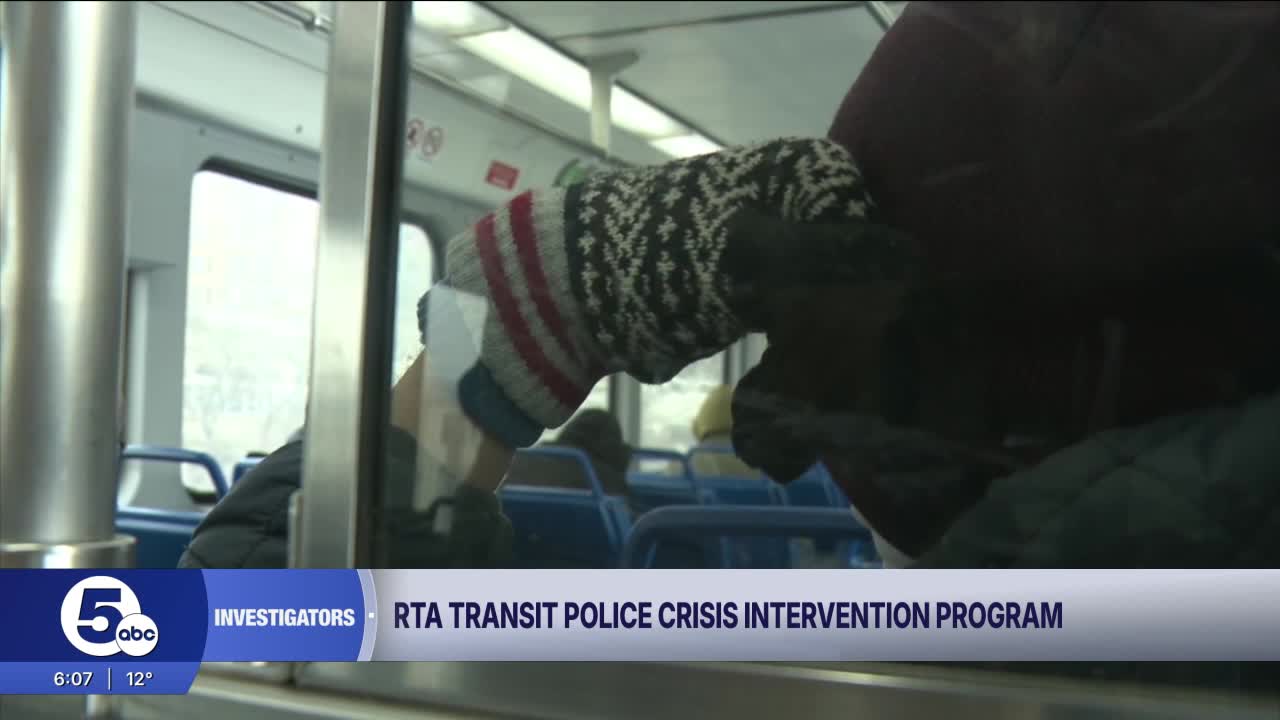


CLEVELAND, Ohio — Cleveland's homeless have turned to the RTA Rapid and train stations for relief from the frigid air, but transit police say settling in for the long haul is not allowed and raises safety concerns.
I got on the Red Line with Transit Police Chief Deirdre Jones to see how they help some of Cleveland’s most vulnerable.
The train arrived at Tower City, where we boarded it for the West 117th Street station.
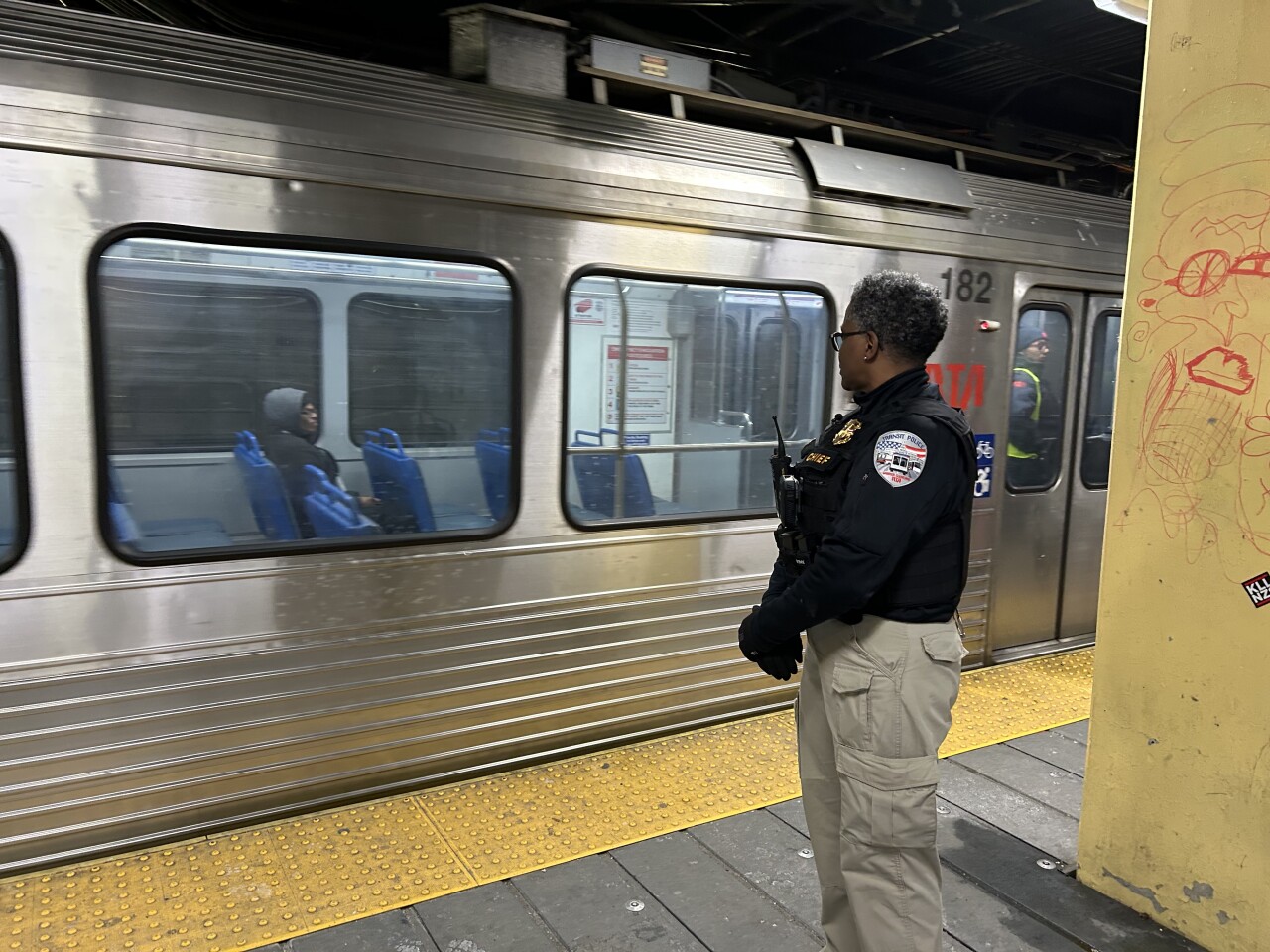
Jones offered pleasantries and gentle reminders to passengers, some of whom were sleeping on a cold morning. Transit police often come across riders without a destination or a home.
The chief said she has heard complaints from other passengers about seeing homeless people and never wanting to get on the train again.
Transit police have a crisis intervention program that was created in 2022. It’s made up of four two-person teams, each with one officer and one social worker.

They look for people who may have substance abuse, mental health or housing issues.
“Everybody, regardless of their situation, should be treated with dignity. Never take anybody’s dignity away,” Jones said.
News 5 Investigators reviewed data from the Transit Police Homeless Initiative. Last year, crisis intervention teams and officers made nearly 2,500 contacts with people.
More than 1,100 for trespassing, but also disturbances, drugs, and welfare checks.
“It will sometimes take 10 to 15 times before that relationship is built that that population trusts our teams to get them the help they need,” Jones said.
Jones says instead of arresting people for minor crimes, they work with different social services agencies.
RTA has the fourth-largest police agency in Cuyahoga County, with just under 100 officers covering about 400 square miles. They go everywhere buses and trains go, like the West 117th Street Rapid Station, where we made a stop for a station check.
“Most of what I think we come in contact with at the stations, like these, are people who are unsheltered. I think that’s the biggest issue we deal with at a lot of our stations,” Jones said.
Earlier this week, News 5 met Jasmyn Lester, who has been without a home for two years. She’s now finding warmth at a seasonal shelter after surviving the streets.

“There’s been times I have to sleep out on the Rapid Stations. Sometimes I have to sleep in the woods. It’s been really hard. It’s been a real challenge,” Lester said.
During the station check at West 117th Street, Jones checks door locks and public spaces.
Jones says they’ll find social services giving out all-day passes, so when fare enforcement happens, the people are valid riders, which the chief says warrants a discussion with those trying to help. The train is for transportation.
“Just because you have that pass, again, it’s not your home,” Jones said.
Jones wants more crisis intervention teams, but right now doesn’t have the staff for it. She says she knows the strategy works.
Jones says when they get complaints they make sure to get back in touch and talk about the issue and possibly switch up their strategy if needed.
